





In industrial manufacturing, consistency is everything. Whether you produce cosmetics, pharmaceuticals, food products, paints, or chemicals, the quality of your final product depends heavily on how well your ingredients are blended. A homogenizer mixer breaks down particles, disperses ingredients evenly, and creates stable emulsions or suspensions. Choosing the wrong machine can lead to wasted batches, inconsistent quality, and costly downtime.
This guide walks you through the key factors to consider before investing, and explains what to look for when evaluating homogenizer mixer manufacturers.
1. Understand Your Application and Product Type
Start by defining what you need the mixer to do. Are you creating emulsions like creams and lotions, dispersing powders into liquids, or reducing particle size in suspensions? Different applications demand different mixing actions.
For example, a high-shear homogenizer works well for emulsification and fine dispersion, while a combined anchor-and-homogenizer setup suits thick, viscous products like ointments and gels. Knowing your process requirements upfront helps narrow down the right design.
2. Consider Batch Size and Production Scale
Your production volume directly affects which mixer suits you best. Laboratory-scale units are ideal for R&D and small trials, while pilot and production-scale mixers handle larger volumes in continuous operation.
Choose a machine that fits your current needs but also allows room for growth. Scalability matters, since a mixer that performs well at lab scale should deliver the same results when you move to full production.
3. Check Viscosity Handling Capability
Viscosity is one of the most important factors in mixer selection. Low-viscosity liquids need different rotor-stator configurations than high-viscosity pastes or creams. Make sure the mixer’s motor power, rotor speed, and agitator design match the thickness of your materials. An underpowered machine will struggle, overheat, or produce uneven results.
4. Look at Rotor-Stator Design and Speed
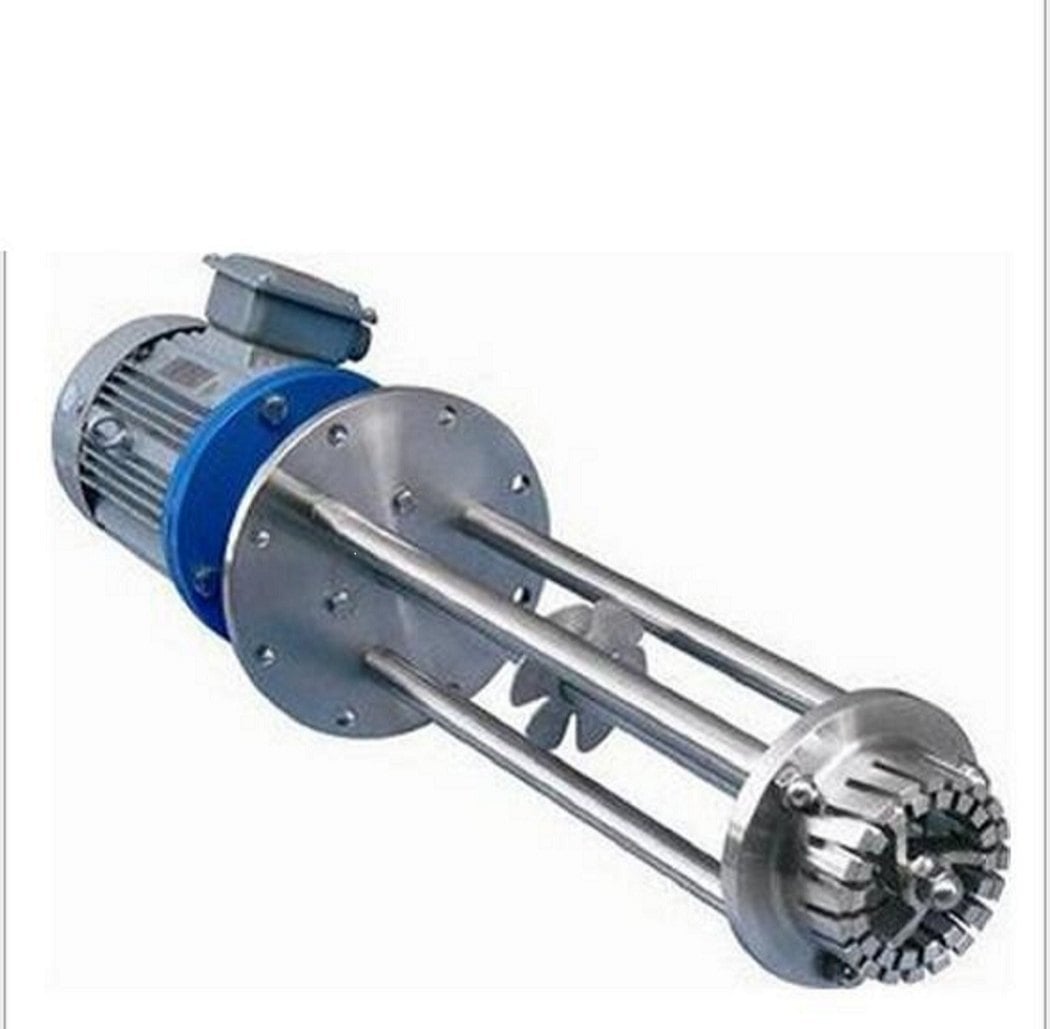
The rotor-stator assembly is the heart of any homogenizer. It generates the shear force that breaks down particles and droplets. Higher tip speeds typically produce finer particle sizes, but the right balance depends on your product. Variable speed control gives you flexibility to fine-tune the process for different formulations, which is especially valuable if you manufacture multiple products.
5. Prioritize Material Quality and Hygiene Standards
Material of construction matters, especially in regulated industries. Stainless steel grades such as SS304 and SS316L are common choices for their corrosion resistance and ease of cleaning. For pharmaceutical, food, and cosmetic manufacturing, look for mirror-polished surfaces, sanitary fittings, and designs that comply with GMP guidelines. Easy-to-clean construction reduces contamination risk and shortens changeover time.
6. Evaluate Vacuum, Heating, and Cooling Features
Many formulations require controlled processing conditions. Vacuum capability prevents air bubbles and oxidation, while heating and cooling jackets maintain precise temperatures during emulsification. If your process involves heat-sensitive ingredients or requires melting waxes and fats, these features are essential rather than optional.
7. Think About Automation and Control
Modern industrial mixers often come with PLC-based controls, touchscreen interfaces, and programmable recipes. Automation improves repeatability, reduces operator error, and makes batch records easier to maintain. If you aim for consistent quality across shifts and plants, automation is a worthwhile investment.
8. Choose a Reliable Manufacturer
Even the best specifications mean little without a dependable supplier. When comparing homogenizer mixer manufacturers, consider these points:
- Experience and track record in your industry
- Customization options to match your process needs
- Quality certifications and testing standards
- After-sales support, including spare parts, training, and maintenance
- Installation and commissioning assistance
A manufacturer that understands your application can recommend the right configuration and save you from expensive mistakes.
9. Factor in Total Cost of Ownership
The lowest price rarely delivers the best value. Consider energy consumption, maintenance requirements, durability, and expected lifespan. A well-built machine may cost more upfront but offers lower running costs and fewer breakdowns over time.
Why Tuyan Industries?
At Tuyan Industries, we understand that every manufacturing process is unique. As one of the trusted homogenizer mixer manufacturers, we design and build robust, high-performance mixing solutions tailored to your product, batch size, and quality requirements. Our machines combine precision engineering, hygienic construction, and reliable performance, backed by responsive technical support from consultation to commissioning.
Final Thoughts
Choosing the right homogenizer mixer comes down to understanding your product, process, and production goals. By evaluating application needs, viscosity, rotor-stator design, material quality, controls, and supplier reliability, you can make a confident decision that improves product quality and efficiency.