







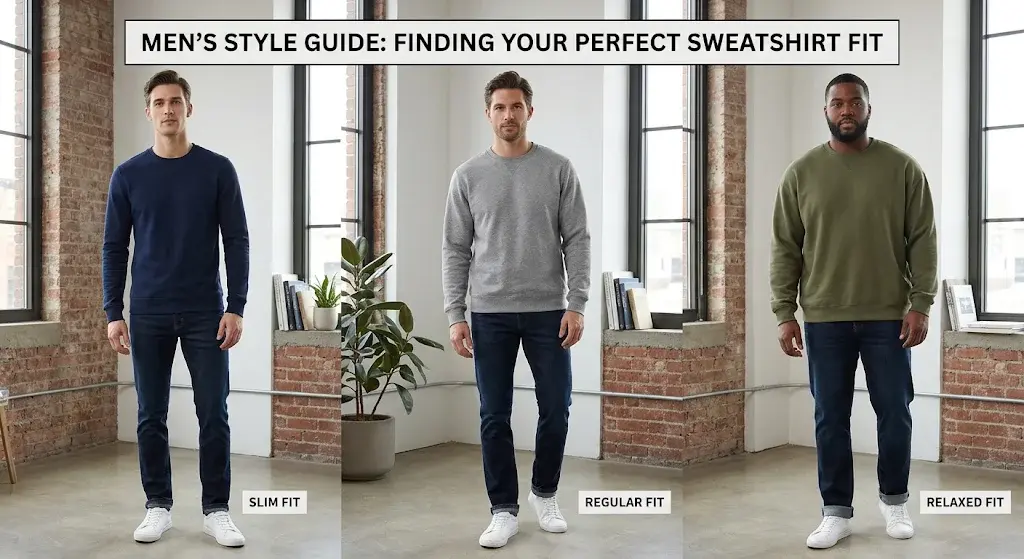
Finding the right sweatshirt fit is about more than simply choosing a size label. A well-fitting sweatshirt should feel comfortable, flatter your shape, and suit the way you plan to wear it. Whether you prefer a relaxed everyday layer, a smart casual look, or something for training and downtime, the cut, fabric, and length all affect how the garment sits on the body. For men browsing sweatshirts for men, understanding fit can make the difference between a piece that becomes a wardrobe favourite and one that stays unworn in the drawer.
In the UK, where layering is often part of daily dressing, sweatshirts need to work with coats, T-shirts, and shirts across changing seasons. That means the ideal fit should allow movement without looking oversized or feeling restrictive. This guide explains how to assess sweatshirt fit properly, what details matter most, and how to choose a style that suits your build and lifestyle.
Key points:
- Fit affects both comfort and appearance, so size alone is not enough.
- Shoulder seams, sleeve length, body length, and fabric weight all influence how a sweatshirt sits.
- Different fits suit different purposes, including slim, regular, and relaxed styles.
- Layering habits and body shape should guide your choice.
- A good sweatshirt should move with you, not cling too tightly or hang awkwardly.
Why sweatshirt fit matters
The fit of a sweatshirt has a direct impact on how polished or casual you look. A sweatshirt that is too tight can pull across the chest or upper arms, making it uncomfortable and restricting movement. One that is too loose may swamp your frame and look unstructured, especially if the fabric is heavy. The best fit creates balance: enough room for comfort, but enough shape to look intentional.
Fit also affects practicality. If you wear a sweatshirt over a shirt or under a jacket, the proportions need to work in layers. A well-chosen fit will make everyday dressing easier, whether you are heading to work, walking in cooler weather, or dressing for a weekend outing.
Understand the main sweatshirt fits
Slim fit
A slim fit sweatshirt sits closer to the body and usually has narrower sleeves and a neater shape through the chest and waist. It is a good choice if you prefer a more refined look or like wearing sweatshirts under tailored outerwear. However, slim fit should not mean tight. You should still be able to raise your arms and move freely without strain.
Regular fit
Regular fit is the most versatile option for many men. It offers a balanced shape with room through the body, making it suitable for everyday wear. This cut tends to suit most body types and works well with jeans, chinos, and joggers. If you are unsure what fit to choose, regular fit is often the safest starting point.
Relaxed fit
Relaxed fit sweatshirts provide extra room through the chest, shoulders, and sleeves. They create a laid-back look and can be especially comfortable for layering. The key is to make sure the extra volume looks deliberate rather than oversized in an unflattering way. This style works well if you favour casual clothing or want a more contemporary, streetwear-inspired shape.
Check the shoulder fit first
One of the clearest signs of a good fit is where the shoulder seam sits. Ideally, it should rest close to the edge of your shoulder rather than dropping too far down your arm. If the seam falls well below the shoulder, the sweatshirt may look baggy. If it sits too high, the garment may be too small.
Shoulders are especially important because they affect the whole silhouette. Even if the chest and waist fit well, poor shoulder alignment can make the sweatshirt look off. When trying one on, stand naturally and check whether the shoulder line feels clean and comfortable.
Pay attention to sleeve length
Sleeves should end around the wrist bone and allow a little movement without riding up too far. If sleeves are too long, the sweatshirt may look oversized or untidy. If they are too short, they can make the garment feel tight and awkward.
For men with longer arms, sleeve length can be a common issue, so it is worth checking product measurements rather than relying on the letter size alone. In a good fit, the cuff should sit neatly without pulling when your arms are extended.
Get the body length right
The length of a sweatshirt affects both style and proportion. A sweatshirt that is too short may rise above the waistband when you move, while one that is too long can make your legs appear shorter. A well-proportioned sweatshirt usually falls somewhere around the hip area.
Body length is especially important if you plan to wear the sweatshirt untucked, which is the most common approach. If you are taller than average, you may need to look for longer cuts to avoid a cropped appearance. If you are shorter, a slightly shorter length can help maintain balance.
Consider the shape through the chest and waist
A sweatshirt should skim the body rather than cling. There should be enough room at the chest for comfortable breathing and movement, but not so much fabric that the front balloons out. Around the waist, the sweatshirt should fall naturally without excessive bunching.
If you have a broader chest or shoulders, a regular or relaxed fit may work better than a slim one. If you have a leaner frame, a slimmer cut can add structure without appearing oversized. The aim is to create a clean line that suits your build.
Think about how you will wear it
Your intended use should influence the fit you choose. If you want a sweatshirt for layering under a coat or jacket, a slimmer or regular fit is usually more practical. If you plan to wear it on its own, you may prefer a slightly looser cut for ease and comfort.
For casual weekends, a relaxed fit may feel right. For commuting or smart casual dressing, a neater shape often looks better. Consider the rest of your wardrobe as well. A sweatshirt should complement your jeans, trousers, and outerwear rather than compete with them.
Fabric affects the fit too
Not all sweatshirts drape in the same way. Heavier fabrics tend to hold their shape more firmly, while lighter fabrics may fall closer to the body. Cotton-rich fabrics usually offer comfort and breathability, while blends can add stretch or help the garment keep its form.
A thicker sweatshirt may feel slightly structured even in a relaxed cut, whereas a lighter sweatshirt might appear more fitted. This is why two sweatshirts in the same size can look quite different. When possible, check the fabric composition as well as the size guide.
Match the fit to your body type
Broader build
If you have a broader chest, shoulders, or upper back, look for sweatshirts with enough room across the top half of the body. A regular or relaxed fit often provides the best comfort without pulling at the seams.
Lean build
If you have a slimmer frame, a regular or slim fit can help create shape. Avoid cuts that are excessively loose, as they may overwhelm your frame. A sweatshirt with a slightly structured shoulder line can add balance.
Taller build
Taller men often need extra body and sleeve length. Check measurements carefully to avoid a sweatshirt that looks too short. A longer cut can help maintain proportion, especially when worn with straight-leg trousers or jeans.
Shorter build
If you are shorter, avoid overly long or oversized sweatshirts, which can make your proportions look compressed. A neater fit with a clean hemline is usually more flattering.
How to test the fit when trying one on
When trying on a sweatshirt, move around rather than standing still. Raise your arms, sit down, and twist slightly. This helps you see whether the fit is practical, not just visually appealing. Check for pulling across the chest, tension at the shoulders, or excess fabric at the waist.
A good sweatshirt should feel comfortable immediately. There should be no need to keep adjusting the hem or pulling the sleeves into place. If you plan to layer it, try it over the type of T-shirt or shirt you would normally wear underneath.
Simple signs the fit is right
- The shoulder seam sits close to your natural shoulder line.
- The sleeves reach the wrist without covering the hands.
- The body feels comfortable without clinging or ballooning.
- The hem falls at a balanced point around the hips.
- You can move freely without tension in the fabric.
Common fit mistakes to avoid
One common mistake is choosing a sweatshirt based only on size rather than shape. Another is buying a style that looks good on the hanger but does not suit your proportions. Oversized sweatshirts can be comfortable, but if they are too large they may look careless rather than relaxed.
Another issue is ignoring fabric and shrinkage. Some materials can tighten slightly after washing, so it is wise to check care instructions before deciding on the fit. Finally, avoid choosing a sweatshirt that only works in one pose. It should be comfortable in daily movement, not just while standing still.
Conclusion
Choosing the right sweatshirt fit for men comes down to understanding shape, comfort, and purpose. The best fit is the one that works with your body, suits your lifestyle, and feels easy to wear throughout the day. Start with the shoulders, then check the sleeves, body length, and chest room. From there, think about how the sweatshirt will fit into your wardrobe and how you want it to look in different settings.
By paying attention to these details, you can choose a sweatshirt that feels natural rather than forced. Whether you prefer slim, regular, or relaxed styles, the right fit will always look better and wear better.
FAQ
How should a men’s sweatshirt fit?
A men’s sweatshirt should fit comfortably through the shoulders and chest, with sleeves that reach the wrist and a body length that sits neatly around the hips. It should allow movement without looking too tight or too loose.
Is it better to size up in sweatshirts?
Not always. Sizing up can work if you want a relaxed look, but it may also create a boxy shape. It is better to choose a fit that suits your build and check the measurements rather than relying only on a larger size.
What is the most versatile sweatshirt fit?
A regular fit is usually the most versatile. It offers enough room for comfort, works for layering, and suits most body types and occasions.
Should a sweatshirt be baggy?
A sweatshirt can be relaxed, but it should not be excessively baggy unless that is the intended style. Too much extra fabric can make the outfit look unbalanced.