







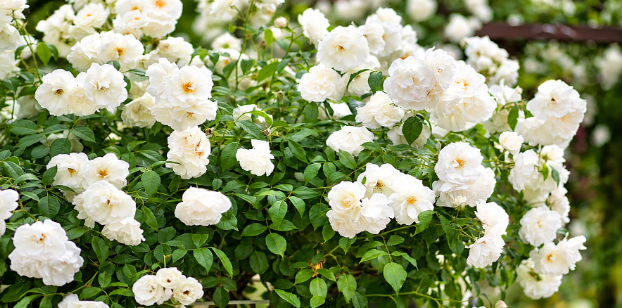
Few shrubs combine beauty and simplicity as well as a classic white-flowered rose bush. Gardeners who want elegant blooms without constant fuss have long valued the dependable habit of this plant, and many home gardeners in different climates choose Iceberg roses for borders, gardens, and landscaping projects. These shrubs are known for long-lasting flowers and easy care, and they come in several colors beyond white. This article explains how the plants bloom, how to grow them in the ground or in containers, when they need support, and how to protect them in cold weather. Each section offers clear, practical guidance.
Why Gardeners Choose This Rose
This rose is valued for its elegant white blooms and its ability to flower for long stretches. The bushy, shrub-like growth habit suits garden beds, borders, and broader landscaping plans, while the flowers add a clean, bright look beside greenery and other plantings. Beyond classic white, the plant is also available in red, pink, and burgundy, which gives gardeners room to match a color scheme. Because Iceberg roses are considered easy-care, they appeal to both beginners and experienced growers who want dependable results.
Blooming Season and Climate
One of the most appealing traits of this plant is its repeat flowering. In most climates, it blooms repeatedly from spring to late fall. In warmer regions with mild winters, it may flower nearly year-round, producing continuous white blooms with minimal care and deadheading. Removing spent flowers keeps the plant tidy and encourages it to keep producing new blooms through the season. Growers in cooler areas should expect a more defined season and plan for winter protection.
Sunlight, Soil, and Ongoing Care
Whether planted in the ground or in a pot, these roses share the same basic needs. They do best with at least six hours of sunlight daily and soil that drains well. Regular watering and feeding support steady growth and repeat flowering, particularly during the main blooming season. Deadheading spent blooms keeps the plant looking its best. Because the shrubs are bushy, leave enough space around each plant for air to move freely, which supports healthy foliage.
Growing Roses in Containers
Gardeners with limited space can still enjoy this plant. Iceberg roses thrive in large containers filled with well-draining soil, as long as they receive at least six hours of sunlight each day. Regular watering and feeding are essential for container-grown plants, since pots limit the nutrients and moisture available to the roots. During extreme cold or extreme heat, container-grown roses should be protected. Moving a pot to a sheltered spot is one practical way to do this.
Do These Roses Need a Trellis?
Standard plants grow as bushy shrubs, so they do not require a trellis. This makes them simple to place in a border or garden bed, where they can form a full, rounded shape without added structures. Climbing varieties are different. Their long canes benefit from a trellis or other support, which guides growth and promotes a structured, vertical pattern. Before planting, confirm which type you have, since the right support depends on whether the plant is a bush or a climber.
How to Winterize Your Roses
Cold weather calls for a little preparation. Start by pruning lightly and removing dead leaves. Next, mound soil or mulch around the base to provide insulation. In colder areas, wrap the plant with burlap or use rose cones to protect it from frost damage. These simple steps help the roots and lower canes get through winter so the plant can return with fresh growth in spring.
Conclusion
In short, this rose offers repeat blooms, flexible placement, and manageable care, whether grown in a border, a garden bed, or a large pot. Gardeners who want to explore more options of this type can look at the collection from Plant Clearance, where white, red, pink, and burgundy varieties are listed. With proper sun, soil, and winter protection, these plants can reward growers for many seasons of dependable color.