





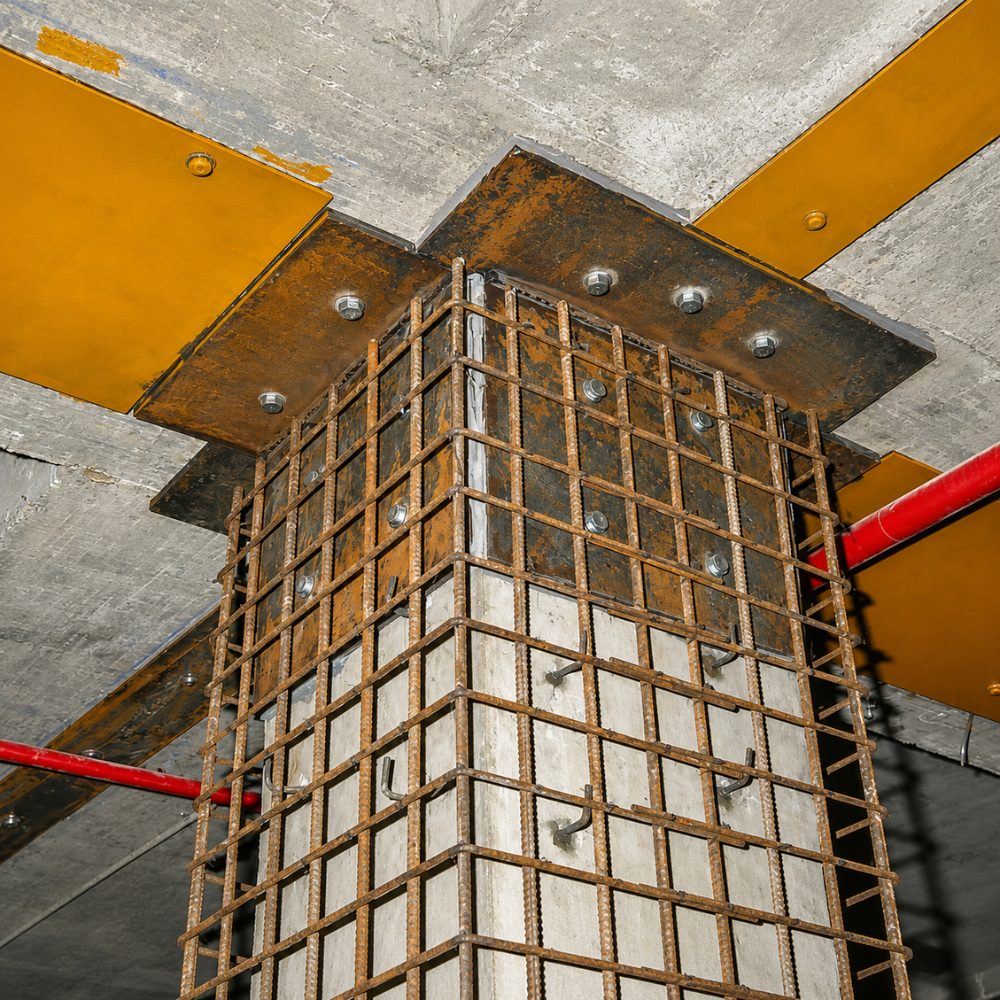
Existing industrial and commercial structures often face changing loads, ageing materials, water ingress, cracks, corrosion, and performance concerns. Retrofitting services provide an engineering route to improve an existing structure without automatically choosing demolition and reconstruction. Depending on the condition, the work may involve structural strengthening, concrete rehabilitation, jacketing, crack treatment, or specialised injection methods. The right solution begins with understanding the defect, its cause, and the required structural performance.
When Does a Structure Need Retrofitting?
Retrofitting becomes important when an existing structure no longer performs as originally intended or when its operating requirements change. Increased equipment loads, modifications, deterioration, environmental exposure, and revised functional requirements can create a need for strengthening. A proper assessment helps determine whether the structure requires local repair, strengthening, rehabilitation, or a combination of measures. This approach avoids treating visible symptoms alone and supports a practical repair strategy.
Retrofitting for Industrial Structures
For industrial facilities, structural problems can affect production areas, machinery foundations, RCC members, slabs, walls, tanks, and other critical assets. Retrofitting services can be planned around operational requirements so that repair work addresses identified weaknesses with controlled disruption. The scope may include concrete repair, micro concrete jacketing, steel jacketing, fibre strengthening, corrosion treatment, or injection grouting. Selection depends on structural assessment, accessibility, loading conditions, and the surrounding environment.
What Is Injection Grouting?
Injection grouting is an important technique used in repair and rehabilitation where material needs to be introduced into cracks, voids, cavities, joints, or other internal paths. Unlike surface filling, injection places grout inside the affected zone under controlled conditions. Depending on the defect, engineers may consider epoxy, polyurethane, cementitious, or microfine cement systems. Material selection should be based on the required outcome rather than choosing a grout simply by name.
What Is PU Grouting?
PU grouting, also called polyurethane grouting, is commonly considered where water leakage passes through suitable cracks, joints, voids, or porous areas. The polyurethane material is injected through prepared ports and reacts according to its formulation and site conditions. Expansion can help occupy internal leakage paths and form a sealing system. Because PU products behave differently, resin type, injection pressure, moisture condition, and repair objective should be evaluated before application.
PU Injection Grouting for Water Leakage
PU injection grouting is useful when visible water leakage originates from a pathway that cannot be effectively treated by surface coating alone. Typical locations include basement walls, underground structures, concrete slabs, construction joints, retaining walls, lift pits, utility areas, and other water-exposed zones. The objective is to intercept and seal the leakage path internally. A site-specific method is important because water pressure, crack geometry, and substrate condition vary between projects.
How PU Grouting Helps Control Leakage
One advantage of polyurethane injection is its ability to work within difficult leakage conditions when the selected material is compatible with the application. PU systems can provide expansion and flexibility, which may be useful for certain non-structural water-bearing cracks and joints. However, PU grouting should not automatically be considered structural strengthening. Where load capacity is affected, separate structural repair or strengthening may be required after engineering assessment.
Role of Injection Grouting Contractors
Injection grouting contractors handle more than the injection operation itself. A suitable project generally requires inspection, identification of leakage or void locations, drilling or port preparation, cleaning, packer installation, material preparation, controlled injection, and finishing. The sequence depends on the defect and selected grout system. Experienced contractors also consider site access, safety, water pressure, equipment requirements, material consumption, and the surrounding structure before starting the treatment.
Choosing Injection Grouting Contractors for Industrial Projects
Choosing injection grouting contractors for an industrial project requires attention to technical capability rather than only quoted price. Contractors should understand different grout materials, injection equipment, pressure control, crack behaviour, waterproofing requirements, and structural repair interfaces. A contractor should also explain why a particular method is proposed. Clear methodology, inspection procedures, material information, safety practices, and quality checks can make the repair process more predictable.
PU Grouting vs Epoxy Injection Grouting
The difference between PU grouting and epoxy injection is mainly related to the purpose and conditions of repair. Epoxy injection is commonly associated with suitable structural cracks where bonding and crack restoration are required. PU grouting is more commonly considered for active water leakage and sealing applications. Neither material is universally suitable for every crack. Crack movement, width, depth, moisture, structural significance, and its cause should guide the decision.
Cement Grouting and Microfine Cement Grouting
Cement grouting and microfine cement grouting are also used for selected repair, filling, consolidation, and rehabilitation requirements. Cement-based systems may suit larger voids or applications requiring cementitious filling, while microfine cement can be considered where finer particles and greater penetration are required. These methods differ from PU injection grouting in material behaviour and purpose. Final selection should follow the geometry of the void, substrate condition, and project objective.
Combining Retrofitting and Injection Grouting
Structural retrofitting and injection grouting can work together as part of a broader rehabilitation programme. An ageing industrial structure may have deteriorated concrete, corrosion, cracks, and water ingress at the same time. Injection may address selected internal leakage or crack pathways, while concrete repair and strengthening address structural deterioration. Treating these issues as connected problems can produce a more complete repair strategy than addressing each visible defect separately.
Why Water Leakage Requires Proper Investigation
Water leakage in concrete should not always be treated as a simple waterproofing problem. Persistent seepage can indicate cracks, construction joints, honeycombing, voids, failed interfaces, drainage issues, or hydrostatic pressure. If the water path is not identified, surface treatment may provide temporary improvement. PU injection grouting can be considered when the leakage pathway is suitable for internal injection. Define the repair objective before selecting the material and injection procedure.
Retrofitting for Changing Industrial Loads
Retrofitting services can become necessary when industrial buildings undergo modifications or changes in use. Installing heavier machinery, adding equipment, changing floor functions, or modifying structural openings may alter the original load path. In such situations, strengthening may involve columns, beams, slabs, foundations, or connections. An engineering assessment can identify where additional capacity is needed and whether local strengthening, load redistribution, or broader rehabilitation is appropriate for the existing structure.
Addressing Concrete Deterioration Before Major Damage
Concrete deterioration can develop through carbonation, corrosion, chemical exposure, repeated wetting and drying, abrasion, or poor drainage. Early signs such as cracks, spalling, exposed reinforcement, damp patches, and unusual deflection should not be ignored. Retrofitting services can be planned after determining the underlying cause and extent of deterioration. Repairing the concrete surface without addressing the mechanism of damage may leave the structure vulnerable to recurring deterioration.
Typical PU Injection Grouting Process
A professional injection grouting process normally begins with identifying the affected area and documenting the defect. Depending on the application, the surface is prepared and injection points are established to intersect the crack, cavity, or leakage route. Packers or injection ports are then installed, followed by controlled pumping of the selected material. Pressure, sequence, material response, and site conditions are monitored throughout the operation to achieve the intended repair result.
Importance of Correct PU Material Selection
The success of PU injection grouting depends on correct material selection and controlled execution. Polyurethane products may be designed for different reaction times, expansion, flexibility, and water conditions. Using a material without considering the leakage condition can reduce repair performance. Injection pressure also matters because excessive or poorly controlled pressure can create unwanted pathways or affect vulnerable areas. Technical planning matters as much as the injection equipment used on site.
Retrofitting for Industrial and Infrastructure Assets
Industrial and infrastructure assets often require repair methods that can be integrated with ongoing maintenance programmes. Injection grouting may be used at selected locations while other areas receive concrete repair, protective coating, waterproofing, or structural strengthening. This integrated approach can reduce the risk of isolated repairs failing because a related problem remains untreated. Scope should follow inspection findings, operational requirements, access conditions, and the expected service environment.
What Should You Check Before Hiring a Contractor?
When evaluating retrofitting services, project owners should ask whether the contractor can diagnose the problem before recommending a solution. A good proposal should identify the observed defect, likely cause, proposed treatment, materials, equipment, execution sequence, and quality checks. It should also distinguish between repairs intended for leakage control and those intended for structural strengthening. This clarity helps decision-makers compare technically suitable options instead of comparing quotations on price alone.
Choosing an Integrated Civil Engineering Partner
For organisations planning industrial or commercial rehabilitation, working with Gubbi Civil Engineers Limited can be considered when the requirement involves coordination between structural repair, retrofitting, grouting, waterproofing, and related civil engineering work. The advantage of an integrated approach is that connected defects can be evaluated together rather than treated as isolated maintenance issues. The recommended scope should still be based on site inspection, engineering assessment, and the specific condition of the affected structure.
Understanding the Cost of Injection Grouting
Cost is important when planning repair work, but the lowest initial quotation may not represent the lowest overall project cost. Material failure, repeated leakage, incomplete crack treatment, or incorrect strengthening can create additional shutdowns and repair expenses. A better evaluation considers the defect, access requirements, material consumption, equipment, labour, safety measures, and expected repair performance. Comparing complete methodologies provides a useful basis for project decisions.
Selecting the Right Repair Method
The choice between repair, injection, and retrofitting should ultimately depend on what the structure needs to achieve after the work is completed. If the issue is water ingress, a suitable sealing method may be required. If load capacity is inadequate, strengthening may be necessary. If concrete has deteriorated, rehabilitation should address the damaged material and its cause. In many industrial projects, these methods can complement one another when planned as one engineering solution.
Importance of Timely Structural Inspection
For long-term asset management, regular inspection and timely intervention are more practical than waiting until deterioration becomes severe. Small cracks, recurring leakage, corrosion stains, damaged concrete, and changing load conditions can provide useful warning signs. Early assessment can help identify whether injection grouting, concrete repair, protective treatment, or structural strengthening is appropriate. Retrofitting services are most valuable when planned around the actual condition and future requirements of the asset.
Industrial owners looking for PU grouting, PU injection grouting, injection grouting contractors, or broader retrofitting services should focus on technical assessment, suitable material selection, controlled execution, and experience with the structure involved. The right contractor should understand that every crack, leakage path, void, and structural weakness has a different cause. A project-specific repair strategy can help improve performance, reduce recurring problems, and extend the useful service life of existing assets.