







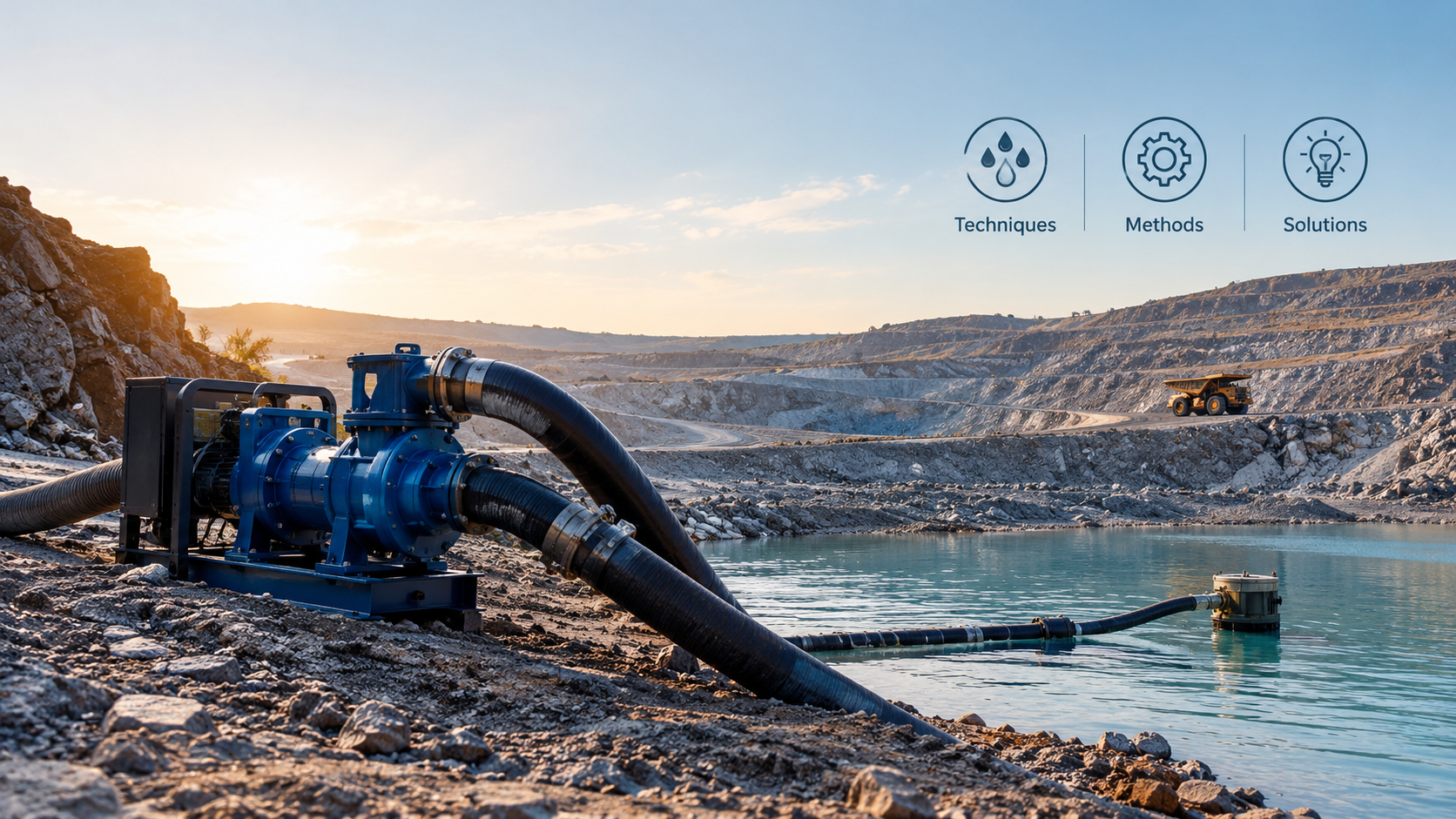
Water is one of the most persistent challenges in any mine. Groundwater seeps through rock fractures, rain collects in open pits, and underground workings can flood without warning. Mining dewatering is the practice of removing or controlling this water so crews can work safely and equipment can run without interruption. Done well, it protects people, preserves machinery, and keeps production on schedule.
Why Mining Dewatering Matters
Excess water makes a mine unstable. It weakens pit walls, increases the risk of slope failure, and turns haul roads into slick, hazardous surfaces. Underground, it can drown equipment, corrode infrastructure, and create dangerous working conditions.
Water also affects the bottom line. Wet ore is heavier and harder to process, blasting becomes less predictable, and flooding downtime can cost operators millions. A well-planned mining dewatering program lowers these risks while supporting regulatory compliance, since discharged water must usually meet strict environmental standards.
Sources of Water in a Mine
Before choosing a method, engineers need to understand where the water comes from. The most common sources include:
- Groundwater inflow: Water moving through aquifers and fractured rock into the workings.
- Surface runoff: Rainfall and snowmelt flowing into open pits or shafts.
- Process water: Water used in drilling, dust suppression, and mineral processing.
- Sudden inflows: Breaches into old workings or water-bearing zones.
Hydrogeological studies map these sources and predict how much water the operation must handle over its life.
Core Mining Dewatering Techniques
Every mine has different water conditions, so mining dewatering rarely relies on a single solution. The techniques below range from simple sump pumping to advanced pre-drainage systems, and many sites combine several.
-
Sump Pumping
Sump pumping is the simplest and most widely used approach. Water drains toward a low point, called a sump, where pumps lift it to the surface or to a treatment area. It works well in open pits and shallow underground levels. Because debris and sediment collect in sumps, pumps must tolerate solids and abrasive material.
-
Dewatering Wells
Where groundwater inflow is heavy, operators drill wells around the mine perimeter. Submersible pumps in these wells lower the water table before it reaches the workings. This pre-drainage approach keeps the working area dry rather than reacting after water arrives, and it is common in large open-pit operations.
-
Well Points and Horizontal Drains
Well points are shallow, closely spaced wells connected to a header pipe and vacuum pump. They suit sandy or granular ground. Horizontal drains are drilled into pit walls at a slight upward angle, letting trapped water flow out by gravity and reducing pressure behind unstable slopes.
-
Underground Drainage Systems
In underground mines, water is collected in channels and directed to central sumps. From there, multistage pumps send it up through boreholes or shafts. Deep mines often use staged pumping stations, with each station lifting water to the next level.
-
Diversion and Surface Controls
Preventing water from entering the mine is often cheaper than pumping it out. Diversion channels, berms, and settling ponds redirect runoff away from the pit. These measures reduce the pumping load and make the entire system easier to manage.
Choosing the Right Equipment
Pump selection is central to any mining dewatering plan. Mine water frequently contains sand, silt, and acidic compounds, so pumps need hardened impellers, corrosion-resistant materials, and the ability to handle solids. Engineers weigh flow rate, total head, and power availability when sizing a system.
Reliability matters as much as performance. During heavy storms or unexpected inflows, a flood control pump provides the high-volume capacity needed to move large amounts of water quickly. Many operations keep a flood control pump on standby as emergency backup, so a sudden surge does not shut down production or endanger workers.
Treatment and Water Management
Removing water is only half the job. Mine water often carries suspended solids, dissolved metals, or acidity, and it must be treated before release. Common solutions include sedimentation ponds, chemical neutralization, filtration, and, in some cases, reverse osmosis.
Many mines now treat dewatering as a resource opportunity. Recovered water can be reused for dust control, ore processing, or equipment washing, lowering freshwater demand and reducing environmental impact. In dry regions, this reuse can be essential to keeping an operation viable.
Best Practices for Effective Dewatering
Successful programs share several habits:
- Plan early. Build water management into the mine design rather than adding it later.
- Monitor continuously. Piezometers, flow meters, and level sensors reveal changes in groundwater conditions.
- Build in redundancy. Backup pumps and power sources prevent a single failure from becoming a flood.
- Maintain equipment. Regular inspections catch wear from abrasive slurries before it causes breakdowns.
- Stay adaptable. Water conditions change as the mine deepens, so review and upgrade systems regularly.
Final Thoughts
Every mine faces water, but not every mine handles it equally well. Effective mining dewatering combines sound hydrogeological knowledge, the right mix of techniques, durable equipment, and responsible water treatment. By planning, keeping a dependable flood control pump ready for peak events, and monitoring conditions closely, operators can keep their sites safe, productive, and compliant for the long term.