




A cake takes hours to bake, fill and decorate, then it spends ten minutes in a box before the customer sees it. Personalised cake boxes decide whether those hours of work arrive intact and whether the customer remembers who made it. For bakeries and home-based cake businesses alike, the box does the job of a shop window, a delivery vehicle and a business card all at once. A plain white carton gets the cake from A to B, but a branded one turns every collection into free advertising.
Cake is also one of the most emotional products a bakery sells. People buy it for birthdays, weddings, christenings and retirements, and the packaging becomes part of the occasion. That makes the box worth far more careful thought than most businesses give it.
Why Cake Packaging Needs More Thought Than Most Bakes
Cakes are heavy, soft and prone to sliding. A tiered celebration cake, a fresh cream sponge and a rich chocolate ganache each behave differently in transit, and a box that suits one may fail another. Personalised cake boxes let you match structure and size to what you actually sell, rather than forcing every product into a stock carton.
A well-fitting box also protects your reputation. If a cake arrives with smudged icing or a collapsed side, the customer rarely blames the courier or the car journey. They remember the bakery, and they tell people.
Measure Your Range Before You Order
Start by listing your most popular cake sizes and heights, including any toppers, decorations or tall sculpted elements. Add a small margin for airflow and easy lifting, but keep it tight enough that the cake cannot slide. Many bakeries need three or four standard sizes, with the occasional bespoke box for showpiece orders.
Choosing the Right Board and Structure
Board strength matters more for cakes than for almost any other baked product. A standard cake can weigh two or three kilograms, and a multi-tier wedding cake weighs far more. A box that bends in the middle lets the cake tilt, and tilted cakes crack and smear.
Rigid, thick board suits larger and heavier cakes, while a sturdy folding carton works well for smaller sponges, cupcakes and traybakes. Reinforced corners and a firm base prevent the box from buckling when you lift it from underneath.
Add a Cake Board and Non-Slip Base
A separate cake board inside the box spreads the weight and makes lifting easier for the customer. A thin non-slip mat or a small dab of icing under the board stops everything sliding during the drive home. These small steps cost very little and prevent most transport damage.
Window Boxes Versus Solid Boxes
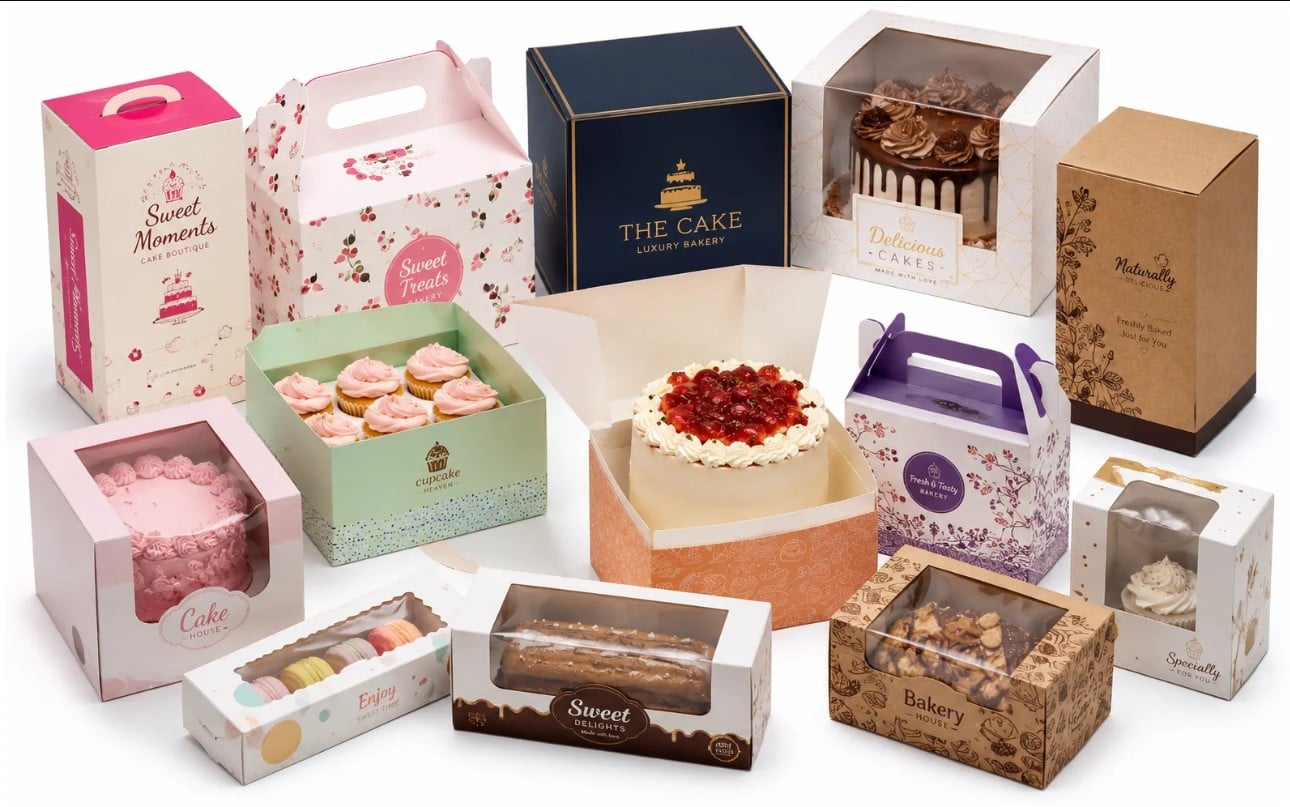
Window boxes let customers see the cake without opening the lid. That visibility sells well on a counter display, and it lets a buyer check that the decoration looks right before they pay. Solid boxes keep the cake hidden, which suits surprise gifts and wedding cakes where presentation matters at the reveal.
Many bakeries use both. A window box handles walk-in sales and counter displays, while a solid, more elegant box handles pre-orders and celebration cakes.
Think About Cling Film and Window Material
If you use a window, choose a clear film that customers can recycle, and make sure it sits slightly back from the edge so it does not touch the icing. Fingerprints and condensation on a clear window can spoil the look, so test your design with a real cake before you commit to a large order.
Building Your Brand Through the Box
Your packaging travels further than your shop sign. A cake box carried through a high street, placed on a party table or photographed for social media puts your logo in front of dozens of potential customers.
Personalised cake boxes with your logo, colour palette and contact details turn each order into a small advertisement. Keep the design clean, with a strong logo, one or two brand colours and enough white space that the box still looks elegant on a dining table.
Include Practical Information
Print your website, social handles and a short care message on the side or base. A line such as “keep refrigerated and serve at room temperature” helps customers handle the cake properly and reduces complaints. A discreet QR code linking to your order page makes it easy for guests to find you after the party.
Food Safety and Material Choices
Cake boxes sit close to food, so materials matter. Choose food-safe board, and ask your supplier about grease-resistant coatings or liners that stop butter and cream from soaking through. Water-based inks add another layer of reassurance, because they avoid harsh chemicals near edible products.
Keep an eye on UK food packaging requirements and ask your packaging partner to confirm that the materials suit direct or indirect food contact. If you sell products with allergens, check your labelling obligations separately and speak to your local trading standards or environmental health office when in doubt.
Ventilation and Condensation
Fridge-cold cakes can sweat when they warm up in a closed box. Small ventilation holes or a slightly breathable board help moisture escape, which keeps fondant and buttercream looking crisp. Test this with your own recipes, because humidity affects different finishes in different ways.
Making Sustainability Work for Your Bakery
Customers increasingly check what their packaging is made from. Recyclable and FSC-certified board, minimal plastic and clear recycling instructions all help you meet that expectation. Many customers now ask about packaging before they order, particularly for gifts and corporate catering.
Avoid mixing materials in ways that make recycling difficult. A box with a small, removable film window works better than one fully coated in plastic laminate, because customers can separate the pieces easily.
Reusable Options for Premium Orders
Wedding and celebration cakes sometimes justify a sturdier keepsake box that customers reuse for storage. A reusable design extends your brand’s visibility and adds perceived value without much extra cost.
Planning Orders and Managing Costs
Printing personalised packaging involves lead times and minimum quantities, so plan ahead. Order your core sizes in bulk to reduce the cost per box, and reserve smaller runs for seasonal or special-edition designs.
Request samples before you place a full order. Pack a real cake, carry it through a normal journey and check how the box holds up. That small test often reveals sizing or strength issues that look fine on a drawing.
Balance Quality and Budget
You don’t need premium packaging on every product. Use sturdy, simply printed boxes for everyday cakes, and save embossing, foil or specialist finishes for high-value celebration orders where presentation justifies the extra cost.
Final Thoughts and Next Steps
Good packaging protects the cake, strengthens your brand and gives customers a reason to order again. Personalised cake boxes handle all three jobs at once, and the best ones come from a clear understanding of your products, your customers and your budget.
Start by measuring your range, testing a sample with a real cake and designing a box that looks like your bakery. Small, practical decisions add up to a packaging system that supports your business every day.
Ready to give your cakes the packaging they deserve? Get in touch with My Box Printing today to discuss personalised cake boxes designed around your bakes, your brand and your customers.