







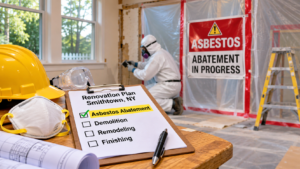
A homeowner may plan to remove a wall, replace old flooring, or open a ceiling during a renovation. Opening those areas without checking the materials first can spread hidden asbestos fibers and stop the project. A written plan from Boyle Contracting or another qualified professional can address testing, containment, removal, and final clearance before work begins. That is why asbestos abatement in Smithtown, NY should be treated as an early planning step, not a last-minute cleanup task.
Key Takeaways
- Do not cut, sand, drill, or demolish suspect materials before they are assessed.
- A building’s age can raise questions, but only proper sampling can identify asbestos.
- The renovation scope affects testing, containment, worker protection, and paperwork.
- State and local requirements may apply before removal or demolition starts.
- A written scope should explain testing, removal, cleanup, and clearance.
Why Asbestos Abatement in Smithtown, NY Comes First
Asbestos was used in many building products because it resisted heat and added strength. It may be found in floor tile and adhesive, pipe insulation, textured ceilings, joint compound, siding, roofing products, duct materials, and other parts of an older building. A newer surface does not always mean the older material underneath is gone.
The main risk often begins when a renovation disturbs a material. Pulling up flooring, scraping a ceiling, or opening a wall can release fibers if the product is damaged or cut. These fibers are too small to see, and ordinary sweeping or a household vacuum is not a safe cleanup method.
A property owner does not need to assume that every older material contains asbestos. They do need to avoid guessing. A building’s construction date, past repairs, and planned work can help determine what should be checked first.
Start With Identification, Not Demolition
The first step is usually a pre-renovation survey or a focused assessment of the areas that will be disturbed. A qualified asbestos professional reviews the work plans, looks at suspect materials, and may collect small samples for laboratory analysis. A visual check alone cannot confirm that a material is safe.
The drawings and work list matter. If a contractor will only replace a sink, the needed assessment may differ from a project that removes cabinets, walls, flooring, and insulation. They should explain the planned disturbance before samples are collected so the assessment covers the real work area.
Boyle Contracting: If a sample comes back positive, that does not always mean the entire property must be closed or stripped. The next decision depends on the material’s condition, its location, and whether the renovation can avoid disturbing it. Some intact materials may remain in place under a management plan, while damaged or affected materials may need removal by qualified workers.
What the Initial Assessment Should Cover
An effective Smithtown home asbestos inspection starts with the renovation drawings, not just a walk-through. The reviewer should understand which rooms will change, where utilities will be moved, and whether the work will affect ceilings, walls, floors, or mechanical systems.
The assessment should help answer several practical questions:
- Which materials may contain asbestos?
- Will the planned work disturb those materials?
- Are samples needed from more than one area or layer?
- What level of containment and worker protection may be required?
Material condition also matters. A friable product can crumble or release fibers more easily when disturbed. A non-friable product may hold fibers together until it is cut, ground, broken, or heavily damaged. This difference can affect the work method, but it does not make a questionable material safe to disturb without proper review.
A useful assessment also considers occupants. If children, older adults, pets, or people with health concerns remain in the building, the work plan may need stronger separation between the work area and living space. Heating and cooling systems may also need protection so dust does not move through the property.
Planning Checks Before Mold Remediation Begins
That is the foundation of Long Island mold remediation planning: the remediation process must match the building conditions, the extent of mold growth, and the requirements that apply to the project. Proper mold remediation involves identifying the moisture source, assessing affected materials, establishing appropriate containment, and following safe removal and cleanup procedures.
Before work is scheduled, homeowners should ask who will perform the mold assessment and who will handle the remediation. They should also confirm whether the project requires permits, special precautions, or coordination with the local building department. A general remodeling contractor does not automatically have the training or experience needed to handle extensive mold contamination.
A clear written scope should explain which areas and materials are affected, how the work area will be isolated, how airborne mold particles will be controlled, and how contaminated materials will be removed and disposed of. Depending on the project, controls may include sealed barriers, negative air pressure, HEPA filtration, protective clothing, and proper cleaning procedures. Simply promising to clean the visible mold afterward is not enough.
Important items to confirm include:
- The findings of the mold inspection and the areas identified as affected.
- The qualifications and experience of the mold remediation contractor.
- The planned containment, ventilation, removal, and cleaning methods.
- How the underlying moisture or water intrusion problem will be corrected.
- The procedures for handling and disposing of mold-contaminated materials.
- Whether post-remediation inspection or clearance testing will be performed.
Post-remediation verification is more than a quick visual inspection. It helps determine whether the affected areas have been properly cleaned, contaminated materials have been addressed, and the original moisture problem has been corrected. Depending on the project, independent inspection, moisture measurements, or air sampling may also be appropriate.
Keeping detailed project records, including inspection findings, remediation procedures, moisture-control measures, and verification results, helps homeowners ensure that the property is ready for normal use and future renovation work.
Mistakes That Can Disrupt a Renovation
Many problems start with scheduling rather than removal. A property owner may book demolition, flooring delivery, and several trades before asking whether old materials need testing. If asbestos is found later, the schedule can change and other workers may need to leave the area.
Common mistakes include:
- Treating a building age as proof that materials are safe or unsafe.
- Sampling only the easiest material while ignoring hidden layers.
- Asking a general remodeler to remove suspect materials without checking qualifications.
- Starting work before the written scope and required paperwork are complete.
Another mistake is moving loose debris from one room to another. Suspect pieces should remain undisturbed until a qualified professional explains the next step. They should also avoid dry scraping, sanding, drilling, or sweeping in the area.
Cost comparisons deserve care, too. The lowest first estimate may leave out sampling, containment, air monitoring, waste transport, or clearance. A more useful comparison looks at the full scope and asks what happens if additional material is found behind a wall or below a floor.
Choosing the Next Step Carefully
The first decision is whether the renovation will disturb a suspect material. If the answer is yes, testing and planning should happen before demolition. If the answer is unclear, they should pause and have the work area reviewed rather than rely on a guess.
They should share old inspection reports, repair records, floor plans, and photographs with the professional reviewing the property. These records may show where materials were previously covered or removed, but they should not replace current assessment when the work will disturb the area.
They should also ask how the project will protect people who are not doing the work. A good plan explains the work boundary, daily cleanup, ventilation controls, access limits, and the point at which other trades may return. Those details help connect safety steps with the actual renovation schedule.
If a contractor proposes leaving an asbestos-containing material in place, they should ask why that choice is suitable and how it will remain protected. Leaving material undisturbed can be reasonable in some projects, but it should be a documented decision rather than an assumption.
Frequently Asked Questions
Can a Homeowner Identify Asbestos by Sight?
No. Some asbestos-containing materials look like ordinary tile, insulation, plaster, or adhesive. Age and appearance may suggest that testing is needed, but only proper sampling and laboratory analysis can confirm the material.
Does a Renovation Permit Replace an Asbestos Survey?
No. A building permit and an asbestos assessment serve different purposes. Permit requirements vary by project, while asbestos rules may involve separate inspections, notifications, work practices, or contractor qualifications.
Is Testing Needed If the Material Looks Intact?
Testing may still be needed if the renovation will cut, remove, drill, scrape, or otherwise disturb the material. Intact condition can reduce concern when the material stays in place, but it does not confirm its contents.
Can a General Remodeling Contractor Remove Asbestos?
They should not assume that a general remodeling contractor is qualified for asbestos abatement. They should verify the contractor’s current state credentials, worker qualifications, insurance, and ability to meet the requirements for the specific project.
How Long Does Asbestos Abatement Take?
The time depends on the amount and location of material, access, containment needs, testing, cleanup, and clearance. A small visible area may involve less work than a hidden material that affects several rooms or building systems.
What Records Should They Keep After the Work?
They should keep the assessment, laboratory results, written work scope, contractor information, required notices, waste records, daily work records, and clearance documentation. These records can help with future repairs, property questions, and later renovations.
Plan Abatement Before the First Cut
Asbestos planning belongs near the beginning of a renovation, alongside design, budgeting, and permit review. Early assessment gives the property owner time to choose the right work method, protect occupants, coordinate trades, and avoid preventable delays. The safest decision is not to guess about an older material when a renovation will disturb it.
Plan the Next Step With Care
Before they schedule demolition, property owners should arrange an asbestos review, collect any past renovation records, and share the project plans with a qualified professional. A clear scope can show which materials need sampling, what work area controls are required, and whether local or state filings apply. For asbestos abatement in Smithtown, NY, early planning can protect workers, occupants, and the renovation schedule. Request a written explanation of testing, removal, clearance, and waste handling before approving work and starting demolition.