







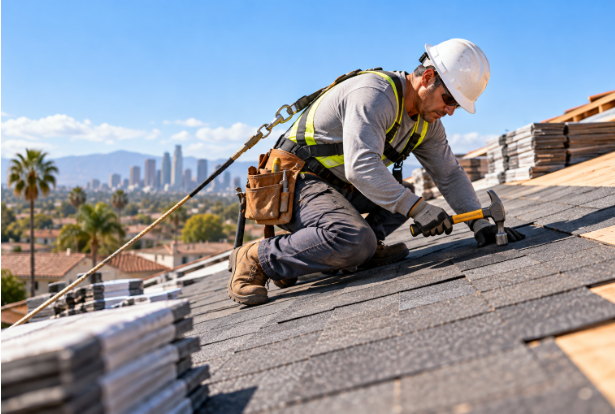
Roofing is widely considered one of the riskiest jobs in construction, since slips and falls from height leave little room for error. According to the National Census of Fatal Occupational Injuries, 111 of the 5,333 job fatalities in 2019 involved roofing professionals. Understanding roofing accidents, including what causes them and what follows, helps workers, employers, and property owners respond more wisely. This article covers common causes, safety standards, immediate steps, and who may be responsible.
Common Causes of Roof-Related Injuries
Roofing accidents involve more than falls alone. Frequent causes include direct falls from the roof, ladder imbalance or damage, electrical injuries, equipment malfunction or mishandling, and defective materials. Loud noise can lead to hearing impairment, and exposure to roofing materials can cause occupational illness. Because the causes vary, injured workers may have more than one path to a claim.
Safety Standards That Protect Roofers
The Occupational Safety and Health Administration (OSHA) regulates the safety of roofing professionals by enforcing standards for work equipment, materials, and safety gear. Key protection areas include fall protection systems, extension and stepladder protection, falling object protection, safe disposal of debris, inclement weather protection, electrical hazard safety, and lift safety standards. Reviewing these areas is a central part of understanding what went wrong after an injury.
What to Do Right After a Roof Fall
Taking the right steps early protects both health and any future claim. Start with medical attention for injuries. If anyone is at significant risk, call emergency services immediately. Then document the scene by photographing or recording the roof condition and equipment used, and report the incident to the appropriate authorities. Take photos or video if possible.
Useful information to gather includes names and contact details of witnesses and others involved, a detailed description with the date, time, and location, medical records and expenses, communication records with authorities, and insurance details. At work, notify a supervisor, safety officer, or human resources department.
Who May Be Responsible
Responsibility depends on where and how the injury happened. At a residential property, the owner may be responsible if poor maintenance or ignored hazards played a role. A hired roofing contractor may be responsible for negligence or faulty workmanship, and a manufacturer may be responsible if defective roofing materials caused the harm. At a commercial property, responsibility may involve the property owner or employer, a management company, or a third party such as a contractor.
Claims and Compensation
Because many roofing accidents happen on the job, a workers’ compensation claim may be available, and benefits apply regardless of who was at fault. A personal injury lawsuit is another route, allowing an injured person to seek damages for medical expenses, lost wages, pain and suffering, and other losses. Compensation generally covers medical expenses, lost wages, and physical and mental suffering. Legal professionals can investigate what happened, gather evidence such as police reports, medical records, and witness statements, negotiate with insurers, and file a lawsuit if needed.
Why Prompt Action Matters
Acting promptly is advisable. Evidence such as the roof’s condition, equipment used, and witness details is easier to collect early. Legal advice early on helps injured people understand liability, handle insurance companies, and pursue a fair settlement or legal action if necessary. Resolution time varies with the circumstances; some cases resolve in weeks to months.
Prevention Starts With Safe Practices
Because the risk is high, prevention depends on following the standards above. Employers can provide fall protection, stable ladders, safe equipment, and proper handling of materials, while workers can use safety gear and report hazards. Awareness of these basics can reduce the chance of serious injury.
Conclusion
Roof work carries serious risk, but knowing the common causes, safety standards, and early response steps gives injured workers a stronger footing. When questions about claims arise, a work injury attorney Los Angeles workers can consult can explain compensation options and who may be responsible. Prompt documentation and awareness of OSHA protections matter just as much as the claim itself.