






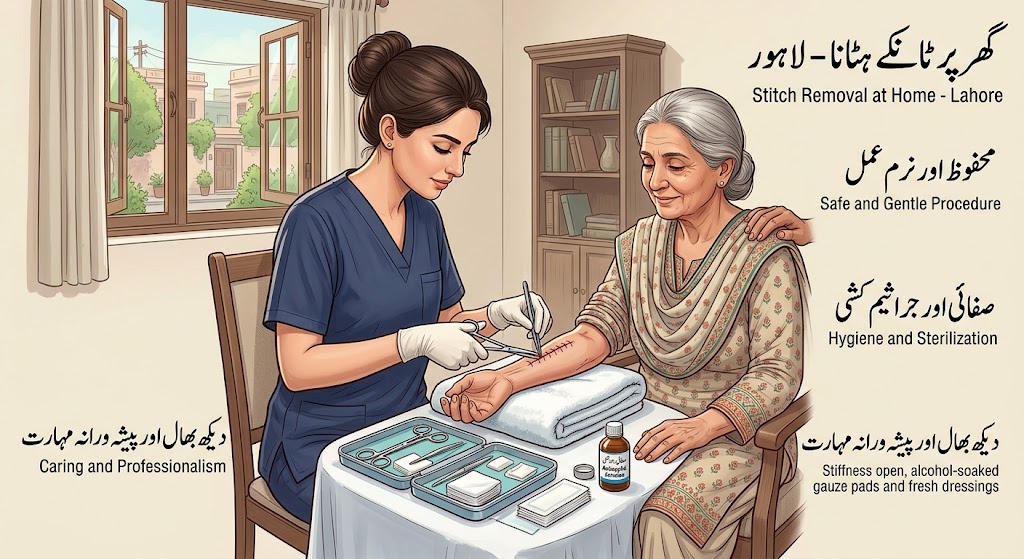
Removing stitches at the right time helps a wound heal properly and reduces the risk of infection, reopening, and scarring. With professional stitches removal at home in Lahore via InstaCare, patients can receive convenient nursing care without travelling to a clinic. An experienced healthcare professional can assess the wound, check for healing, and remove suitable stitches using appropriate techniques. This service is especially helpful for older adults, patients recovering from surgery, and people with limited mobility. However, stitches should never be removed simply because the wound looks healed. The correct timing depends on the wound’s location, depth, healing progress, and the advice of the treating clinician.
What Is Stitches Removal at Home?
Stitches removal at home is a healthcare service in which a qualified healthcare professional visits a patient’s home to remove sutures from a healing wound. The professional checks the wound, follows appropriate hygiene procedures, and removes the stitches when it is safe to do so. This service allows patients to receive care in a familiar and comfortable environment.
After surgery or an injury, doctors use stitches to hold the edges of a wound together while the body repairs the damaged tissue. Once the wound has healed sufficiently, the stitches may need to be removed. Some sutures dissolve naturally, while others require professional removal.
InstaCare helps patients looking for homecare services in Lahore access convenient healthcare support. Before arranging stitches removal, patients should confirm the service requirements and ensure that a qualified professional can assess their wound.
When Should You Get Your Stitches Removed?
The correct time for stitches removal depends on the wound’s location, the type of sutures used, and how well the skin has healed. Removing stitches too early can cause the wound to reopen, while leaving them in for too long may increase irritation, visible stitch marks, or difficulty during removal.
Typical removal times for non-dissolvable skin stitches are:
- Face: Usually 3–5 days.
- Scalp: Usually 7–10 days.
- Arms: Usually 7–10 days.
- Chest and abdomen: Usually 10–14 days.
- Legs: Usually 10–14 days.
- Hands and feet: Often 10–14 days, depending on the wound.
- Joints or high-tension areas: May require a longer period based on clinical assessment.
These timeframes are general guidelines, not a replacement for your doctor’s instructions. Your healthcare professional may recommend a different schedule based on your medical history and wound condition.
If you are unsure when to remove your stitches, arrange a professional assessment rather than attempting removal yourself.
Why Is Professional Stitches Removal Important?
Professional stitches removal helps ensure that the wound is ready and that the sutures can be removed safely. A healthcare professional can identify signs of delayed healing, infection, or wound separation before proceeding.
Here are the main reasons to choose professional care.
- Proper Wound Assessment
Before removing stitches, the healthcare professional checks whether the wound edges have joined and whether the skin appears sufficiently healed. If the wound has not closed properly, removing the stitches may lead to reopening or bleeding.
- Reduced Risk of Infection
Appropriate hand hygiene, clean equipment, and suitable wound-care practices help reduce the risk of contamination. A professional can also identify redness, swelling, discharge, or other warning signs that may require medical attention.
- Less Discomfort During Removal
Stitches removal usually causes little discomfort, although some patients may experience mild pulling or tenderness. Correct technique helps minimise unnecessary discomfort and reduces the chance of irritating the surrounding skin.
- Early Identification of Complications
A wound may appear normal at first but still have underlying healing problems. Professional assessment can help identify concerns that need further evaluation before the sutures are removed.
- Better Aftercare Guidance
After removing the stitches, a healthcare professional can explain how to keep the area clean, protect the healing skin, and recognise signs that require medical attention.
Who Can Benefit from Stitches Removal at Home in Lahore?
Home-based stitches removal can be useful for people who find travelling to a clinic difficult or uncomfortable. It allows patients to receive appropriate care without arranging transport or spending time in a waiting room.
This service may suit:
- Post-surgery patients: People recovering from minor or major procedures who need scheduled suture removal.
- Older adults: Patients who have difficulty walking, using stairs, or travelling independently.
- People with limited mobility: Individuals recovering from fractures, injuries, or other conditions that restrict movement.
- Busy families and professionals: People who prefer to arrange suitable healthcare appointments at home.
- Patients recovering from injuries: Individuals who need follow-up wound care after cuts or other injuries.
Not every wound is suitable for routine home removal. Patients with complicated surgical wounds, significant pain, suspected infection, or wound separation may need assessment at a clinic or hospital.
Signs Your Stitches May Need Medical Attention
Before removing stitches, it is important to recognise symptoms that could indicate infection or delayed healing. Removing sutures without addressing these problems may make the situation worse.
Contact a healthcare professional if you notice:
- Increasing redness or warmth around the wound.
- Swelling that is worsening rather than improving.
- Pus, cloudy discharge, or an unpleasant smell.
- Increasing pain or tenderness.
- Fever or chills.
- Wound edges that are separating.
- Bleeding that does not stop with gentle, direct pressure.
Seek urgent medical attention if the wound opens significantly, bleeding is heavy or persistent, or you develop severe symptoms. Do not wait for a scheduled homecare appointment when urgent assessment is needed.
A professional should evaluate the wound before deciding whether stitches can be removed safely. In some cases, the removal appointment may need to be postponed while the underlying issue is assessed or treated.
What Happens During a Home Stitches Removal Appointment?
Understanding the process can help patients feel more comfortable before their appointment. Although the exact steps depend on the wound and the sutures, professional removal generally follows a structured approach.
Step 1: Wound assessment
The healthcare professional examines the wound, checks the surrounding skin, and reviews any available instructions from the treating doctor.
Step 2: Hygiene and preparation
The professional follows appropriate hand hygiene and prepares suitable equipment. The wound area is examined and cleaned when necessary according to clinical guidance.
Step 3: Suture removal
Using an appropriate technique and suitable instruments, the professional removes the stitches carefully. If the wound begins to separate or another concern appears, the procedure may need to stop for further assessment.
Step 4: Post-removal inspection
After removal, the wound is checked to ensure that the edges remain together and that there are no obvious complications.
Step 5: Aftercare advice
The patient receives guidance on protecting the area, keeping it clean, and recognising warning signs. Adhesive wound-closure strips may be recommended in some cases to provide additional support.
How to Care for Your Wound After Stitches Removal
Removing the stitches does not mean the wound has regained its full strength. Newly healed skin can remain fragile, so proper aftercare is essential to reduce irritation and prevent the wound from reopening.
Follow the instructions provided by your healthcare professional and consider these general precautions:
- Keep the area clean and follow the recommended wound-care instructions.
- Avoid rubbing, scratching, or picking at the healing skin.
- Do not apply creams, antiseptics, or home remedies unless advised by a healthcare professional.
- Avoid heavy lifting, strenuous exercise, or movements that stretch the wound until your clinician says they are safe.
- Protect the area from friction and follow advice about dressings or adhesive strips.
- Avoid prolonged soaking if your clinician advises against it.
- Once the wound has fully closed, ask your healthcare professional about sun protection to help reduce visible scarring.
Watch for new redness, discharge, swelling, increasing pain, or separation of the wound edges. If these symptoms appear, seek medical advice promptly.
Why Choose InstaCare for Homecare Services in Lahore?
Finding suitable healthcare support can be challenging when you are recovering from surgery or managing a painful injury. Homecare services can make routine follow-up care easier to arrange, particularly for patients who prefer not to travel.
InstaCare is an option for people seeking convenient homecare services in Lahore. When arranging stitches removal, patients should confirm the availability of the service, the qualifications of the visiting healthcare professional, and whether their wound is appropriate for home treatment.
Professional homecare offers several practical advantages:
- Convenience: Receive care at home without making a separate trip to a clinic.
- Personal attention: Have your wound assessed during an individual appointment.
- Comfort: Recover in a familiar environment.
- Aftercare guidance: Learn how to protect the wound after the stitches are removed.
- Support for families: Make follow-up care easier for patients who need assistance with daily activities.
The priority should always be safe wound healing. Choose a service that follows appropriate clinical procedures and refers patients for further medical assessment when necessary.
Book Homecare Services in Lahore via InstaCare
If your stitches are due for removal, arranging professional care can help you avoid unnecessary discomfort and reduce the risk of complications. InstaCare can be a convenient starting point for exploring homecare services in Lahore and checking whether a suitable stitches removal appointment is available.
Before booking, keep your doctor’s instructions, surgery or injury date, wound location, and any current symptoms ready. Share these details when arranging your appointment so the healthcare professional can determine whether home removal is appropriate. If you have fever, pus, severe pain, heavy bleeding, or an opening wound, seek prompt medical assessment instead of waiting for a routine visit.
Choose professional care, follow your clinician’s instructions, and give your wound the attention it needs to heal properly.
Conclusion
Safe stitches removal is an important part of recovery after surgery or an injury. Removing sutures at the correct time, checking the wound carefully, and following appropriate aftercare can help prevent avoidable complications. Although home removal offers convenience, it should always be performed by a qualified healthcare professional when the wound is suitable for the procedure. If you need stitches removal at home in Lahore, consider InstaCare to explore available homecare options and arrange an appropriate assessment. Your wound’s healing progress should always determine when and how the stitches are removed.
Frequently Asked Questions (FAQs)
- Can stitches be removed at home in Lahore?
Yes, stitches may be removed at home by a qualified healthcare professional when the wound is suitable for homecare. The professional should assess the wound first and follow the treating doctor’s instructions.
- How much time does stitches removal take?
Routine stitches removal often takes around 10–30 minutes, depending on the number of stitches, wound location, and condition of the skin. Assessment and aftercare may add to the appointment time.
- Is stitches removal painful?
Most patients experience mild pulling, pinching, or brief discomfort rather than significant pain. If the wound is very tender or the stitches appear embedded, the healthcare professional should assess the area before proceeding.
- What happens if stitches are removed too early?
Removing stitches too early may cause the wound edges to separate, leading to bleeding, delayed healing, or a need for additional treatment. Always follow the removal schedule recommended by your healthcare professional.
- How can I book stitches removal through InstaCare?
You can explore InstaCare’s homecare services and confirm whether stitches removal is available in your area of Lahore. Provide your wound location, procedure date, and doctor’s instructions when arranging an appointment.