



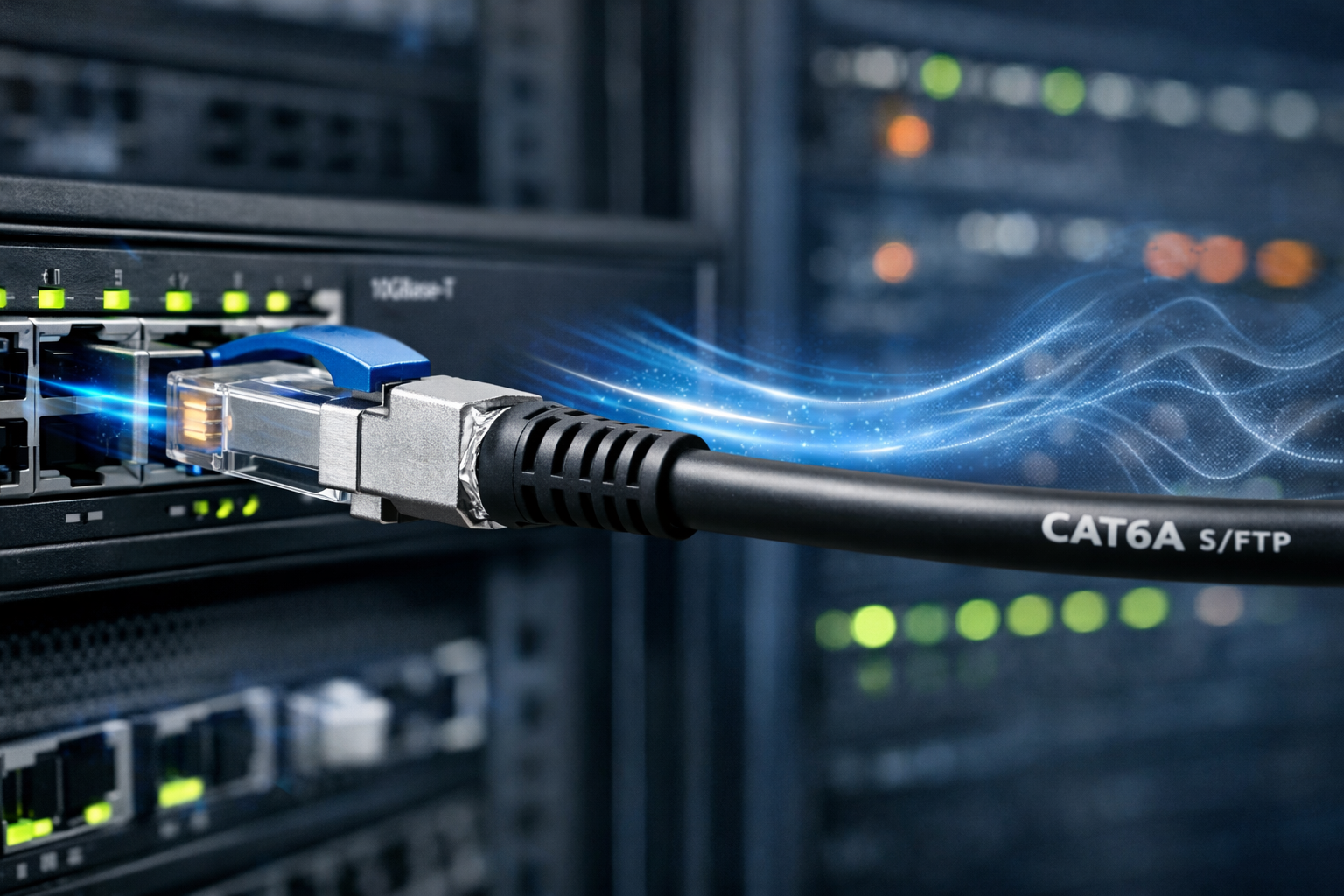
Reliable network connectivity is essential for modern businesses, data centers, offices, and industrial facilities. As organizations handle increasing amounts of digital information, they need networking infrastructure that supports high-speed data transmission and consistent performance. A shielded Cat6A Ethernet cable is an excellent option for environments where 10 Gigabit Ethernet connectivity and additional protection against electromagnetic interference (EMI) are important.
Across the USA, businesses depend on Ethernet networks for cloud computing, video conferencing, data transfers, security systems, and connected devices. Selecting the appropriate cable can help create a reliable foundation for these applications. TS Cables is a company to consider when exploring Ethernet cabling solutions for different networking requirements. Understanding the features, benefits, and applications of shielded Cat6A cable can help customers make informed purchasing decisions.
What Is Shielded Cat6A Ethernet Cable?
Shielded Cat6A Ethernet cable is a Category 6A networking cable designed to support high-speed data communication while providing additional protection against electromagnetic interference. Cat6A stands for Category 6 Augmented and is designed to support 10 Gigabit Ethernet over a channel length of up to 100 meters when the complete installation meets applicable specifications.
Cat6A cable provides a rated bandwidth of up to 500 MHz. Unlike standard Cat6, which may support 10 Gigabit Ethernet only over shorter distances depending on the installation, compliant Cat6A cabling is designed to support 10GBASE-T over the full 100-meter channel.
Shielded versions incorporate metallic shielding around the cable pairs or the complete group of pairs. Common constructions include F/UTP, which has an overall foil shield, and S/FTP, which uses individually foil-shielded pairs with an overall braided shield. The right construction depends on the installation environment and the level of interference protection required.
Key Benefits of Shielded Cat6A Ethernet Cable
1. Enhanced Electromagnetic Interference Protection
One of the most important advantages of shielded Cat6A Ethernet cable is its ability to help reduce the effects of electromagnetic interference. Nearby motors, generators, industrial machinery, and electrical systems can create noise that affects network cabling.
The metallic shielding helps reduce the impact of external interference when installed correctly with compatible components. This makes shielded Cat6A a practical choice for factories, manufacturing facilities, equipment rooms, and commercial environments with significant electrical activity.
However, shielding does not eliminate all interference under every condition. Correct cable routing, suitable connectors, and proper bonding practices remain essential.
2. High-Speed 10 Gigabit Ethernet Performance
Modern businesses require fast connections to support large file transfers, cloud-based software, high-resolution video, and data-intensive applications. Cat6A is designed to support 10 Gigabit Ethernet over a compliant channel of up to 100 meters.
The combination of appropriate cable construction and correct installation helps establish a reliable network foundation. Shielding can be especially beneficial where electromagnetic interference is a concern, but it does not independently increase the cable’s rated speed.
3. Improved Signal Integrity
Signal integrity is important for dependable communication between computers, servers, switches, routers, and other network devices. Interference can contribute to transmission errors and reduced reliability in challenging environments.
Cat6A cable uses twisted-pair construction to control crosstalk. Shielded designs add metallic protection to help reduce external electromagnetic interference. When the cable is installed according to the manufacturer’s specifications, these features can support consistent data transmission.
4. Suitable for Demanding Networking Environments
Shielded Cat6A Ethernet cable can be useful in industrial facilities, commercial buildings, laboratories, and technical spaces where electrical equipment is present. It can also be considered for structured cabling systems that require 10 Gigabit Ethernet performance.
Choosing the right cable construction helps address the specific conditions of each project. A professional installer can assess whether shielding is necessary or whether unshielded Cat6A will provide sufficient performance.
Shielded Cat6A vs. Unshielded Cat6A
Understanding the difference between shielded and unshielded Cat6A cable helps customers select a suitable product.
Shielded Cat6A includes metallic shielding designed to reduce the effects of external electromagnetic interference. It may be more appropriate for industrial settings or installations with substantial electrical noise. However, shielded systems generally require compatible shielded connectors and appropriate grounding and bonding practices.
Unshielded Cat6A, commonly identified as U/UTP, does not include an additional metallic shield. It relies on twisted-pair construction and cable design to meet the Category 6A performance requirements. It is often easier to handle and install and may offer a lower overall installation cost.
Both compliant versions can support 10 Gigabit Ethernet over 100 meters and provide a rated bandwidth of up to 500 MHz. The main decision should be based on the installation environment, interference risks, budget, and technical requirements rather than speed alone.
Common Applications of Shielded Cat6A Ethernet Cable
Commercial Offices
Modern offices depend on fast network connections for computers, wireless access points, printers, IP phones, and collaborative applications. Shielded Cat6A may be useful in buildings where electrical interference is a concern.
Data Centers and Server Rooms
Data centers require organized, high-performance cabling to connect network equipment and support demanding data workloads. Cat6A provides a suitable option for 10 Gigabit Ethernet connections where copper cabling is appropriate.
Industrial Facilities
Manufacturing plants and workshops often contain motors, control systems, and heavy electrical equipment. Shielded cabling can help reduce the impact of electromagnetic interference in these environments when installed correctly.
Security and Surveillance Systems
IP cameras, access-control systems, and network video recorders rely on stable Ethernet connectivity. Shielded Cat6A can be considered for installations where cables run near equipment that produces electrical noise.
Educational and Healthcare Buildings
Schools, laboratories, and healthcare facilities use networks for communication, administration, and connected equipment. Choosing suitable cabling helps support dependable infrastructure while meeting the installation requirements of each building.
How to Choose the Right Shielded Cat6A Cable
Before purchasing shielded Cat6A Ethernet cable, consider the following factors.
Cable construction: Review the shielding type, such as F/UTP or S/FTP, and determine which design best suits the expected interference levels.
Conductor material: Solid copper conductors are generally preferred for permanent building cabling. Confirm the conductor specifications and avoid relying on category labels alone.
Cable length: A compliant Ethernet channel supports up to 100 meters, including the permanent link and patch cords, when installed according to the applicable standards.
Jacket rating: In the USA, CMP-rated cable is intended for qualifying plenum spaces, while CMR-rated cable is designed for qualifying riser applications. The appropriate rating depends on the installation location and applicable building codes.
Connector compatibility: Shielded cables require compatible connectors and properly designed shielding and bonding arrangements.
Documentation: Check product specifications and relevant compliance information before making a purchasing decision. These details help confirm that the cable meets the project’s performance and safety requirements.
Installation and Maintenance Best Practices
Proper installation is essential for achieving the expected performance of shielded Cat6A Ethernet cable. Avoid excessive bending, crushing, and pulling tension, as these can damage the cable and affect its transmission characteristics.
Use compatible shielded connectors and follow the manufacturer’s instructions for grounding and bonding. The shielding system must be installed correctly to deliver its intended benefits. Metallic cable shielding should not be treated as a replacement for proper electrical grounding.
Maintain appropriate separation from power wiring where required, and organize cables to prevent unnecessary strain or damage. After installation, use suitable testing equipment to verify that the completed cabling meets the required performance specifications.
Clear cable labeling and accurate installation records also simplify troubleshooting, maintenance, and future network upgrades.
Why Consider TS Cables in the USA?
Selecting a suitable supplier is an important step when planning a networking project. TS Cables is a company customers can consider when researching Ethernet cabling solutions for commercial, residential, and industrial applications in the USA.
Before choosing a product, customers should review its shielding construction, conductor material, jacket rating, cable specifications, and compliance documentation. Comparing these details helps ensure that the selected cable matches the intended application.
Whether an organization is upgrading its office network, expanding its infrastructure, or installing connections in an industrial environment, choosing appropriate cabling can help support long-term network reliability.
Conclusion
Shielded Cat6A Ethernet cable offers high-speed networking capability with additional protection against electromagnetic interference. With support for 10 Gigabit Ethernet over a compliant 100-meter channel and a rated bandwidth of up to 500 MHz, it is suitable for demanding commercial and industrial networking applications.
Its shielding can be especially valuable in electrically noisy environments, but proper installation, compatible connectors, and appropriate grounding and bonding practices are essential. Unshielded Cat6A may remain a suitable and cost-effective choice for installations with lower interference risks.
For networking projects across the USA, TS Cables is an option to explore when researching Ethernet cabling products. By evaluating installation conditions and comparing product specifications, businesses and network professionals can choose a shielded Cat6A Ethernet cable that supports reliable connectivity and future network growth.