






Keeping track of your health can become difficult when everyday life gets busy. Between work, family responsibilities, doctor appointments, and regular medication, it is easy to forget small but important details. You might remember taking your medicine yesterday but struggle to recall your blood pressure reading from last week.
This is one reason digital health tools are becoming more popular. People want simple ways to organize their health information without depending entirely on notebooks, loose papers, or memory. With the right tools, managing personal health at home can become a little easier and more organized.
Why Tracking Your Health at Home Matters
Many people only pay attention to their health when something feels wrong. However, keeping a regular record of certain health measurements can help people understand changes over time. It can also make conversations with healthcare professionals more productive.
For example, someone monitoring their blood pressure may benefit from recording readings at consistent times. A person managing diabetes may need to keep track of glucose readings alongside other information recommended by their healthcare provider.
A home health monitoring app can help bring these records together in one convenient place. Instead of searching through different notebooks or phone notes, users can review their information whenever they need it.
The goal is not to diagnose health problems independently. It is to maintain organized records that support better communication with qualified healthcare professionals.
Making Daily Health Tracking Easier With Digital Tools
Traditional health records can work well, but they are not always convenient. Paper notes can get misplaced, and remembering to record every reading takes effort. Digital tools offer another option for people who want to keep their information organized.
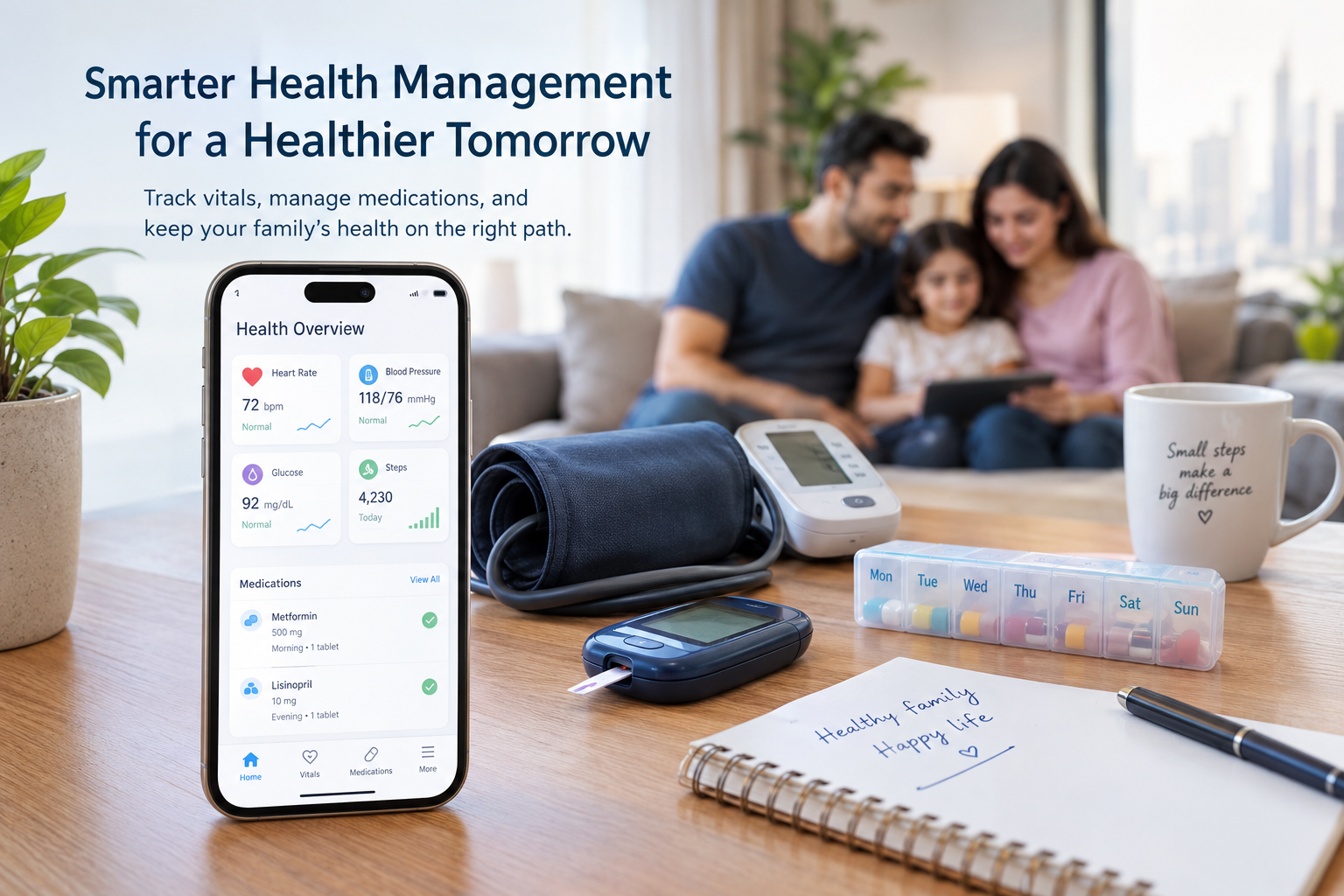
A health vitals log app can provide a practical place to record measurements such as blood pressure, heart rate, temperature, and other relevant health information, depending on the app’s features.
Similarly, a track vital signs app can help users review previous entries and notice patterns that might otherwise be difficult to remember. Having a history of readings can be especially useful when preparing for a medical appointment.
Consistency matters more than complexity. A simple routine that takes a few minutes each day is often easier to maintain than a complicated tracking system that becomes another daily burden.
What Information Should You Record?
The information you track will depend on your individual needs and your healthcare provider’s advice. Some people may need to monitor blood pressure, while others may need to record glucose levels or medication use.
It can help to include the date, time, and any relevant notes alongside each measurement. This gives the information more context when reviewing it later.
Remember that a single reading does not always tell the whole story. Measurements can vary for different reasons, so it is best to follow proper measurement instructions and discuss concerning results with a healthcare professional.
Managing Blood Pressure and Glucose Records
Blood pressure and blood glucose are two measurements that many people need to monitor as part of an ongoing care plan. Keeping these records organized can reduce the effort involved in remembering previous readings.
A blood pressure tracker app can help users enter their readings and review changes over time. This may be useful for people who have been advised to monitor their blood pressure at home.
For those who need to monitor both measurements, a glucose and blood pressure tracker can offer a convenient way to keep related records together, provided the selected tool supports both functions.
It is important to use reliable measuring devices and follow the instructions provided by healthcare professionals. An app can store and organize the numbers, but it should not replace medical advice or determine treatment changes on its own.
If readings are repeatedly outside the range recommended by your healthcare provider, share the records with them. Seek urgent medical assistance when readings or symptoms indicate a possible emergency.
Remembering Medication Without Adding More Stress
Medication routines can be challenging, particularly when prescriptions involve different doses or times of day. A busy morning, a change in routine, or an unexpected appointment can easily disrupt a person’s schedule.
A medication schedule app can help users organize medication names, instructions, and planned times. Depending on its features, it may also provide notifications to help people remember their routine.
For households supporting older relatives or family members with ongoing health needs, a pill reminder app for family can be particularly useful. It can make it easier to coordinate reminders and understand which tasks still need attention.
However, reminders are only helpful when the medication information is entered correctly. Always follow the prescription label and your healthcare provider’s instructions. Do not change a dose or stop taking prescribed medication simply because an app suggests something different.
Why Refill Reminders Can Be Helpful
Running out of medication can create unnecessary stress. Sometimes, the problem is not remembering to take a dose but forgetting to request the next supply before the current one runs out.
A refill reminder app can help users keep an eye on their medication supply and plan ahead. This can be useful when a prescription requires a pharmacy visit, a renewal request, or an appointment with a healthcare provider.
It is still important to check the actual supply and allow enough time for prescription renewals. App notifications may be missed, and refill availability can vary between medications and pharmacies.
Keeping Family Health Information Organized
Health management often involves more than one person. Parents may keep records for their children, adult children may help an older parent manage appointments, and partners may share household responsibilities related to care.
Trying to manage all these details through separate notes and messages can become confusing.
A family health records app can help bring important information into one organized system when it supports multiple profiles and the appropriate privacy controls. Depending on the tool, families may be able to maintain separate records, review relevant measurements, and keep track of medication schedules.
For people who need to track medications for multiple people, clear separation between individual profiles is especially important. Each person’s medication list, dosage instructions, reminders, and refill dates should be checked carefully to avoid confusion.
Privacy also deserves attention. Before sharing access to health records, review the app’s security and permission settings. Only give access to people who genuinely need the information, and make sure everyone involved understands how the records are being used.
Choosing a Health App That Fits Your Routine
The best health app is not necessarily the one with the most features. It is the one that fits your needs and is easy enough to use regularly.
Before choosing a tool, consider what you actually need to manage. If your main priority is recording blood pressure, look for straightforward entry and history features. If medication is the bigger concern, check whether the app supports schedules and reminders. Families may need separate profiles and practical ways to organize each person’s information.
It is also worth checking whether information can be exported or shared with a healthcare professional. Clear privacy information, reliable notifications, and a simple interface can make a meaningful difference in everyday use.
Medkeep is one option to explore for people interested in organizing personal health information and medication routines. You can learn more about its available features at https://medkeep.app/. Before relying on any health tool, check that its current features match your particular needs.
Building a Healthier Routine One Step at a Time
Managing health at home does not have to mean tracking every possible measurement or constantly checking your phone. Often, a few consistent habits are enough to make daily routines more manageable.
You might start by recording measurements recommended by your healthcare provider, setting reminders for prescribed medication, or organizing information before an upcoming appointment. Once these habits become familiar, you can decide whether additional tracking would be useful.
Digital tools can support these efforts by making records easier to access and routines easier to follow. Still, they work best alongside professional medical guidance, reliable measuring devices, and open communication with healthcare providers.
The real benefit of organized health tracking is peace of mind. When information is easier to find and daily tasks are less likely to be forgotten, it becomes simpler to focus on the things that matter most: looking after yourself and supporting the people you care about.
A small amount of organization today can make tomorrow’s health routine feel much more manageable.