




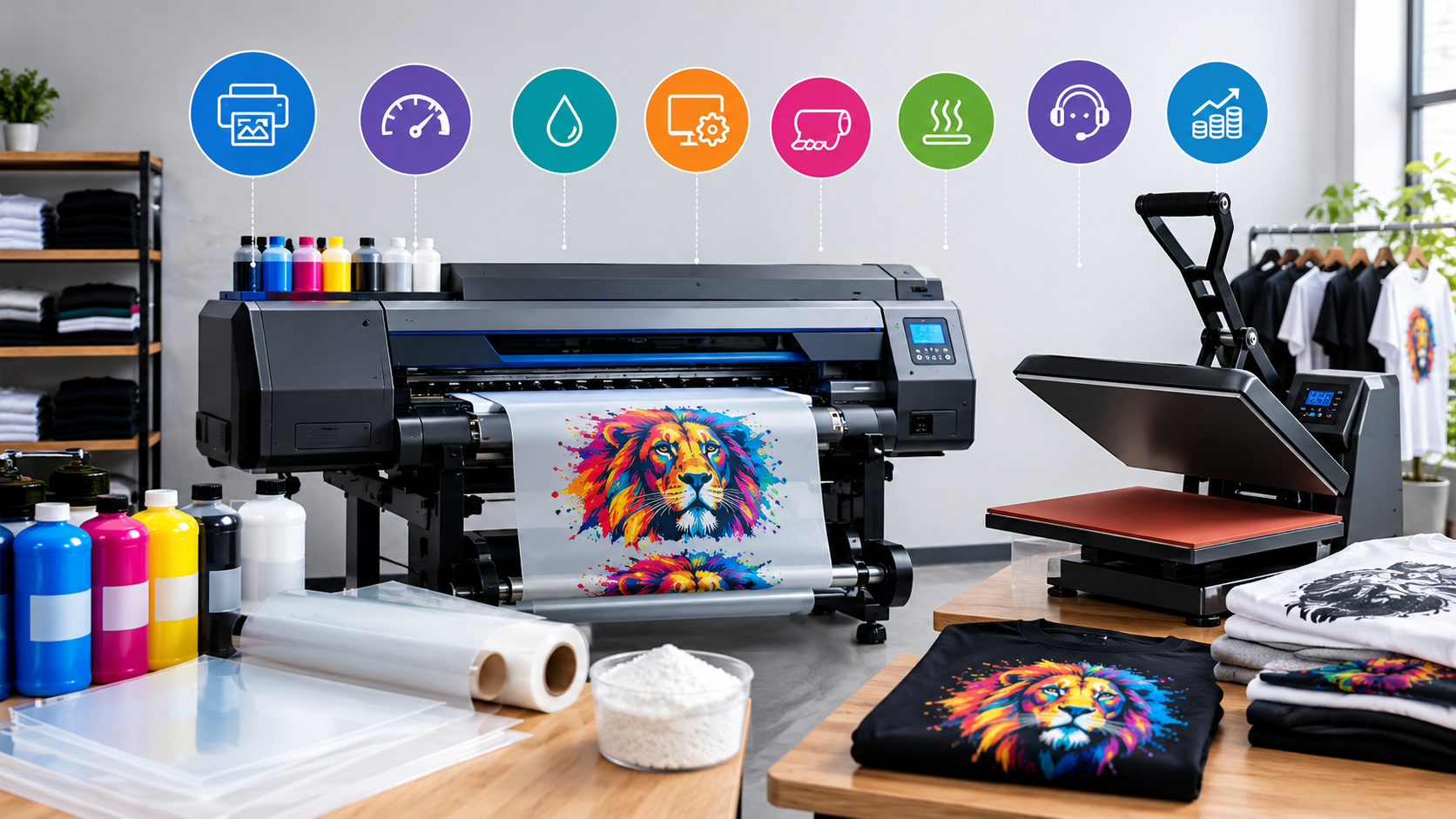
Buying a professional printing machine is a significant decision for any apparel business. Whether you run a small custom T-shirt shop or manage a growing garment printing operation, the equipment you choose affects print quality, production speed, operating costs, and the number of orders you can handle each day.
The challenge is that two machines can look similar on paper but perform very differently in a working print shop. One might produce excellent results for occasional orders, while another is better suited to longer production runs. Before investing, it helps to understand which features genuinely matter and which ones may not be necessary for your business.
Businesses exploring direct to film printers from DTG PRO can compare different equipment options based on their production requirements, available workspace, and future growth plans. The goal is not simply to buy the most expensive machine. It is to find equipment that fits the way your business actually operates.
1. Print Quality and Color Accuracy
Print quality should be one of your first considerations. Customers expect apparel designs to look sharp, with vibrant colors, clean edges, and clear details. Poor output can lead to rejected orders, wasted garments, and unnecessary production costs.
Look for a machine that can reproduce fine lines, small lettering, gradients, and detailed artwork consistently. If your customers order photographic designs or colorful graphics, ask the supplier about color management and the results you can expect from different print settings.
It is also worth requesting a sample print before making a purchase. Examine the details closely and check how the finished transfer looks after application to a garment. A demonstration gives you a more realistic understanding of performance than a specification sheet alone.
2. Printhead Technology and Production Speed
The printhead plays a major role in determining how a machine performs. Different printhead configurations offer different combinations of speed, resolution, and operating costs.
When comparing models, consider the following:
-
Printhead configuration: Check the number and type of printheads installed.
-
Production speed: Ask how quickly the machine handles real jobs at practical quality settings.
-
Consistency: Find out whether the system maintains stable output during longer production sessions.
-
Replacement costs: Understand the price and availability of replacement components.
Some manufacturers advertise impressive maximum speeds, but those figures may reflect particular operating modes rather than everyday production. Ask for realistic output estimates based on the type of designs and transfer sizes you expect to print.
3. Reliable White Ink Management
White ink is particularly important in direct-to-film production because it provides the foundation for vibrant designs on dark or colored garments. However, white ink can settle when left unmanaged, potentially contributing to clogged nozzles and inconsistent output.
A professional system should have clearly documented white ink maintenance procedures. Depending on the model, useful features may include ink circulation, agitation, and monitoring systems designed to help maintain ink consistency.
Even with these features, regular maintenance remains essential. Ask the supplier how often the machine requires cleaning, what daily care involves, and which maintenance tasks operators must perform manually.
Understanding these requirements before purchasing can help you avoid unexpected downtime.
4. Software That Fits Your Workflow
Printing equipment is only one part of the production process. RIP software helps prepare artwork, manage colors, control print settings, and organize jobs.
Choose software that supports the file formats you commonly use and provides the controls your business needs. Useful features may include:
-
Color adjustment and profiling
-
White ink management
-
Image positioning and layout tools
-
Job queue management
-
Compatible operating systems
Ease of use matters, too. If several employees will operate the equipment, a straightforward interface can reduce training time and help prevent avoidable mistakes.
Before buying, confirm whether the software license is included, whether updates cost extra, and whether your computer meets the required specifications.
5. Film Handling and Production Capacity
Film feeding can make a noticeable difference to daily productivity. A system designed for roll media may suit businesses handling repeated jobs, while a different configuration might be sufficient for smaller batches.
Consider the width of the media supported, loading procedures, and how easily operators can align the film. If you anticipate larger orders, ask whether the machine can maintain consistent feeding throughout extended production sessions.
Think about your actual order patterns rather than choosing capacity based on assumptions. A compact setup may be more practical for a startup, while an established print shop may benefit from a wider production system.
6. Curing Equipment and Heat Transfer Compatibility
Printing the design onto film is only one stage of the process. The adhesive powder must be cured correctly, and the finished transfer must be applied to the garment using appropriate heat and pressure.
Depending on the system, curing may involve a separate oven or an integrated solution. Evaluate the equipment’s temperature control, capacity, ventilation requirements, and compatibility with your production workflow.
A suitable heat press is equally important. Consistent temperature and pressure help achieve dependable adhesion, although the correct settings vary with the materials and transfer instructions.
Ask the supplier to explain the complete workflow, including curing, pressing, and any finishing steps. This will help you budget for the equipment you need beyond the printer itself.
7. Maintenance, Technical Support, and Warranty
A machine that produces excellent prints but remains out of service for days can create serious problems for a business. Support availability should therefore be part of your purchasing decision.
Before committing, ask these questions:
-
What warranty coverage is included?
-
Are replacement parts readily available?
-
Is remote or telephone technical support offered?
-
Does the purchase include installation or onboarding?
-
Are training materials available for new operators?
Also, request a clear maintenance schedule and an estimate of common consumable and service costs. These details help you calculate the real cost of ownership rather than focusing exclusively on the initial purchase price.
8. Operating Costs and Room for Growth
A professional machine should make financial sense over time. Calculate your expected expenses for ink, film, powder, electricity, maintenance, labor, and rejected prints.
Next, estimate how many orders you expect to process each week. Compare that figure with the machine’s realistic production capacity and consider whether demand may increase over the next few years.
When comparing DTF Printers, avoid assuming that a higher purchase price automatically guarantees better value. The right choice depends on output quality, reliability, service requirements, and how well the machine matches your workload.
A simple cost-per-order estimate can help you compare different models and set prices that protect your margins.
Conclusion
Choosing professional printing equipment requires more than comparing prices or advertised speeds. Print quality, white ink management, software, film handling, curing equipment, maintenance, and technical support all influence how well a system performs in everyday production.
Take time to assess your current order volume, workspace, budget, and plans for expansion. Request sample prints, clarify warranty terms, and make sure you understand the complete production setup before investing. By comparing these practical factors, you can select equipment that supports reliable output and sustainable business growth. For businesses researching professional apparel printing equipment, direct to film printers from DTG PRO offer a starting point for exploring available solutions and identifying a setup that aligns with their production goals.