





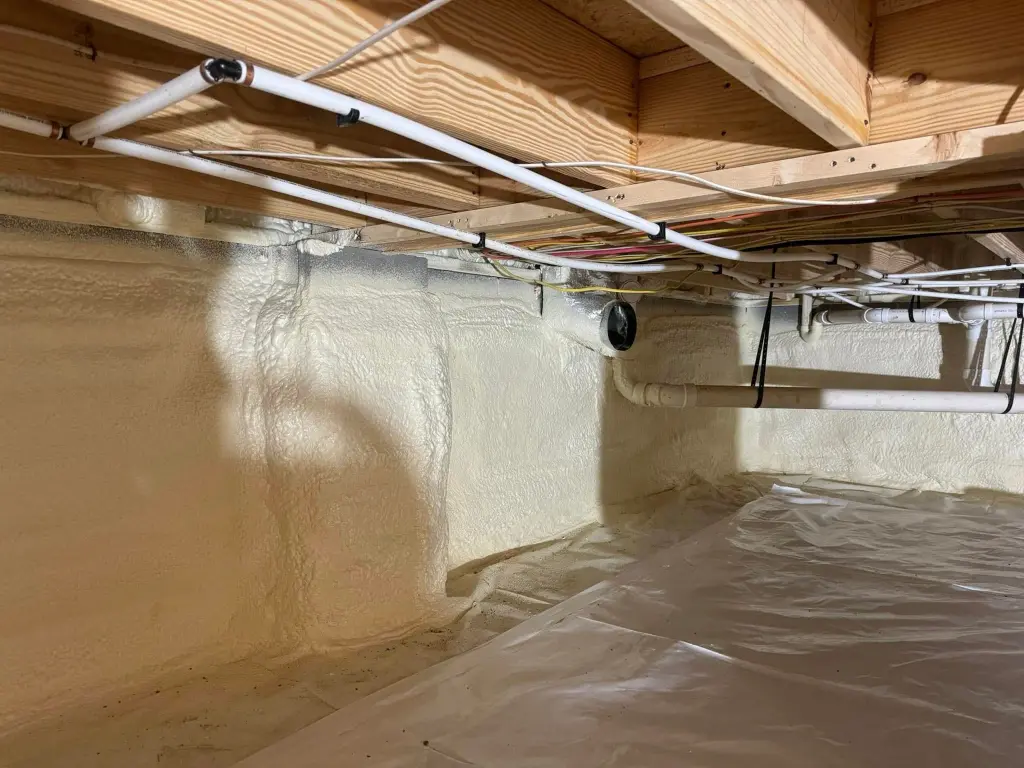
The best crawl space insulation company in Troy, NC, is one that assesses the home’s condition, identifies moisture concerns, and recommends a suitable insulation system. Spray Foam Pro offers crawl space insulation and residential insulation services for homeowners looking to improve comfort and reduce unwanted heat transfer. The right solution depends on the existing insulation, foundation design, moisture conditions, and installation area.
This guide explains what to look for in a crawl space insulation company, compares common materials, and covers moisture control, R-value, local weather, and questions to ask before hiring a contractor.
What Should Homeowners Look for in a Crawl Space Insulation Company?
A reliable contractor should look beyond the insulation itself. A proper assessment helps identify whether the home needs new insulation, air sealing, moisture control, or a combination of these measures.
When comparing local crawl space insulation companies, homeowners should look for:
- A clear inspection process: The contractor should check existing insulation, floor joists, foundation walls, and visible signs of water damage.
- Suitable material recommendations: The proposed insulation should match the crawl space design and intended location.
- Moisture awareness: Standing water, leaks, and drainage issues should be addressed before insulation work begins.
- A written estimate: The proposal should explain the materials, installation areas, preparation work, and any additional services.
The Building America Solution Center’s crawl space guidance explains why the insulation plan must fit the building assembly and why moisture problems need attention first.

Benefits of Professional Crawl Space Insulation
Correctly installed insulation can help reduce heat transfer between the home and the crawl space. Its performance depends on proper coverage, air sealing, and control of moisture sources.
- Improved comfort: Insulating the right surfaces can help reduce cold floors and temperature changes in rooms above the crawl space.
- Reduced air leakage: Suitable spray foam systems can seal gaps around framing and penetrations when correctly installed.
- Better moisture management: Insulation combined with appropriate drainage and ground moisture control can help protect building materials.
- Potential energy savings: Less unwanted heat transfer may reduce heating and cooling demand, depending on the home and HVAC system.
Insulation alone will not fix plumbing leaks, standing water, or poor drainage. Those problems require separate attention.
Comparing Crawl Space Insulation Options
Different materials suit different crawl space designs. The main decision is often whether insulation belongs beneath the floor or along the foundation walls.
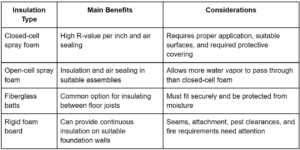
Spray Foam Pro offers open-cell spray foam, closed-cell spray foam, and fiberglass insulation. The best option depends on the home’s layout and the contractor’s proposed insulation strategy.
Advantages and Limitations of Crawl Space Insulation
Crawl space insulation can improve thermal performance, but results depend on the condition of the structure and the quality of the installation.
Advantages
- Better indoor comfort: Proper insulation and air sealing can help limit drafts and cold floors.
- Flexible installation options: Materials can be selected for floor joists or suitable foundation-wall assemblies.
- Support for building protection: Addressing moisture before installation can help reduce the risk of damage to insulation and nearby materials.
Limitations
- Preparation may be required: Wet insulation, standing water, and damaged framing need attention first.
- Access can affect the work: Low clearance, pipes, and wiring may make installation more difficult.
- Safety rules apply: Insulation must be installed according to product instructions and applicable building codes.
Common Crawl Space Problems and Solutions
Some crawl space problems may appear to be insulation failures but have another cause. Identifying the source helps determine the work needed.
- Sagging or missing insulation: Loose batts can leave gaps beneath the floor and may need repair or replacement.
- Musty odors or damp materials: These can indicate ground moisture, condensation, or leaks that require investigation.
- Water near the foundation: Poor grading or drainage can allow water into the crawl space. Water entry should be corrected before insulation.
- Drafts around openings: Gaps around pipes, wiring, and rim joists may need suitable air sealing.
The Building America Solution Center’s water-management guidance recommends correcting water intrusion and moisture problems before sealing and insulating a crawl space.
How Troy, NC, Weather Affects Crawl Space Insulation
Troy’s humid periods, seasonal rainfall, and cooler winter weather make moisture management an important part of crawl space planning. Rainwater can collect near the foundation, while warm, humid air entering a cooler crawl space can contribute to condensation.
Before installation, homeowners should check gutters, downspouts, drainage, plumbing, and exposed soil. A ground vapor barrier or humidity-control system may also be appropriate, depending on the crawl space design.
There is no single best season for every project. The crawl space should be properly assessed and prepared, and the materials must be installed under suitable conditions.

Understanding R-Value and Insulation Performance
R-value measures how well insulation resists heat flow. A higher R-value generally means greater resistance, but gaps, compression, moisture, and poor installation can reduce overall performance.
Fiberglass batts need full, secure coverage between floor joists. Spray foam must be applied at the specified thickness to suitable surfaces.
The North Carolina Residential Code’s energy-efficiency chapter outlines insulation requirements for different building assemblies. Homeowners should confirm the requirements that apply to their project with local code officials.
Why Consider Spray Foam Pro?
Spray Foam Pro provides crawl space insulation and other residential insulation services in Troy, NC. Its available options include open-cell spray foam, closed-cell spray foam, and fiberglass insulation.
Before choosing a contractor, homeowners should compare the proposed material, installation location, preparation work, moisture-control needs, and cleanup. A clear written estimate helps show what the project includes and makes it easier to compare providers.
Conclusion
Choosing the right crawl space insulation company means finding a contractor who considers the home’s structure, insulation needs, and moisture conditions before recommending a solution. Proper material selection and installation can help improve comfort and reduce heat transfer. Homeowners in Troy, NC, should compare project details and ensure moisture problems are addressed before work begins.
Contact Spray Foam Pro
Homeowners seeking crawl space insulation services in Troy, NC, can contact Spray Foam Pro to discuss their property’s needs and request project information.
- Email: sales@sprayfoamprollc.com
- Phone: (910) 606-6247
Frequently Asked Questions
Can Crawl Space Insulation Attract Pests?
Insulation does not automatically attract pests, but rodents and insects may nest in some materials or enter through gaps. Sealing suitable openings and addressing pest activity can help protect the crawl space.
How Long Does Crawl Space Insulation Installation Take?
Many projects take a day or longer, depending on crawl space size, access, material choice, and preparation needs. Moisture damage or old insulation removal can extend the timeline.
Can Crawl Space Insulation Help Reduce Musty Smells?
It may help when odors are linked to damp conditions, but insulation alone will not eliminate the source. Leaks, wet soil, mold, and poor drainage should be investigated and addressed.
How Can Homeowners Tell If Crawl Space Insulation Is Failing?
Warning signs include sagging or missing insulation, cold floors, drafts, damp materials, and rising energy bills. A crawl space inspection can help identify the cause.
Author & Reviewer
Author: I’m Jacob Wilberg, and I have been in the insulation business for three years. I started by earning my certification through SPI and later worked for a large company in Raleigh. Over time, I saw jobs being sold incorrectly, which led to warranty problems for homeowners. I decided to start my own company to provide better experiences and avoid the issues I had seen with big-box stores. My company was established on August 10, 2025. I also recently earned my Master Insulation Installer certification through PCP, reinforcing my commitment to proper installation.
Reviewer: Maria Lopez reviewed the article and brought 12 years of insulation industry experience to improve the guidance. Practical tips were added, and the content was made clearer and more useful for contractors working in the field every day.