






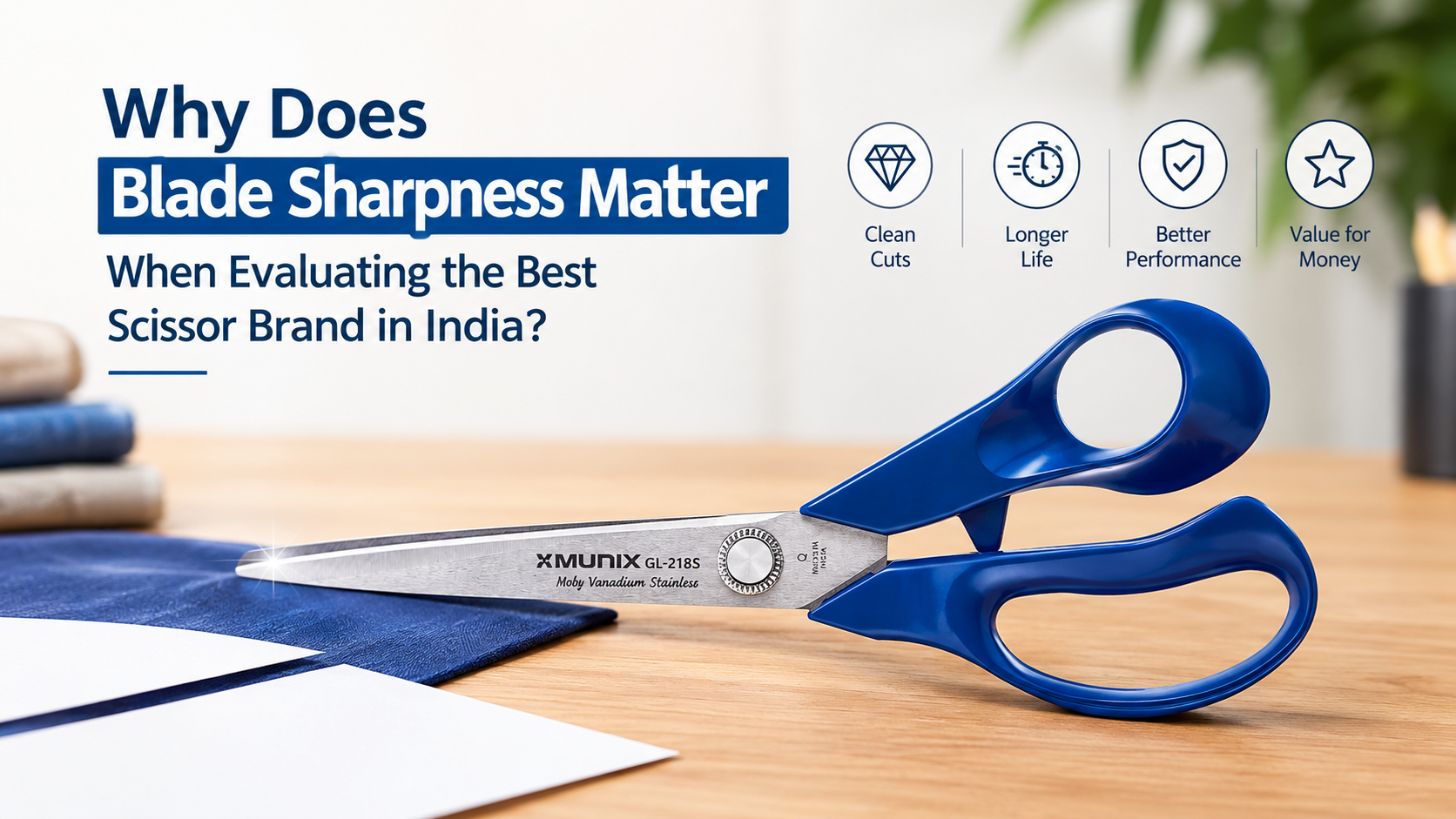
Choosing scissors involves more than comparing appearance, handle design, or price. Blade sharpness is one of the most important factors affecting cutting accuracy, consistency, comfort, and overall performance. Whether scissors are used for tailoring, crafts, office tasks, personal grooming, or household activities, the condition and design of the blades influence how effectively they perform.
In India, scissors are available in different materials, sizes, blade configurations, and designs. These differences make it important to understand what contributes to cutting performance before comparing products or manufacturers. For people evaluating the best scissor brand in India, blade sharpness provides a useful starting point, but it should always be considered alongside durability, blade alignment, handle comfort, and intended use.
For buyers and professionals in Ludhiana, understanding these features can help narrow down suitable options for personal, commercial, and workplace requirements. A pair of scissors designed for fabric cutting may not deliver the same results when used for grooming or paper crafts.
This guide explains how blade sharpness affects scissor performance, what influences it, how to identify common blade problems, and what buyers should examine before making a decision. It also discusses how to evaluate manufacturers, including Munix KGOC, using practical product-quality criteria rather than unsupported brand claims.
What Is Blade Sharpness in Scissors?
Blade sharpness refers to the condition of the cutting edge and its ability to separate material efficiently when the blades move against each other. A properly designed cutting edge helps scissors cut material cleanly without requiring excessive hand pressure.
However, sharpness alone does not determine performance. The blades must also meet correctly, maintain suitable tension, and have a design appropriate for the material being cut.
For example, scissors used for lightweight paper require different performance characteristics from scissors intended for thick fabric or professional grooming.
Three factors work together to influence cutting performance:
- Edge sharpness: Determines how effectively the cutting edge engages the material.
- Blade alignment: Helps the two blades meet correctly throughout the cutting movement.
- Blade tension: Keeps the blades in suitable contact without making them unnecessarily difficult to operate.
When these elements work together, scissors are more likely to produce consistent cuts with less effort.
Why Does Blade Sharpness Matter When Comparing Scissor Brands?
1. It Improves Cutting Accuracy
Sharp blades can engage material more effectively, helping users follow straight lines, curves, and detailed cutting patterns. This is particularly important in tailoring, paper crafts, and other applications where precision matters.
Dull blades may push or fold material before cutting through it. This can create uneven edges, especially when working with thin paper, delicate fabric, or small components.
When comparing scissor manufacturers, examine whether the product is designed for the required level of precision rather than assuming that every sharp blade will suit every task.
2. It Reduces Unnecessary Hand Pressure
Scissors with effective cutting edges generally require less force to cut suitable materials than scissors with worn or poorly finished edges.
Reduced effort can make repetitive cutting more comfortable, particularly for tailors, craft workers, office staff, and other people who use scissors regularly.
However, excessive resistance can also result from incorrect blade tension, unsuitable blade geometry, or material that exceeds the scissors’ intended capacity. Sharpening alone may not solve these problems.
3. It Helps Produce Cleaner Edges
A clean cut is important when appearance and finishing quality matter. In tailoring, uneven cuts can affect fabric preparation. In crafts, rough paper edges may reduce the quality of the finished project.
Blade sharpness contributes to cleaner results, but the material, cutting technique, and blade shape also influence the outcome.
For this reason, buyers should evaluate scissors according to their intended application instead of using a single sharpness standard for every product category.
4. It Supports Consistent Performance
Scissors should cut predictably from the beginning to the end of each movement. If the blades cut well near the tips but struggle around the middle, alignment, blade geometry, or tension may be contributing to the problem.
Consistent cutting performance is particularly useful in professional settings where repeated tasks must meet similar standards.
When evaluating the best scissor brand in India, buyers should consider how the blades perform across their working length, not merely whether the tips feel sharp.
What Factors Affect Scissor Blade Sharpness?
Blade Material and Hardness
Blade material influences edge retention, corrosion resistance, and maintenance requirements. Stainless steel is commonly used because it offers useful resistance to corrosion, although performance varies according to the steel grade, heat treatment, and manufacturing quality.
Hardness also matters. A suitable hardness level can help an edge retain its shape, but hardness alone does not guarantee a durable or effective cutting edge.
A buyer should therefore consider the complete blade construction rather than selecting scissors based only on a material label.
Blade Geometry and Grinding
The shape and angle of a cutting edge affect how the blades engage material. Different applications require different blade profiles and cutting characteristics.
For example, fabric scissors may be designed to support controlled cutting across textiles, while general-purpose scissors are intended for a wider range of everyday tasks.
The quality of edge grinding and finishing can also influence cutting smoothness. Poorly finished edges may produce inconsistent results even when the blades appear sharp.
Blade Alignment and Tension
The two blades must interact correctly for scissors to cut efficiently. If they are misaligned or too loose, material may fold, slip, or remain partially uncut.
Excessive tension can make the handles difficult to operate, increasing fatigue during repeated use.
A balanced mechanism is therefore just as important as edge sharpness when assessing overall quality.
Maintenance and Storage
Dirt, adhesive residue, moisture, and repeated contact with unsuitable materials can affect cutting performance. Dropping scissors or storing them without protection can also damage the cutting edges.
Basic maintenance includes cleaning the blades after use, drying them when necessary, keeping the pivot area in good condition, and storing scissors safely.
These practices help preserve performance, although damaged or worn blades may require professional servicing or replacement.
How Can You Check Whether Scissors Are Sharp Enough?
Before buying scissors, examine their construction and, where practical, test them on the material they are designed to cut.
Use this checklist:
- Inspect the cutting edges: Look for visible chips, dents, rust, or uneven finishing.
- Check the blade alignment: The blades should meet appropriately during the cutting movement.
- Test the intended material: Use paper, fabric, or another suitable material according to the product’s intended purpose.
- Observe the cutting action: Look for snagging, folding, tearing, or sections that remain uncut.
- Assess handle comfort: The handles should support a controlled grip without unnecessary strain.
- Check the pivot mechanism: Opening and closing should feel controlled, without excessive looseness or resistance.
- Review product specifications: Look for information about materials, intended use, maintenance, and warranty where available.
Avoid testing sharpness by running your fingers along the cutting edge. A practical cutting test is safer and provides more useful information about real-world performance.
How to Evaluate the Best Scissor Brand in India
The phrase best scissor brand in India can mean different things depending on the buyer’s requirements. A tailor, student, salon professional, and household user may need entirely different features.
A more reliable approach is to compare products against clear criteria.
Match the Scissors to the Application
Identify the primary task before comparing products.
- Tailoring: Consider fabric compatibility, blade length, cutting control, and edge consistency.
- Crafts: Look for precision, comfortable handling, and suitability for the materials being used.
- Office and household tasks: Evaluate versatility, ease of use, and routine maintenance.
- Personal grooming: Choose scissors specifically designed for the intended grooming task, with appropriate control and construction.
Scissors should not be used interchangeably when their designs and safety requirements differ.
Evaluate Product Quality, Not Just Brand Recognition
When assessing manufacturers such as Munix KGOC, buyers can use the same objective criteria applied to any scissor brand.
Consider available product specifications, blade material, intended application, construction quality, handling comfort, and maintenance guidance. Where possible, examine the actual product and review reliable information about its performance.
Do not assume that a manufacturer’s name alone establishes superior sharpness, durability, or precision. These qualities should be evaluated through verifiable product information and practical performance.
Consider Local Buying Requirements in Ludhiana
Ludhiana has a range of commercial and professional activities in which cutting tools may be used, including textile-related work, tailoring, education, and general business operations.
Local buyers should identify their application first and then compare suitable products through available retailers or suppliers. For frequent professional use, consistency, serviceability, and replacement options may matter as much as initial sharpness.
Checking product specifications before purchasing can help prevent choosing scissors that are unsuitable for the intended material.
Common Signs That Scissors Need Maintenance
Sharpness can decline gradually, so users may not immediately notice reduced performance.
Common warning signs include:
- Material folds or slips instead of being cut cleanly.
- The blades require noticeably more pressure.
- Cutting becomes inconsistent along the blade length.
- The pivot feels loose or excessively tight.
- Residue or corrosion appears on the blades.
First, clean the scissors and check the pivot mechanism according to the manufacturer’s instructions. If cutting remains poor, professional sharpening or repair may be appropriate.
Not every performance issue is caused by dullness. Damaged edges, poor alignment, and unsuitable blade design may require different solutions.
Conclusion
Blade sharpness is an important factor when evaluating scissors because it influences cutting accuracy, smoothness, consistency, and operating effort. However, a sharp edge alone does not guarantee reliable performance. Blade material, alignment, tension, handle design, and intended application must also be considered.
For buyers researching the best scissor brand in India, including those in Ludhiana comparing products from manufacturers such as Munix KGOC, a practical assessment is more useful than relying on brand claims alone.
Before making a decision, identify the material you need to cut, review the product specifications, and check how comfortably and consistently the scissors perform. This simple process can help you select a suitable tool for your everyday or professional requirements.
FAQs
1. Why is blade sharpness important when choosing scissors?
Blade sharpness helps determine cutting accuracy, smoothness, and the amount of force required. However, performance also depends on blade alignment, tension, material, and the intended application.
2. Does stainless steel guarantee sharper scissors?
No. Stainless steel can provide corrosion resistance, but sharpness depends on edge geometry, grinding, heat treatment, and manufacturing quality. Steel type alone cannot establish cutting performance.
3. How can I identify a suitable scissor brand in India?
Compare products based on intended use, blade construction, cutting consistency, handle comfort, durability, maintenance requirements, and reliable product information. Test the scissors on an appropriate material whenever possible.
4. Where should buyers in Ludhiana start when comparing scissors?
Start by identifying whether the scissors are needed for tailoring, crafts, office work, grooming, or household use. Then compare suitable products using their specifications, construction, and practical performance.
5. How often should scissors be sharpened?
There is no universal sharpening interval. Frequency depends on usage, material, maintenance, and blade condition. Sharpen scissors when their cutting performance declines and follow the manufacturer’s servicing recommendations.