







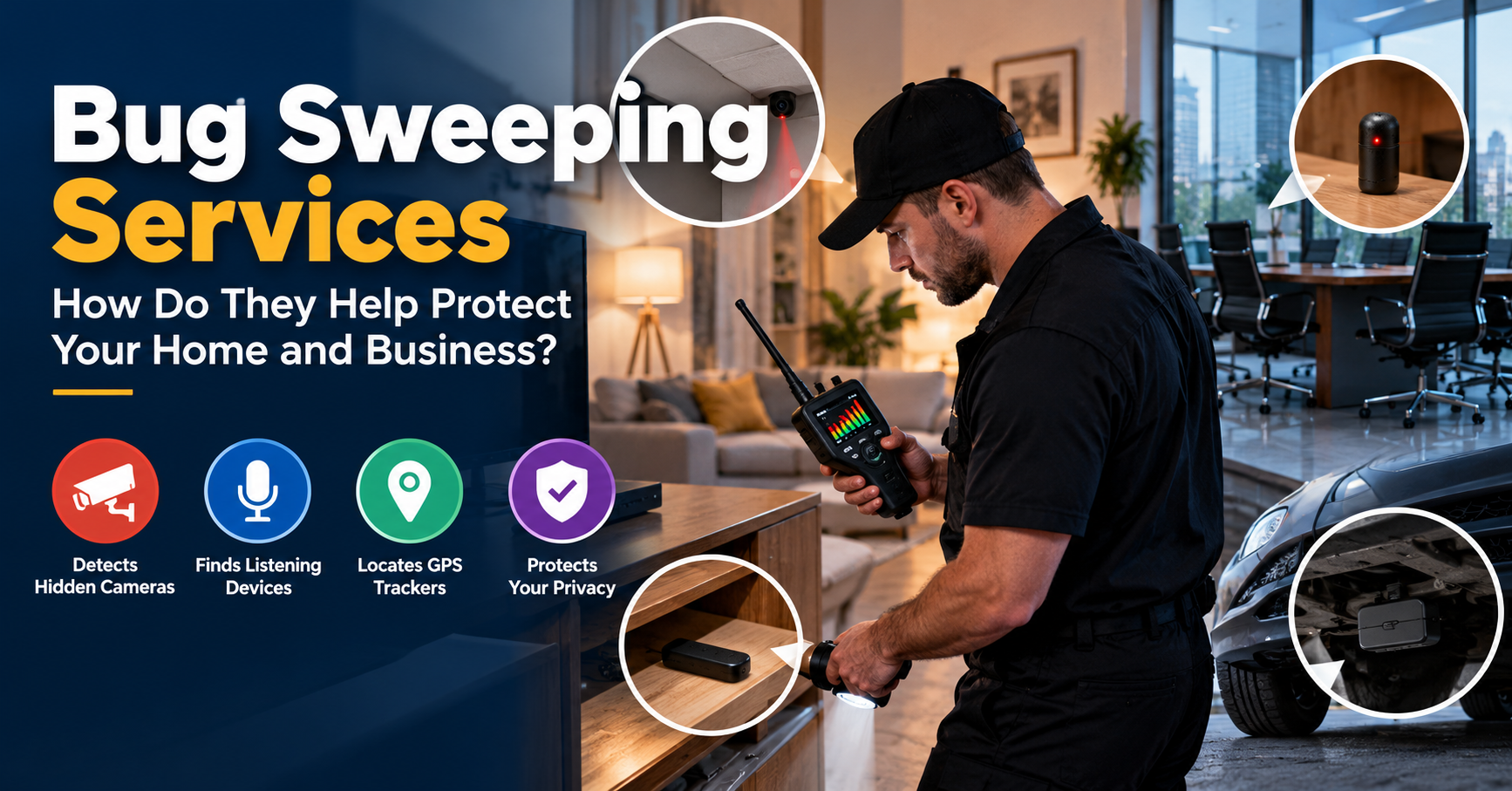
Privacy is important in both personal and professional life. However, hidden cameras, unauthorized audio recording devices, GPS trackers, and other surveillance equipment can create serious concerns when used without proper authorization. These devices may be difficult to identify because they can be concealed in everyday objects, vehicles, offices, and other private spaces.
Bug Sweeping Services help individuals and businesses investigate potential surveillance threats through specialized technical inspections. These services, also known as Technical Surveillance Countermeasures (TSCM), combine physical inspections and electronic detection methods to locate suspected hidden devices and assess possible security risks.
Whether you want to protect your family’s privacy or safeguard confidential business information, understanding professional surveillance detection can help you take informed steps toward improving your security.
What Are Professional Bug Sweeping Services?
Professional bug sweeping involves examining a property, vehicle, or communication system for signs of unauthorized electronic surveillance. Unlike ordinary security inspections, these assessments focus on identifying hidden listening devices, covert cameras, wireless transmitters, GPS trackers, and potentially compromised telephone equipment.
Ham Investigations provides TSCM inspections for residential and commercial environments, including services involving hidden cameras, audio devices, telephone systems, and vehicle tracking equipment.
The inspection process may involve specialized detection equipment, a physical examination of the area, and a review of suspicious devices or installations. The methods used depend on the location, the client’s concerns, and the type of surveillance threat being investigated.
A professional assessment can help establish whether a suspected threat exists instead of relying entirely on assumptions or consumer-grade detection tools.
How Surveillance Detection Helps Protect Your Home
Your home is a private space where you should feel comfortable discussing personal matters and spending time with family. Unauthorized surveillance can threaten that privacy and create uncertainty about the security of your surroundings.
1. Identify Hidden Cameras and Listening Devices
Covert cameras and audio recording equipment can sometimes be concealed in ordinary household objects or installed in areas where people expect privacy. Identifying these devices may require more than a visual examination.
A professional technician can inspect relevant areas and use suitable equipment to investigate potential surveillance devices. The purpose is to identify suspicious equipment, verify findings where possible, and help property owners understand the results.
2. Investigate Potential Privacy Violations
People may request a residential inspection when they have specific reasons to suspect unauthorized monitoring. These concerns can arise during difficult personal situations, disputes, stalking concerns, or other circumstances involving privacy and personal safety.
A professional inspection provides a structured way to investigate the physical environment. It can help determine whether identifiable surveillance equipment is present, although no inspection can guarantee that every possible threat will be discovered.
3. Check Vehicles for Unauthorized Tracking Devices
GPS trackers can potentially reveal information about a vehicle’s location and movements. When someone suspects unauthorized tracking, a specialized vehicle inspection can help examine relevant areas for tracking equipment.
Technicians may also investigate other items or locations identified by the client. If a suspicious device is found, professional guidance can help the client consider appropriate next steps without unnecessarily disturbing potential evidence.
4. Support Peace of Mind
Uncertainty about personal privacy can be stressful. A professional inspection provides an opportunity to investigate specific concerns using a structured process.
Clear findings and practical recommendations can help homeowners understand the condition of their environment and decide whether additional security measures are appropriate.
Why Businesses Need Professional Surveillance Detection
Businesses often handle confidential information, financial records, client details, and strategic plans. Unauthorized surveillance could expose sensitive discussions or information to people who should not have access to it.
Professional counter-surveillance assessments can help organizations investigate potential risks in areas where confidentiality is particularly important.
1. Protect Confidential Meetings
Boardrooms, executive offices, and conference rooms may be used to discuss business strategies, negotiations, contracts, and future plans. Unauthorized recording in these spaces could compromise confidential information.
A technical inspection can examine relevant areas for hidden cameras, audio recording equipment, wireless transmitters, and other suspicious devices. Organizations can consider periodic assessments based on their risk level and the sensitivity of their discussions.
2. Reduce the Risk of Corporate Espionage
Corporate espionage involves obtaining confidential business information through unauthorized or deceptive methods. In some cases, surveillance equipment may be used to gather information about product development, commercial negotiations, or internal operations.
Professional inspections can help investigate suspected electronic surveillance and support a broader information security strategy. Businesses should also maintain appropriate access controls, protect digital systems, and establish clear policies for handling confidential information.
3. Examine Telephone and Communication Systems
Businesses rely on communication systems to exchange sensitive information with employees, customers, suppliers, and professional partners. Concerns may involve traditional telephone equipment, internet-based phone systems, connected wiring, or related devices.
Depending on the service requested, a technical inspection may examine relevant equipment and connections for signs of unauthorized monitoring or compromise. This work should complement, rather than replace, appropriate cybersecurity assessments.
4. Protect Employees and Customers
Privacy is also important in changing rooms, restrooms, and other sensitive areas. Businesses and property managers have a responsibility to address credible concerns about unauthorized recording and protect people who use their facilities.
A professional inspection can help investigate suspected surveillance equipment and provide information about appropriate corrective measures. Organizations should also establish procedures for reporting concerns and responding to potential privacy incidents.
What Happens During a Professional TSCM Inspection?
The inspection process varies according to the property, the client’s concerns, and the type of equipment being investigated. However, a professional assessment generally involves several stages.
Initial Consultation
The process begins with a discussion about the location, the nature of the concern, and any relevant circumstances. This information helps the provider determine which areas or systems may require attention.
Physical Inspection
The technician examines the agreed-upon areas for suspicious devices, unusual installations, and other relevant physical indicators. The inspection may cover rooms, furniture, communication equipment, vehicles, or other locations within the agreed scope.
Electronic Detection
Specialized equipment may be used to investigate electronic signals and identify potential surveillance devices. The precise techniques depend on the suspected equipment and the conditions of the inspection.
Some devices may not transmit signals continuously, so signal detection alone is not sufficient for every situation. Physical inspection and other appropriate methods may also be necessary.
Findings and Recommendations
After the assessment, the provider explains the findings and any limitations. If a suspicious device is identified, the technician can discuss appropriate documentation, evidence preservation, and next steps.
The objective is to provide useful information that helps the client make informed security decisions.
How to Choose the Right TSCM Provider
Choosing a qualified provider is important because surveillance detection requires specialized knowledge, suitable equipment, and careful handling of sensitive information.
Review Experience and Training
Ask about the technician’s experience with residential, commercial, or vehicle inspections, depending on your needs. You should also confirm relevant qualifications, licensing requirements, and professional practices applicable to the location.
Understand the Inspection Process
A reliable provider should explain which areas will be inspected, what detection methods may be used, and what the final findings will include.
Ask whether the service covers physical inspections, electronic detection, telephone systems, or vehicle tracking devices. The scope should match your concerns.
Ask About Confidentiality
Surveillance concerns can involve personal relationships, sensitive business discussions, or legal matters. Before hiring a provider, ask how client information, inspection results, and any potential evidence will be handled.
Compare Services and Costs
Request a clear estimate based on the location, inspection scope, and complexity of the work. A residential inspection may differ considerably from a large commercial assessment or a review involving multiple vehicles and communication systems.
Compare the proposed services rather than choosing a provider on price alone.
What Should You Do If You Suspect Unauthorized Surveillance?
If you have a specific reason to believe that a room, vehicle, or communication system may be compromised, take a careful and measured approach.
- Document the circumstances that led to your concern.
- Avoid making accusations before the situation has been investigated.
- If you find a suspicious device, avoid handling or dismantling it unnecessarily.
- Contact a qualified professional using a communication method you reasonably believe is secure.
- If you believe you are in immediate danger, move to a safe location and contact the appropriate authorities.
- Ask the provider how potential evidence will be documented and preserved.
- Consider additional physical security or cybersecurity measures when recommended.
These steps can help you investigate a concern without unnecessarily disturbing a potential source of evidence or creating further security risks.
Frequently Asked Questions
What devices can a professional bug sweep detect?
Depending on the equipment and inspection scope, a TSCM assessment may investigate hidden cameras, audio recording devices, wireless transmitters, GPS trackers, Wi-Fi-connected surveillance equipment, and potentially compromised telephone systems.
Are residential and business inspections different?
Yes. Residential inspections generally focus on personal privacy, living spaces, and vehicles. Business assessments may place greater emphasis on executive offices, conference rooms, confidential discussions, communication equipment, and sensitive commercial environments.
Can a hidden device be detected if it is switched off?
Some specialized inspection methods may help identify devices that are not actively transmitting, but detection is not guaranteed. Results depend on the device’s design, power state, installation, and the methods available to the technician.
Are consumer detection apps enough?
Mobile applications may offer limited assistance in certain circumstances, but they cannot reliably identify every type of surveillance device. Professional equipment and trained inspection methods may be necessary when a thorough technical assessment is required.
When should I consider a professional inspection?
You may consider an inspection when you have a specific privacy concern, need to protect confidential business discussions, suspect unauthorized vehicle tracking, or want to investigate potential surveillance in a sensitive environment.
Conclusion
Protecting privacy requires more than securing doors and installing ordinary security systems. Hidden cameras, recording devices, tracking equipment, and other forms of unauthorized surveillance may require specialized technical investigation.
By using Bug Sweeping Services, homeowners and businesses can investigate potential surveillance threats, assess suspicious equipment, and obtain professional guidance about their security concerns. Physical inspections, electronic detection methods, and careful documentation can contribute to a more informed approach to protecting private spaces and confidential information.
For individuals and organizations in Ohio, Ham Investigations offers residential, commercial, telephone, and GPS-related inspection services. Choosing a provider with relevant experience and a clearly defined inspection process can help you take practical steps toward protecting your privacy and business information.