





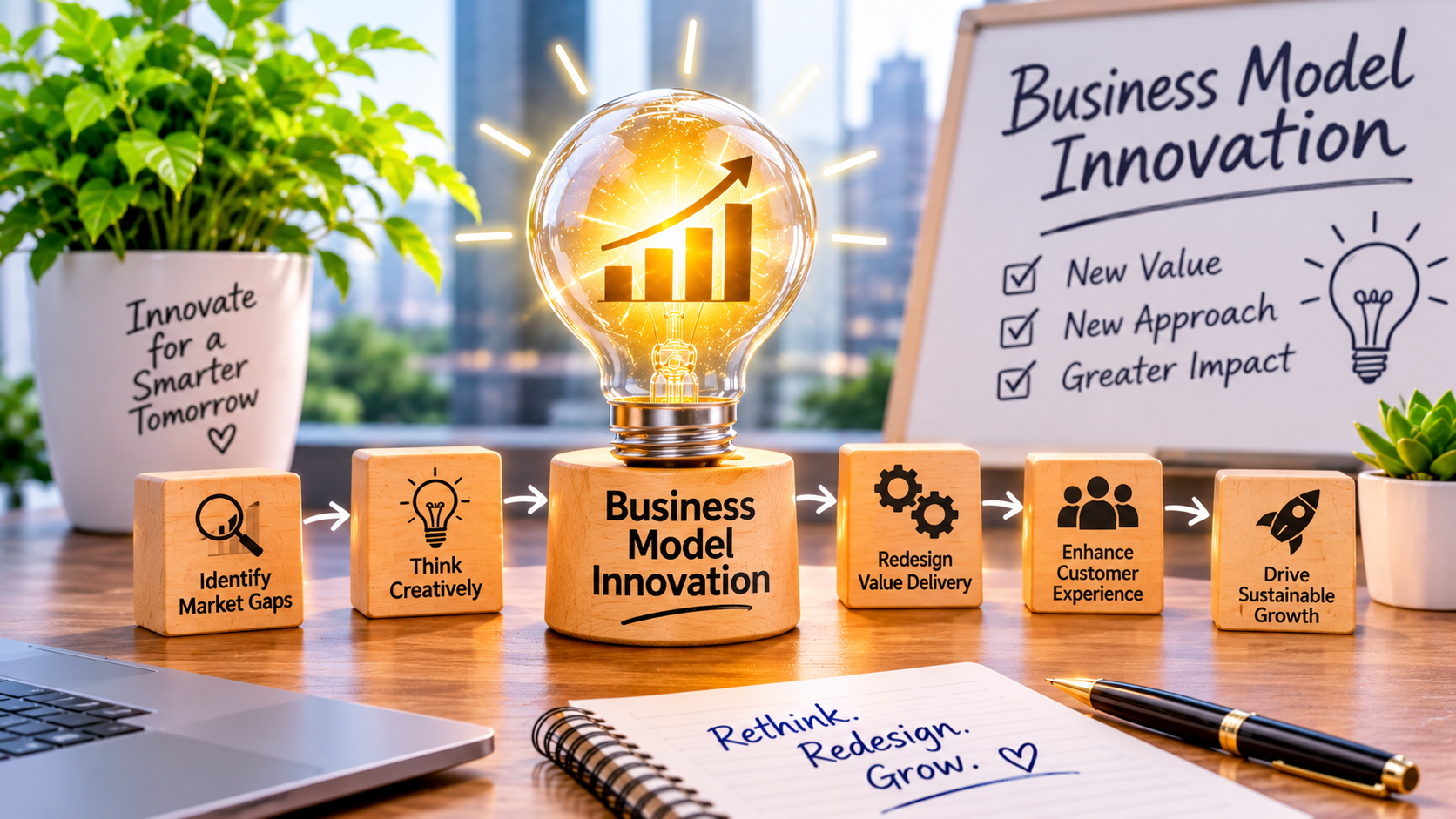
Businesses today operate in an increasingly competitive environment shaped by changing customer expectations, emerging technologies, and evolving market conditions. Traditional business practices may not always deliver the results organizations need to remain successful. Companies must regularly review their strategies, improve operational processes, and identify better ways to serve their customers.
Long-term success requires more than offering quality products or services. Organizations also need effective revenue strategies, reliable distribution channels, strong customer relationships, and efficient resource management. Companies that understand these elements can identify opportunities and develop stronger competitive advantages.
Business Model Innovation allows organizations to reconsider how they create value, deliver solutions, and generate revenue. By improving existing operations or introducing alternative approaches, businesses can respond to market developments and build a foundation for sustainable growth.
Understanding Business Model Innovation
A business model explains how an organization operates and creates value for its customers. It includes several connected elements, such as target audiences, products, services, pricing methods, distribution channels, partnerships, and revenue sources.
Business Model Innovation involves changing these elements to improve performance, address customer needs, or explore new market opportunities. It encourages organizations to examine their entire operating structure instead of concentrating only on product development.
For example, a traditional retailer might introduce an online shopping platform alongside its physical stores. This change can help the company reach customers in different locations, provide convenient purchasing options, and develop additional revenue opportunities.
The objective is not simply to make changes for the sake of appearing modern. Every improvement should solve a genuine problem, create measurable value, and support the organization’s long-term objectives.
Why Businesses Need Innovative Operating Strategies
Market conditions rarely remain unchanged. Customer preferences develop, competitors introduce alternative services, and technological advancements influence purchasing decisions. Organizations that fail to respond may gradually lose their market relevance.
Innovative operating strategies help businesses identify these developments and make informed decisions. They allow management teams to evaluate existing weaknesses, improve internal processes, and explore opportunities that may not have been considered previously.
Customer satisfaction is another important reason to review business operations. Companies that understand their audiences can develop services that better match customer expectations. Flexible payment options, convenient delivery systems, and responsive customer support can improve the overall experience.
Businesses can also benefit from improved efficiency. Reviewing supply chains, reducing unnecessary expenses, and adopting suitable digital tools can help organizations manage resources more effectively.
Key Components of an Effective Business Model
A successful business structure depends on several important components working together. Organizations should understand each element before introducing significant operational changes.
Value proposition: This explains the specific benefits a company offers and why customers should choose its products or services.
Customer segments: Businesses need to identify their intended audiences, understand purchasing behavior, and recognize different customer requirements.
Revenue streams: Organizations should establish reliable income sources, including product sales, subscriptions, licensing, or service fees.
Cost structure: Understanding operating expenses helps management control budgets and maintain financial stability.
Distribution channels: Companies must select suitable methods for delivering products and services, whether through physical locations, online platforms, or business partners.
Customer relationships: Consistent communication, dependable support, and personalized experiences can encourage customer loyalty.
When these components are properly aligned, organizations can create a business structure that supports both customer satisfaction and financial performance.
The Role of Digital Technology in Business Development
Technology has become an important part of modern business operations. Digital platforms, artificial intelligence, cloud computing, and automation provide opportunities to improve productivity and simplify daily activities.
E-commerce platforms allow businesses to reach customers beyond their immediate geographical markets. Companies can display products, receive orders, process payments, and manage customer inquiries through online systems.
Artificial intelligence can support market research, customer service, and business planning. Data analysis tools help organizations understand purchasing patterns and identify areas that may require improvement.
Automation can also reduce repetitive administrative work. Employees can spend more time on strategic responsibilities, customer relationships, and activities that require human judgment.
However, technology should be selected according to actual business requirements. Organizations must consider implementation costs, staff training, cybersecurity, and customer privacy before introducing new systems.
Practical Examples of Business Innovation
Different industries demonstrate how organizations can improve their operations through alternative business approaches.
Subscription-based services have changed how customers access entertainment, software, and educational resources. Instead of purchasing individual products, customers pay recurring fees for continued access.
E-commerce has transformed retail by allowing customers to explore products and complete purchases online. Businesses can serve wider audiences without depending entirely on physical stores.
The financial sector has also changed through mobile banking and digital payment services. Customers can complete transactions, review account information, and manage everyday financial activities through connected devices.
Manufacturing organizations use digital monitoring systems and improved inventory planning to manage production more efficiently. These systems can help reduce delays, identify operational problems, and improve supply chain coordination.
These examples demonstrate that meaningful improvements can involve pricing, accessibility, distribution, customer service, or internal processes.
Challenges in Implementing New Business Approaches
Introducing a different operating strategy can create opportunities, but organizations must also prepare for potential difficulties.
Financial limitations are a common challenge, especially for smaller businesses. Developing digital platforms, purchasing equipment, hiring specialists, and training employees may require considerable investment.
Employee resistance can also affect implementation. Staff members may feel uncertain when familiar responsibilities or established procedures change. Clear communication and appropriate training can make transitions easier.
Market uncertainty is another concern. A new service may appear promising during planning but attract fewer customers than expected after launch.
Businesses should also consider competition, industry regulations, and customer data protection. Conducting research, evaluating risks, and testing new ideas on a smaller scale can help organizations make more informed decisions.
Steps to Develop a Sustainable Business Strategy
Organizations should begin by reviewing their existing operations. Management teams can examine customer feedback, revenue performance, operating costs, and service quality to identify areas requiring improvement.
The next step is understanding customer needs. Surveys, market research, purchasing patterns, and competitor analysis can provide useful information about potential opportunities.
After identifying a suitable direction, businesses should prepare a realistic implementation plan. This should include clear objectives, estimated costs, required resources, and expected outcomes.
Testing a new approach through a pilot project can help reduce uncertainty. Businesses can evaluate customer responses, identify operational weaknesses, and make adjustments before expanding the initiative.
Finally, organizations should monitor measurable performance indicators. Revenue, customer retention, operating expenses, and satisfaction levels can help management determine whether the strategy is delivering meaningful results.
The Future of Business Development
Future business growth will increasingly depend on adaptability, customer-focused planning, and responsible technology adoption. Organizations will need to respond to changing expectations while maintaining financial discipline and operational reliability.
Sustainable practices are also becoming an important consideration. Companies are exploring responsible sourcing, efficient resource management, and environmentally conscious production methods.
Digital marketplaces, personalized services, flexible payment options, and collaborative partnerships may create additional opportunities across different industries.
Organizations that invest in research, employee development, and continuous improvement can prepare themselves for changing market conditions. A successful business strategy should balance innovation with practical planning, customer trust, and long-term financial stability.
Frequently Asked Questions
1. What does Business Model Innovation mean?
It refers to changing how an organization creates, delivers, and captures value to improve performance and respond to market opportunities.
2. Why is business model development important?
It helps companies remain competitive, improve customer experiences, identify revenue opportunities, and adapt to changing industry conditions.
3. What are common examples of innovative business models?
Examples include subscription services, online marketplaces, direct-to-consumer sales, franchising, and digital service platforms.
4. How does technology support business development?
Technology improves productivity through automation, data analysis, digital communication, online distribution, and more efficient operational systems.
5. How can small businesses introduce new business strategies?
Small businesses can research customer needs, improve existing services, explore affordable digital tools, test new ideas, and establish useful partnerships.