





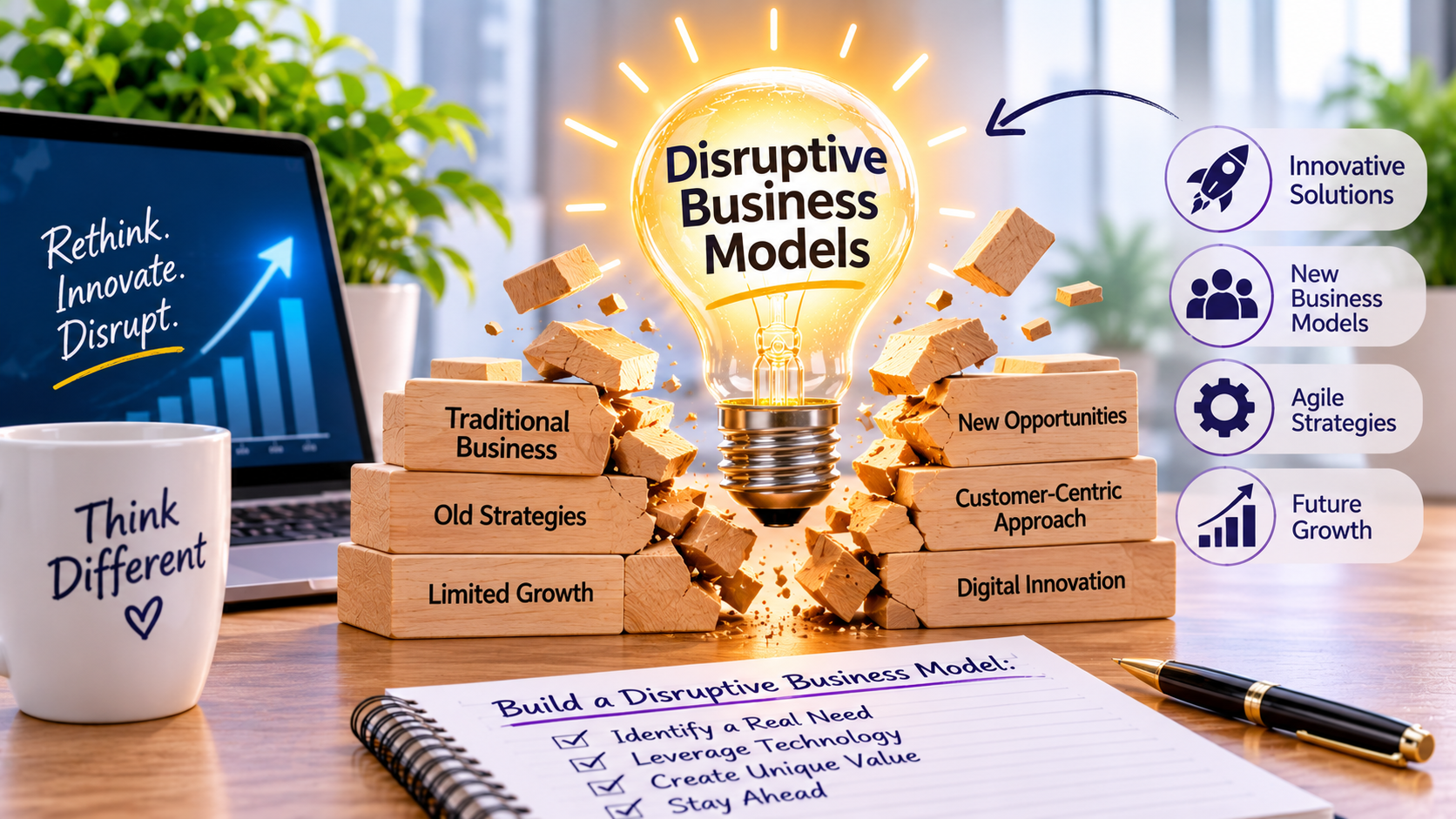
Businesses operate in an environment where customer expectations, technology, and competition continue to evolve. Traditional methods that once delivered consistent results may no longer meet the needs of modern consumers. Companies must therefore explore different ways to provide value, improve services, and maintain their position in the market.
Innovation is not limited to creating new products. It can also involve changing pricing structures, improving distribution channels, introducing digital services, or developing alternative ways to connect with customers. Organizations that recognize these opportunities can build stronger relationships and discover new sources of revenue.
Disruptive Business Models are changing how companies approach these challenges. They introduce alternative methods of delivering products and services, often making them more accessible, convenient, or affordable for customers.
Understanding Disruptive Business Models
A business model describes how a company creates value, delivers products or services, and earns revenue. When an organization changes important parts of this structure, it can create a different way of competing within its industry.
These approaches often focus on customer problems that traditional businesses have not addressed effectively. A company might simplify its services, offer flexible payment options, or use digital platforms to reach customers who were previously difficult to serve.
For example, subscription services allow customers to access products or digital resources through recurring payments instead of making separate purchases. This approach can provide convenience to customers while helping businesses develop more predictable revenue.
The purpose of disruption is not simply to replace an existing system. It is to introduce a practical alternative that offers meaningful value and has the potential to remain financially sustainable.
Why Modern Companies Need New Business Strategies
Customer behavior changes as lifestyles, purchasing habits, and technology develop. Consumers increasingly expect convenient services, transparent pricing, quick communication, and flexible purchasing options.
Companies that continue relying only on outdated practices may struggle to meet these expectations. Reviewing existing operations helps management identify weaknesses and recognize opportunities for improvement.
New strategies can also help businesses reach different customer groups. For instance, an organization that previously depended on physical stores may introduce online ordering and home delivery to serve customers in additional locations.
Another benefit is operational efficiency. Digital systems, automation, and improved supply chain management can reduce unnecessary tasks and help employees use their time more effectively.
The Importance of Technology in Business Transformation
Technology plays an important role in changing how organizations operate. Digital platforms allow companies to communicate with customers, manage orders, process payments, and monitor performance through connected systems.
Artificial intelligence can support business decisions by analyzing information, identifying patterns, and helping organizations understand customer preferences. Automation can reduce repetitive administrative work and improve productivity.
Cloud-based software also allows teams to access important information from different locations. This can support collaboration and make certain business operations more flexible.
However, adopting technology requires careful consideration. Companies should evaluate costs, employee training requirements, cybersecurity risks, and customer privacy before introducing new systems. Technology creates value when it addresses a genuine business need rather than being adopted simply because it is popular.
Key Features of Innovative Business Structures
Successful business approaches usually include several important elements that support customer satisfaction and long-term development.
Customer-focused services: Organizations study customer requirements and create solutions that address specific problems.
Flexible pricing: Different payment options can make products and services accessible to a wider audience.
Efficient operations: Improved workflows and suitable technology help reduce delays and unnecessary expenses.
Scalable systems: Businesses need processes that can support expansion without making operations unnecessarily complicated.
Reliable customer support: Clear communication and effective after-sales services help build trust and encourage repeat business.
Continuous improvement: Regular feedback and performance reviews help organizations identify areas that require attention.
These features provide a foundation for businesses seeking to introduce meaningful changes while maintaining financial stability.
Real-World Examples of Industry Transformation
Several industries demonstrate how alternative operating methods can change customer experiences.
The entertainment industry has moved toward digital streaming services. Customers can access movies, television programs, and other content through online subscriptions rather than depending entirely on traditional broadcasting or physical media.
Retail has also experienced significant changes through e-commerce platforms. Customers can explore products, compare prices, and complete purchases online. Businesses can serve wider audiences without depending exclusively on physical locations.
In transportation, mobile applications have made booking services more convenient. Digital platforms connect customers with available service providers and simplify communication and payment processes.
Financial services have developed through mobile banking and digital payment systems. Customers can manage accounts, transfer money, and complete many everyday transactions using internet-connected devices.
These examples show how companies can improve accessibility and convenience by changing the way services are delivered.
Challenges Businesses May Face During Implementation
Introducing a new operating approach can involve financial, technical, and organizational difficulties. Businesses must understand these challenges before making major changes.
Investment costs are often a primary concern. Developing digital platforms, purchasing equipment, upgrading systems, and training employees may require substantial resources.
Customer acceptance can also be uncertain. People may hesitate to use unfamiliar services, particularly when traditional alternatives are already convenient and trusted.
Employees may need additional training to understand new processes and technologies. Without clear communication, organizational changes can create confusion and reduce productivity.
Companies must also consider industry regulations, market competition, and data protection requirements. Careful research and gradual implementation can help reduce these risks.
How Businesses Can Introduce Effective Changes
Organizations should begin by reviewing their existing operations. Management teams can examine customer feedback, sales performance, operating costs, and service quality to identify areas that need improvement.
The next step is understanding the target market. Researching customer expectations and competitor activities can help businesses discover opportunities that are both practical and relevant.
After identifying an opportunity, companies should prepare a realistic implementation plan. This should include expected costs, available resources, business objectives, and potential revenue sources.
Testing a new idea through a small pilot project can provide useful information before a full launch. Businesses can evaluate customer responses, identify operational problems, and make adjustments based on actual results.
Performance should also be measured regularly. Customer retention, revenue, expenses, satisfaction, and service efficiency can help management determine whether the new approach is achieving its objectives.
The Future of Business Innovation
Future business development will depend increasingly on adaptability, customer understanding, and responsible technology use. Organizations will need to respond to changing expectations while protecting customer trust and maintaining financial discipline.
Artificial intelligence, digital marketplaces, automated services, and personalized customer experiences are likely to influence many industries. Sustainability may also become a stronger consideration as businesses explore responsible sourcing and more efficient resource management.
The long-term success of Disruptive Business Models will depend on their ability to solve genuine problems and provide lasting value. Companies should avoid adopting trends without understanding their relevance to customers and operations.
Organizations that combine market research, practical planning, and continuous improvement can build a stronger foundation for sustainable growth.
Frequently Asked Questions
1. What are Disruptive Business Models?
They are alternative ways of operating that challenge established industry practices by changing how products or services are created, delivered, priced, or accessed.
2. How do innovative business strategies benefit companies?
They can help businesses reach new customers, improve efficiency, increase convenience, develop additional revenue sources, and respond to market changes.
3. What role does technology play in business transformation?
Technology supports transformation through automation, artificial intelligence, digital platforms, cloud computing, and improved data management.
4. Can small businesses use disruptive strategies?
Yes. Small businesses can introduce affordable services, focus on specific customer needs, use online platforms, and improve existing processes.
5. What should companies consider before changing their business model?
They should evaluate customer demand, investment requirements, competition, available resources, employee readiness, and relevant regulations.