






Muscle stiffness and limited mobility can make everyday activities more challenging. Simple movements such as turning your neck, bending to pick something up, reaching overhead, or walking comfortably may become difficult when your muscles feel tight or sore. These problems can develop because of prolonged sitting, repetitive movements, sports injuries, muscle overuse, or other musculoskeletal conditions.
Dry needling is one treatment that physiotherapists may use to help manage certain types of muscle pain and movement restrictions. By targeting sensitive areas within muscles, this technique may help reduce discomfort and improve a person’s ability to move. However, its effectiveness depends on the underlying cause of the symptoms and the individual’s overall condition.
Understanding how dry needling works, when it may be helpful, and how it fits into a broader rehabilitation plan can help you make informed decisions about your care.
What Is Dry Needling?
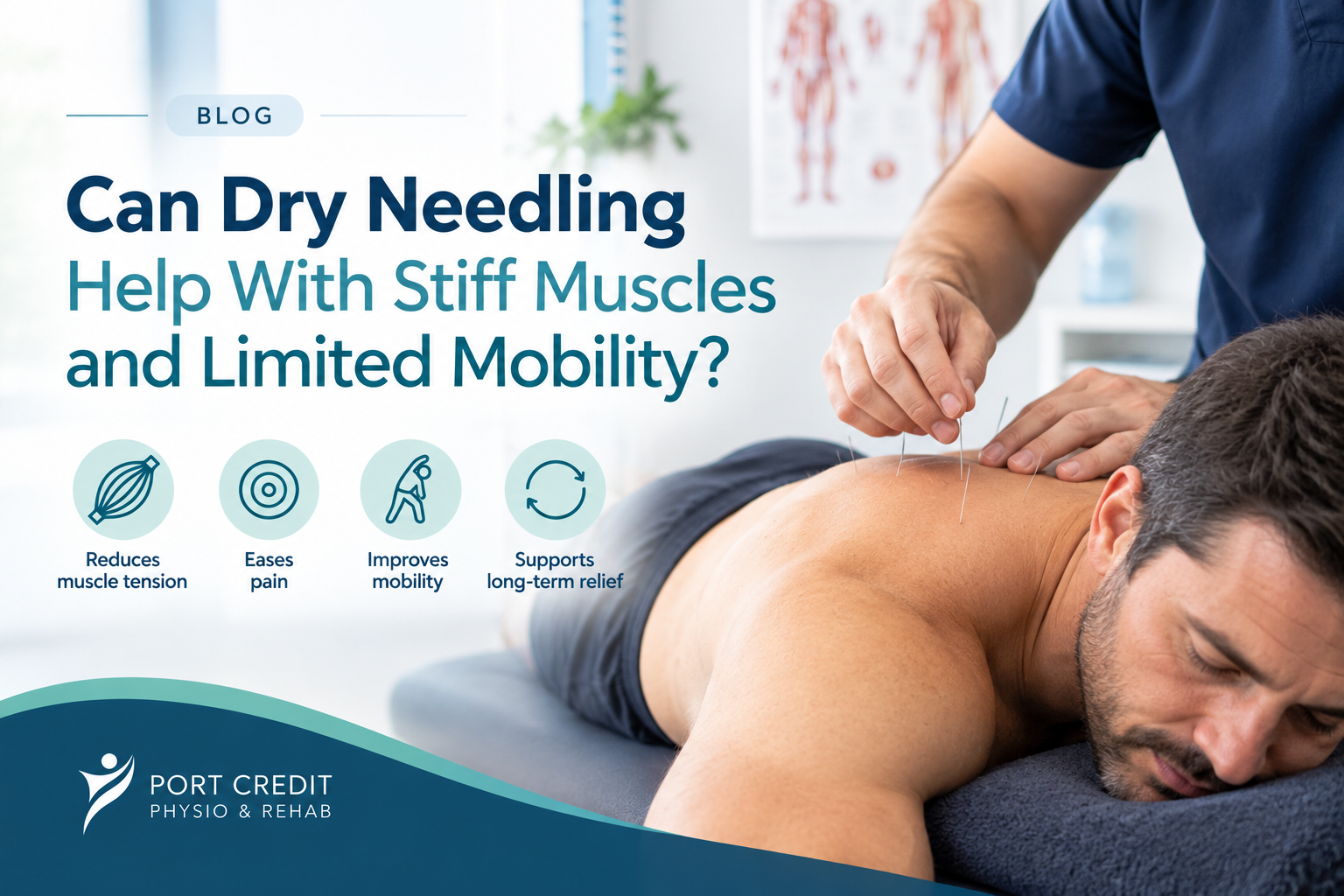
Dry needling is a therapeutic technique that involves inserting thin, sterile needles into specific areas of muscle tissue. These areas may include myofascial trigger points, which are sensitive spots associated with muscle tenderness and sometimes referred pain.
Unlike injections, dry needling does not involve injecting medication or another substance into the body. Instead, the treatment uses the needle itself to stimulate targeted tissue.
Physiotherapists may consider dry needling when muscle pain, tenderness, or restricted movement interferes with daily activities or rehabilitation. The technique is commonly used alongside other treatments, such as therapeutic exercises, manual therapy, and movement retraining.
Dry needling is different from acupuncture, although both techniques use fine needles. Acupuncture is traditionally based on Chinese medicine principles, while dry needling generally focuses on musculoskeletal pain and muscle function. The appropriate approach depends on the patient’s needs, the practitioner’s qualifications, and the treatment goals.
How Can Dry Needling Help With Stiff Muscles?
Muscle stiffness can occur when muscles are overworked, irritated, or affected by an injury. Some people also develop sensitive trigger points that contribute to localized discomfort and restricted movement.
Dry needling may help address these symptoms by stimulating the affected tissue and influencing pain sensitivity. Some people experience a temporary reduction in muscle discomfort or a greater sense of ease when moving after treatment.
1. Reducing Muscle Pain and Tenderness
Painful muscles can make ordinary movements uncomfortable. For example, tight neck muscles may make it difficult to turn your head, while discomfort around the shoulders may interfere with reaching or lifting.
Dry needling may help reduce pain in some people by stimulating sensory pathways involved in pain processing. When discomfort decreases, movements that previously felt difficult may become more manageable.
However, the response varies from person to person. Dry needling does not guarantee pain relief, and persistent pain may require further assessment to identify its underlying cause.
2. Addressing Sensitive Muscle Trigger Points
Myofascial trigger points are sensitive areas within muscle tissue that may be associated with localized tenderness or referred pain. They can develop alongside repetitive strain, muscle overuse, and other musculoskeletal problems.
A trained practitioner may use dry needling to target these areas as part of a treatment plan. Some patients experience reduced tenderness or improved comfort following treatment.
It is important to understand that not all muscle stiffness comes from trigger points. Joint restrictions, nerve irritation, inflammation, and other conditions can also contribute to symptoms. A proper assessment helps determine whether dry needling is appropriate.
3. Supporting Muscle Relaxation and Movement
When a muscle is painful, people may unconsciously limit their movements or hold the affected area in a guarded position. This response can make normal activities feel more difficult.
By potentially reducing pain sensitivity and muscle tenderness, dry needling may help some people move with greater comfort. Nevertheless, improved mobility usually requires more than a single treatment. Appropriate movement, strengthening, and gradual return to normal activities remain important parts of recovery.
Can Dry Needling Improve Limited Mobility?
Limited mobility refers to difficulty moving a joint or body part through its usual range of motion. It may affect the neck, shoulders, back, hips, knees, or other areas.
Dry needling may help improve mobility when muscle pain or tenderness is contributing to the restriction. For instance, someone with tight shoulder muscles may find it uncomfortable to raise an arm overhead. If treatment reduces the associated discomfort, the person may be able to perform shoulder movements more comfortably.
Similarly, people experiencing muscle-related neck stiffness may notice that turning their head becomes easier after treatment.
However, limited mobility is not always caused by tight muscles. Conditions involving joints, tendons, ligaments, nerves, or structural changes may require different treatment approaches. Dry needling alone cannot correct every cause of restricted movement.
A physiotherapist can assess the affected area, evaluate movement patterns, and determine whether dry needling may complement other interventions.
Common Conditions Where Dry Needling May Be Considered
Dry needling may be considered as part of a rehabilitation programme for selected musculoskeletal complaints.
Neck and Shoulder Stiffness
Prolonged computer use, repetitive tasks, and sustained postures may contribute to neck and shoulder discomfort. Some people experience tenderness around the upper back and shoulders, along with difficulty turning their head or raising their arms.
Dry needling may help manage associated muscle pain in selected cases. Postural adjustments, movement breaks, and strengthening exercises may also be recommended.
Lower Back Muscle Tightness
Lower back stiffness can develop after prolonged sitting, physical work, lifting, or unfamiliar exercise. When muscular tenderness contributes to the symptoms, dry needling may be considered alongside exercises that improve strength, flexibility, and movement control.
Back pain can also have causes that are unrelated to muscle trigger points, so assessment is important before selecting treatment.
Sports-Related Muscle Discomfort
Athletes and recreationally active individuals may develop muscle soreness or movement restrictions following intense training or repetitive activity. Dry needling may be used in some rehabilitation programmes to help manage specific muscular symptoms.
It should not replace appropriate injury assessment, load management, or a structured return-to-sport plan.
Hip and Leg Muscle Tightness
Tightness around the hips and legs may affect walking, squatting, climbing stairs, or participating in physical activities. When muscle-related pain contributes to these difficulties, dry needling may be one option within a broader rehabilitation approach.
The treatment plan should address the reason for the restriction rather than focusing only on the area that feels tight.
What Happens During a Dry Needling Session?
A dry needling session generally begins with a discussion of your symptoms, medical history, activity levels, and treatment goals. The physiotherapist may assess your posture, muscle tenderness, strength, and range of motion to understand what may be contributing to your discomfort.
If dry needling is appropriate, the practitioner uses sterile, single-use needles to target selected areas. You may feel a brief prick, muscle twitch, or temporary aching sensation during the procedure. The experience varies depending on the treatment area and individual sensitivity.
After the session, some people notice improved comfort or movement, while others experience temporary soreness. Mild muscle tenderness can occur for a day or two, although the duration varies.
Your practitioner should explain the potential benefits and risks, obtain your informed consent, and discuss alternatives before proceeding. You should also mention any relevant medical conditions, pregnancy, bleeding disorders, use of blood-thinning medication, or needle-related concerns.
Is Dry Needling Enough to Improve Mobility?
Dry needling may help reduce certain symptoms, but it is generally most useful when integrated into a comprehensive rehabilitation plan.
For example, if shoulder stiffness is associated with muscle pain, treatment may be followed by gentle range-of-motion exercises and progressive strengthening. Someone with back stiffness may benefit from mobility exercises, improved lifting techniques, and gradual increases in physical activity.
These strategies help address movement limitations and build the capacity needed for everyday activities. They may also help reduce the likelihood of recurring problems.
The most suitable plan depends on the person’s condition, activity level, and recovery goals. Not everyone needs dry needling, and some people may improve with exercise-based physiotherapy or other conservative treatments alone.
Is Dry Needling Safe?
Dry needling is generally considered safe when performed by a properly trained and qualified practitioner using appropriate hygiene and safety procedures. However, it is an invasive technique and carries potential risks.
Temporary soreness, minor bleeding, and bruising can occur. More serious complications are uncommon but possible. For example, needling around the chest or upper back carries a small risk of pneumothorax, which occurs when air enters the space around a lung.
People with certain medical conditions or circumstances may need additional precautions or an alternative treatment. Your practitioner should review your medical history and explain the risks relevant to your situation.
Seek prompt medical attention if you experience severe or worsening pain, significant swelling, fever, or unexpected symptoms following treatment. Sudden chest pain or shortness of breath requires emergency assessment.
Finding Acupuncture and Dry Needling in Port Credit
If muscle stiffness or restricted movement is affecting your daily routine, a professional assessment can help identify possible causes and suitable treatment options. Residents looking for Acupuncture & Dry Needling in Port Credit can explore physiotherapy services that assess musculoskeletal concerns and develop treatment plans based on individual needs.
Port Credit Physio provides an acupuncture and dry needling service for people seeking support with pain management and movement-related concerns. A physiotherapist can help determine whether dry needling may be appropriate and whether it should be combined with exercises, manual therapy, or other rehabilitation strategies.
Before starting treatment, ask about the practitioner’s qualifications, the expected goals, potential risks, and how progress will be measured. The aim should be to improve function and help you return to everyday activities safely, rather than relying on passive treatment alone.
Conclusion
Dry needling may help some people manage muscle stiffness, tenderness, and movement restrictions, particularly when muscular pain contributes to their symptoms. It may provide short-term improvements in comfort and range of motion, but results vary, and it is not suitable for every condition.
A comprehensive treatment plan should consider the underlying cause of the stiffness and include appropriate exercises, movement strategies, and rehabilitation when needed. If pain or restricted mobility persists, worsens, or interferes with daily activities, seek professional assessment rather than relying on self-treatment.
With the right evaluation and an individualized approach, people experiencing muscle-related movement difficulties can work towards better mobility, improved function, and a more comfortable return to their usual activities.