







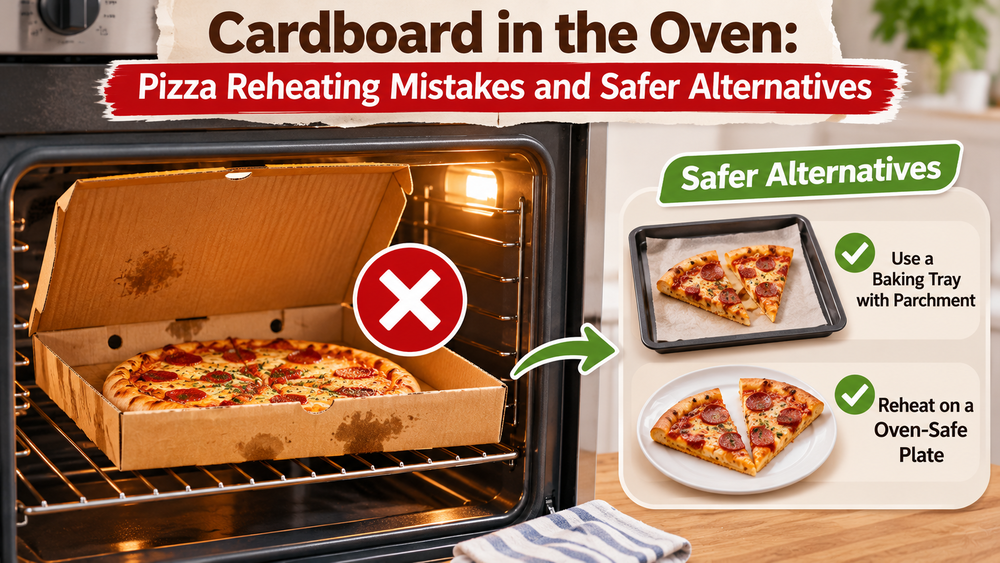
Leftover pizza is easy to enjoy, but reheating it the wrong way can turn a quick meal into a kitchen hazard. Many people leave their pizza inside the delivery box because it seems convenient and saves washing another dish. This raises a common question: Can you put a pizza box in the oven to warm up leftover slices? The answer is no. Ordinary cardboard pizza boxes are designed for food delivery, not direct oven heating. Understanding why cardboard reacts poorly to heat and which alternatives work better can help you reheat pizza safely while keeping its crust and toppings in good condition.
Why Cardboard Pizza Boxes Are Not Designed for Oven Heating
Most delivery pizza boxes are made from corrugated cardboard. This material consists of a fluted paper layer between flat paper liners. The structure provides stiffness, helps protect food during transportation, and slows heat loss after the pizza leaves the restaurant.
However, retaining heat from freshly cooked food is different from being exposed to continuous oven temperatures. Cardboard is combustible, and ordinary pizza boxes are not manufactured or tested as oven-safe cookware.
When exposed to excessive heat, cardboard can dry out, discolor, scorch, smoke, or eventually ignite. The risk becomes more serious when the box is close to heating elements or contains grease from the pizza. Even a plain, unprinted cardboard box should not be considered suitable for oven use without specific manufacturer approval.
Can Cardboard Go in the Oven at Low Temperatures?
Some people assume that cardboard becomes safe when the oven is set to a low temperature. Unfortunately, there is no universally safe oven setting for an ordinary pizza delivery box.
An oven set to 170°F or 200°F may seem harmless compared with normal baking temperatures. However, heating elements and interior surfaces can become hotter than the selected temperature while the appliance operates.
The material itself also matters. Cardboard thickness, moisture content, grease contamination, coatings, and exposure time can affect how a box responds to heat. For this reason, the question can cardboard go in the oven should not be answered using a single temperature limit. Unless the specific packaging is explicitly approved for oven use, keep it outside the appliance.
What Happens When You Heat a Pizza Box?
Placing a cardboard pizza box in an oven can create several problems beyond the possibility of fire.
Cardboard Can Scorch or Ignite
Paper fibers are combustible. Continued exposure to high temperatures can cause the material to darken, char, or catch fire.
There is no reliable ignition temperature that guarantees every pizza box will behave the same way. Oven conditions and the finished packaging construction affect the level of risk.
Grease Can Make the Situation Worse
Pizza boxes often absorb oil from cheese and toppings. Grease stains can change how the packaging responds to heat and may contribute to smoke or burning. A heavily stained box should never be used as a heating surface.
Printing and Adhesives May Not Be Heat-Rated
Many pizza boxes contain printing inks, adhesives, and other materials selected for normal food delivery conditions. These components are not necessarily evaluated for oven exposure. Heating the finished box beyond its intended use may affect its structure or introduce unwanted odors and contamination concerns.
Pizza May Heat Unevenly
Cardboard also prevents direct contact between the pizza crust and a properly heated baking surface. As a result, the bottom may remain soft while the toppings become hot. Using suitable cookware generally provides better control over the reheating process.
Can I Bake Pizza on a Cardboard?
No. If you are wondering, can I bake pizza on cardboard, remove the cardboard support before putting the pizza in the oven. Some frozen pizzas come with a circular cardboard disc beneath the crust. This disc supports the pizza during packaging, transportation, and storage. It should not be mistaken for an oven-safe baking tray.
Always check the cooking instructions printed on the frozen pizza packaging. Some products are intended to cook directly on an oven rack, while others require a baking sheet or pizza pan. Certain specialty food trays are designed for specific heating applications, but their instructions must explicitly permit the intended oven type, temperature, and cooking time.
Safer Ways to Reheat Leftover Pizza
Removing the pizza from its box does not mean sacrificing convenience. Several simple methods can warm the toppings while improving the crust.
1. Reheat Pizza on a Baking Sheet
A baking sheet is one of the most practical options for reheating multiple slices. Preheat the oven to approximately 350°F, place the slices on an oven-safe baking sheet, and heat them for around 8–12 minutes, checking frequently. Actual timing depends on slice thickness, toppings, and oven performance.
A preheated baking sheet can help produce a firmer crust, but handle it carefully to avoid burns. For food safety, the USDA recommends reheating leftovers to an internal temperature of 165°F.
2. Use a Skillet for Individual Slices
A skillet is useful when you want to reheat one or two slices without warming the entire oven. Place the pizza in a skillet over low to medium-low heat. Allow the bottom to become crisp, then cover briefly if necessary to help warm the cheese and toppings. Monitor the pizza closely so the crust does not burn before the center becomes hot.
3. Try an Air Fryer
An air fryer can reheat small portions quickly because hot air circulates around the food. Arrange the slices in a single layer and follow the appliance manufacturer’s reheating guidance. Avoid overcrowding the basket, which can lead to uneven results. Never place an ordinary cardboard pizza box inside an air fryer.
4. Use a Microwave-Safe Plate
A microwave is convenient when time is limited. Transfer the pizza to a microwave-safe plate and heat it in short intervals. The crust may become softer than it would in an oven or skillet, but this method avoids placing combustible packaging near oven heating elements.
Comparing Pizza Reheating Methods
| Method | Main Advantage | Important Consideration |
| Baking sheet | Suitable for several slices | Requires oven preheating |
| Skillet | Helps crisp the bottom | Best for small portions |
| Air fryer | Quick, circulating heat | Limited cooking space |
| Microwave-safe plate | Convenient and fast | Crust may soften |
| Cardboard pizza box | No safe reheating advantage | Not suitable for ordinary oven use |
The best method depends on how many slices you have, the available equipment, and the crust texture you prefer.
How to Keep Pizza Warm Without Its Cardboard Box
If pizza arrives before everyone is ready to eat, transferring it to suitable cookware is safer than placing the delivery box inside the oven. Use an oven-safe pan and follow your appliance’s food-warming instructions. Keep hot food at a safe holding temperature rather than leaving it in the temperature range where bacteria can multiply.
For short periods, covering the pizza loosely with an appropriate lid or foil may reduce heat loss. Avoid sealing it tightly if you want to prevent condensation from softening the crust. If the pizza will not be eaten soon, refrigerate it promptly instead of leaving it at room temperature. Perishable leftovers should generally be refrigerated within two hours, or within one hour when the surrounding temperature exceeds 90°F.
Why Pizza Box Design Still Matters
Although cardboard should not be placed in an oven, it remains an effective material for transporting freshly prepared pizza.
Corrugated pizza boxes provide structural support, are relatively lightweight, and can be manufactured in different sizes to fit restaurant requirements. Ventilation openings may help moisture escape during delivery, while suitable food-contact materials help keep the pizza separated from exterior surfaces. Packaging design also affects how easily restaurant staff can assemble, stack, carry, and distribute orders.
At Search Packaging, readers can explore practical packaging information, understanding the difference between food-delivery packaging and oven-safe cookware helps consumers make better decisions about handling hot food.
What Should You Do If a Pizza Box Starts Smoking in the Oven?
If cardboard begins smoking inside the oven, turn the appliance off if you can do so safely. Keep the oven door closed and avoid opening it to inspect the box, as introducing additional oxygen may worsen a developing fire.
If flames appear, the fire spreads, or you cannot control the situation safely, leave the area and contact emergency services. Do not pour water into the oven or attempt to remove burning cardboard.
After the incident, allow the appliance to cool completely and arrange appropriate inspection if damage is suspected.
Conclusion
Cardboard pizza boxes are useful for food transportation, but ordinary delivery boxes should never be used as oven cookware. Even low oven settings do not establish that cardboard packaging is safe for heating.
For better results, transfer leftover pizza to a baking sheet, skillet, air fryer basket, or microwave-safe plate, depending on the appliance. Following proper food-handling instructions and keeping cardboard away from heating elements can help prevent avoidable kitchen accidents.
Frequently Asked Questions
Can you put a pizza box in the oven for five minutes?
No. Even a short heating period can expose ordinary cardboard to unsafe temperatures. Transfer the pizza to an oven-safe pan instead.
Can cardboard go in the oven at 200°F?
Standard cardboard packaging is not recommended for oven use at 200°F. Low temperature settings do not make ordinary pizza boxes oven-safe.
Can I bake pizza on cardboard from frozen packaging?
No. Remove the cardboard disc or support unless the product instructions explicitly identify it as suitable for the intended oven use.
Is it safe to put a pizza box in a toaster oven?
No. Toaster ovens have heating elements close to the food, making ordinary cardboard packaging particularly unsuitable.
Can a pizza box go in the microwave?
Only if the specific box is clearly labeled microwave-safe and the manufacturer’s instructions permit it. Otherwise, transfer the pizza to a microwave-safe plate.
What is the best way to reheat pizza without cardboard?
A baking sheet or skillet is a practical choice for maintaining a crisp crust. Reheat leftovers thoroughly and follow applicable food-safety guidance.