




Events often happen quickly, with important presentations, conversations, demonstrations, performances, and interactions taking place at the same time. Professional video coverage can preserve these moments while creating content that can later be used for internal communications, social media, marketing, public relations, or event archives.
Effective event videography requires more than simply recording everything that happens. The production team needs to understand the event schedule, identify important moments, choose appropriate camera positions, record clear audio, and determine how the footage will be edited and delivered. Planning these elements before the event can make the final video more useful.
What Is Event Videography?
Event videography involves recording an event using professional video equipment and production techniques.
Depending on the occasion, coverage may include keynote presentations, panel discussions, exhibitions, product demonstrations, interviews, networking, award ceremonies, audience reactions, venue details, and behind-the-scenes activity.
The final product can take several forms. A short highlight video may summarize the atmosphere and key moments, while a longer documentary-style video can provide a more comprehensive record.
Dreambox’s current Dubai event videography service covers exhibitions, conferences, corporate events, seminars, presentations, press conferences, award ceremonies, live demonstrations, webinars, and private occasions.
Start With the Event Objectives
Before filming begins, determine why the event is being recorded.
Different objectives require different production approaches.
For example, an organization may want a short highlight film for social media, a detailed record of a conference, interviews for future marketing, or footage that can be repurposed into multiple pieces of content.
A production brief should identify:
- Purpose of the video
- Target audience
- Key event moments
- Required video formats
- Expected delivery date
- Distribution platforms
- Interview requirements
- Branding requirements
Having these details established early helps the production team prioritize its coverage.
Review the Event Schedule
The event agenda is one of the most useful documents for a videography team.
A detailed schedule can show when keynote speeches, product launches, demonstrations, awards, interviews, networking sessions, and other important activities will take place.
The production team can then determine where cameras should be positioned and whether additional crew members are necessary.
This is especially important when multiple activities are happening simultaneously. Dreambox states that one to two videographers are sufficient for many Dubai events, while additional videographers can be arranged when multiple angles or simultaneous coverage are required.
Choose the Right Number of Cameras
Camera requirements depend on the event format.
A small presentation may only need one primary camera. A conference can benefit from several camera positions, such as a wide shot of the stage, a closer angle of the speaker, and another camera covering the audience.
Multi-camera production can also be useful for panel discussions because it allows editors to move between speakers without relying on a single viewpoint.
The number of cameras should be based on the event schedule, venue layout, number of speakers, and intended final product.
Audio Is Just as Important as Video
Clear audio is essential when an event includes speeches, interviews, presentations, or panel discussions.
A visually impressive recording is less useful if the speaker cannot be heard clearly. Audio requirements should therefore be discussed during pre-production.
Depending on the event, the production team may need to capture:
- Microphone feeds
- Speaker microphones
- Audience questions
- Interviews
- Ambient sound
- Music or performances
For larger events, coordination with the venue’s audio team can help ensure that the videography crew receives appropriate sound feeds.
Plan Camera Positions
Camera placement should be considered before attendees arrive.
The team needs to capture useful angles without obstructing guests or distracting speakers.
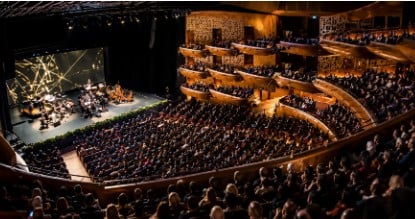
For a stage presentation, one camera might provide a wide view while another focuses on the presenter. A third camera could capture audience reactions or provide an alternative angle.
For exhibitions, cameras may need to move between booths, demonstrations, interviews, and networking areas.
A venue walkthrough can help identify suitable positions and potential obstacles before filming begins.
Capture More Than the Main Stage
The most important footage is not always the main presentation.
Supporting footage can show the atmosphere and context of the event.
Useful B-roll may include:
- Venue exterior
- Event signage
- Registration
- Guest arrivals
- Exhibition booths
- Product displays
- Networking
- Audience reactions
- Staff preparing the venue
- Speaker preparation
- Branding
- Demonstrations
These shots can be used by editors to connect different sections of the final video and provide visual variety.
Interview Opportunities
Events can provide opportunities to record interviews with speakers, executives, exhibitors, guests, or organizers.
Interviews can turn an event video into a longer-lasting piece of content because they can explain what the event was about and why it mattered.
Before recording interviews, prepare a short list of questions and confirm who should participate.
The production team should also identify a quiet location away from loud speakers, crowds, and other distractions.
Event Highlight Videos
A highlight video is designed to summarize the most important parts of an event.
Dreambox states that its event highlight videos generally run between one and five minutes, providing a shorter summary of an event’s key moments.
A typical highlight edit might combine:
- Establishing shots
- Guest arrivals
- Opening moments
- Key presentations
- Audience reactions
- Networking
- Product demonstrations
- Interviews
- Closing moments
The final structure depends on the event and the intended audience.
Event Documentary Videos
A documentary-style event video provides more extensive coverage.
Dreambox describes its event documentaries as typically ranging from 10 to 30 minutes and intended to provide a broader overview of an event.
This format can be useful when the organizer wants more than a short promotional summary.
A documentary may include interviews, presentations, detailed B-roll, event context, and a chronological structure.
Same-Day and Fast-Turnaround Content
Some events require video content shortly after or even during the event.
This can happen when organizations want to publish announcements, press material, social media clips, or event highlights while the event is still receiving attention.
Dreambox states that its typical Dubai event videography editing turnaround is one to five business days, depending on event scale and complexity, and that same-day edits are available for certain requirements.
If rapid delivery is required, this should be discussed before the event because it can affect the editing workflow and crew requirements.
Consider Social Media Content
Event footage can potentially produce multiple pieces of content rather than one final video.
For example, a conference recording could be edited into:
- A main highlight video
- Speaker clips
- Short interview videos
- Vertical social media clips
- Behind-the-scenes footage
- Product demonstration clips
Planning these outputs before filming can influence camera framing and the type of supporting footage collected.
Vertical and horizontal content may also require different framing considerations.
Lighting and Venue Conditions
Event venues can present difficult lighting conditions.
Conference stages may use changing coloured lights, while exhibition halls can contain a mixture of artificial and natural lighting. Evening events may require additional low-light capabilities.
The production team should review the venue beforehand where possible.
Other factors to consider include:
- Ceiling height
- Available power
- Camera access
- Restricted areas
- Ambient noise
- Stage position
- Audience seating
- Lighting changes
Professional equipment and experienced operators can help adapt to these conditions, but early planning remains important.
Coordinate With the Event Team
The videography team should have a designated event contact.
That person can provide schedule updates, identify important guests, communicate last-minute changes, and coordinate access.
This is particularly important because event schedules can change unexpectedly.
Dreambox states that its event videography service is designed to accommodate changes involving schedules, locations, requirements, and other event details.
Clear communication before and during the event helps the production team respond to those changes.
Consider Filming Permissions
Some locations require permission before professional filming takes place.
The requirements can vary depending on the venue, property, public location, event organizer, and type of production.
Dreambox states that its broader video-production services can handle filming permit processes and location-related requirements as part of pre-production.
Event organizers should confirm responsibilities for permits and permissions before filming begins rather than assuming the production team or venue will automatically handle them.
Post-Production Matters
The quality of the final event video depends heavily on editing.
Post-production can include:
- Footage selection
- Video editing
- Audio mixing
- Colour correction
- Motion graphics
- Titles
- Captions
- Music
- Interviews
- Brand elements
- Format conversions
The editing style should match the video’s purpose. A corporate recap may require a polished and structured approach, while a social media clip may benefit from shorter sequences and faster pacing.
Protect and Organize the Footage
Large events can generate substantial amounts of video footage.
Files should be organized and backed up during and after production. This is particularly important when several cameras are recording simultaneously.
Dreambox states that it retains event videography files from Dubai projects for one year and describes backup and storage practices as part of its service. These are the provider’s own stated policies and should be confirmed in the project agreement.
The organizer should also clarify whether raw footage is included and how long the production company will retain project files.
Questions to Ask Before Hiring a Videography Team
Before booking an event production team, ask:
- How many videographers are recommended?
- How many cameras will be used?
- Is professional audio recording included?
- Can interviews be recorded?
- Are highlight and documentary edits available?
- What is the expected turnaround?
- Are same-day edits possible?
- Can the team provide social media clips?
- Who handles filming permissions?
- How are files backed up?
- How long are project files retained?
- Are raw files included?
- How many editing revisions are provided?
Clear answers help establish the scope of work before the event.
Conclusion
Effective event videography starts with understanding the event objectives, schedule, venue, important participants, camera requirements, audio needs, and final deliverables. Organizers should decide whether they need a short highlight film, a longer documentary, interviews, social media clips, or a combination of formats before filming begins. Careful planning also helps the production team respond when event schedules or locations change. For organizations comparing providers in Dubai, Dreambox Videography & Photography describes its event services as covering conferences, exhibitions, corporate gatherings, seminars, award ceremonies, product launches, private occasions, and other events. Its published service information also outlines options for multiple videographers, edited highlights, documentary-style videos, rapid turnaround, and real-time coverage for certain requirements. These are descriptions of the company’s own services and should be evaluated against the specific needs of the event.