






What Is a Free-Standing NEMA Enclosure?
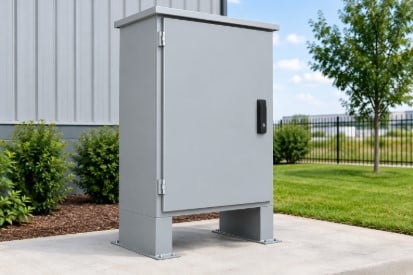
Electrical and industrial equipment often needs protection from dust, moisture, accidental contact, and other environmental hazards. A free standing NEMA enclosure provides a dedicated cabinet for housing electrical controls, automation components, instrumentation, and related hardware. Unlike wall-mounted cabinets, these enclosures stand independently on a floor or supporting surface, making them useful for installations that require more internal space or centralized equipment access.
They are commonly used in manufacturing facilities, utilities, processing plants, and commercial infrastructure. Depending on the design and rating, a cabinet may support equipment in relatively clean indoor environments or more demanding industrial locations.
Selecting the right enclosure requires evaluating the installation environment, equipment dimensions, accessibility needs, and applicable protection requirements.
Key Benefits of Free-Standing Enclosures
Greater Capacity for Electrical Equipment
Floor-standing cabinets can accommodate larger assemblies than many compact wall-mounted alternatives. Their internal space may be suitable for control panels, terminal blocks, motor control components, programmable logic controllers, and wiring systems.
Adequate room inside the cabinet helps technicians organize components, maintain appropriate clearances, and simplify troubleshooting. However, internal dimensions should account for wiring bends, ventilation requirements, component expansion, and future maintenance access.
Flexible Installation Options
A free standing NEMA enclosure can be positioned near the machinery or process it serves, provided the location meets electrical, structural, and safety requirements. This flexibility can simplify the layout of industrial control systems and reduce the need to distribute components across multiple smaller cabinets.
Before installation, confirm that the floor or mounting surface can support the enclosure’s total loaded weight. Anchoring may also be necessary to prevent movement, particularly in areas exposed to vibration or other mechanical forces.
Organized and Protected Components
A suitable enclosure helps keep electrical components contained and can reduce exposure to environmental contaminants. It also provides a structured location for wiring, control interfaces, and maintenance documentation.
The actual level of protection depends on the enclosure’s construction, door seals, cable entries, accessories, and verified rating. Proper installation is essential to achieve the intended protection.
Understanding NEMA Ratings
NEMA ratings describe enclosure performance under specified environmental conditions. They help engineers and facility managers compare products based on the hazards present at an installation site.
For example, certain ratings address indoor protection against dust, falling dirt, or dripping water, while others address outdoor exposure, windblown dust, rain, or hose-directed water. Not every enclosure provides protection against every hazard, so the rating must match the actual application.
NEMA 4X enclosures are designed to provide protection against specified environmental conditions, including windblown dust, rain, splashing water, and hose-directed water. The 4X designation also includes corrosion resistance requirements. These features can make this rating appropriate for certain washdown areas, outdoor installations, and locations where corrosive conditions are a concern.
However, the correct selection depends on the specific contaminants, cleaning procedures, chemicals, and operating conditions. A NEMA rating should not automatically be treated as interchangeable with an IP rating because the standards use different classification systems and test criteria.
Materials and Construction Considerations
The enclosure material can influence durability, weight, corrosion resistance, and cost.
Painted carbon steel is commonly used for industrial cabinets in environments where its protective finish is suitable. Scratches or damaged coatings may require attention to help prevent corrosion.
Stainless steel may be appropriate for demanding environments where corrosion resistance and frequent cleaning are important. The specific stainless-steel grade should be selected according to exposure conditions.
Aluminum offers a relatively lightweight option for certain applications, although its suitability depends on mechanical requirements and environmental exposure.
When evaluating a free standing NEMA enclosure, examine the door construction, hinges, locking mechanism, gasket, mounting provisions, and available cable-entry options. These details affect both usability and the cabinet’s ability to maintain its intended protection.
How to Select the Right Enclosure
Start by identifying the equipment that will be housed and calculating the space required for components, wiring, and future modifications. Next, assess environmental conditions, including indoor or outdoor placement, water exposure, airborne particles, temperature, and potential corrosion.
Consider the following questions:
- Does the enclosure need to accommodate future equipment additions?
- Will technicians require frequent access to internal components?
- Is a particular material necessary for the installation environment?
- Are cooling, ventilation, or thermal management measures required?
- Does the cabinet need mounting panels, cable glands, or other accessories?
- What electrical codes, site standards, and manufacturer instructions apply?
A free standing NEMA enclosure should be selected based on the complete installation rather than dimensions alone. Electrical professionals can help confirm that the enclosure, mounting arrangement, and internal layout meet the project’s requirements.
Conclusion
A free standing NEMA enclosure provides a practical way to organize and protect electrical equipment in industrial and commercial settings. Choosing the right size, construction material, access features, and environmental rating can improve equipment organization and simplify long-term maintenance. For applications exposed to moisture, dust, or corrosive conditions, compare the required protection carefully with the manufacturer’s documented specifications. Evaluating NEMA 4X enclosures alongside other suitable ratings can help determine which solution best matches the installation environment, operational demands, and maintenance requirements.