




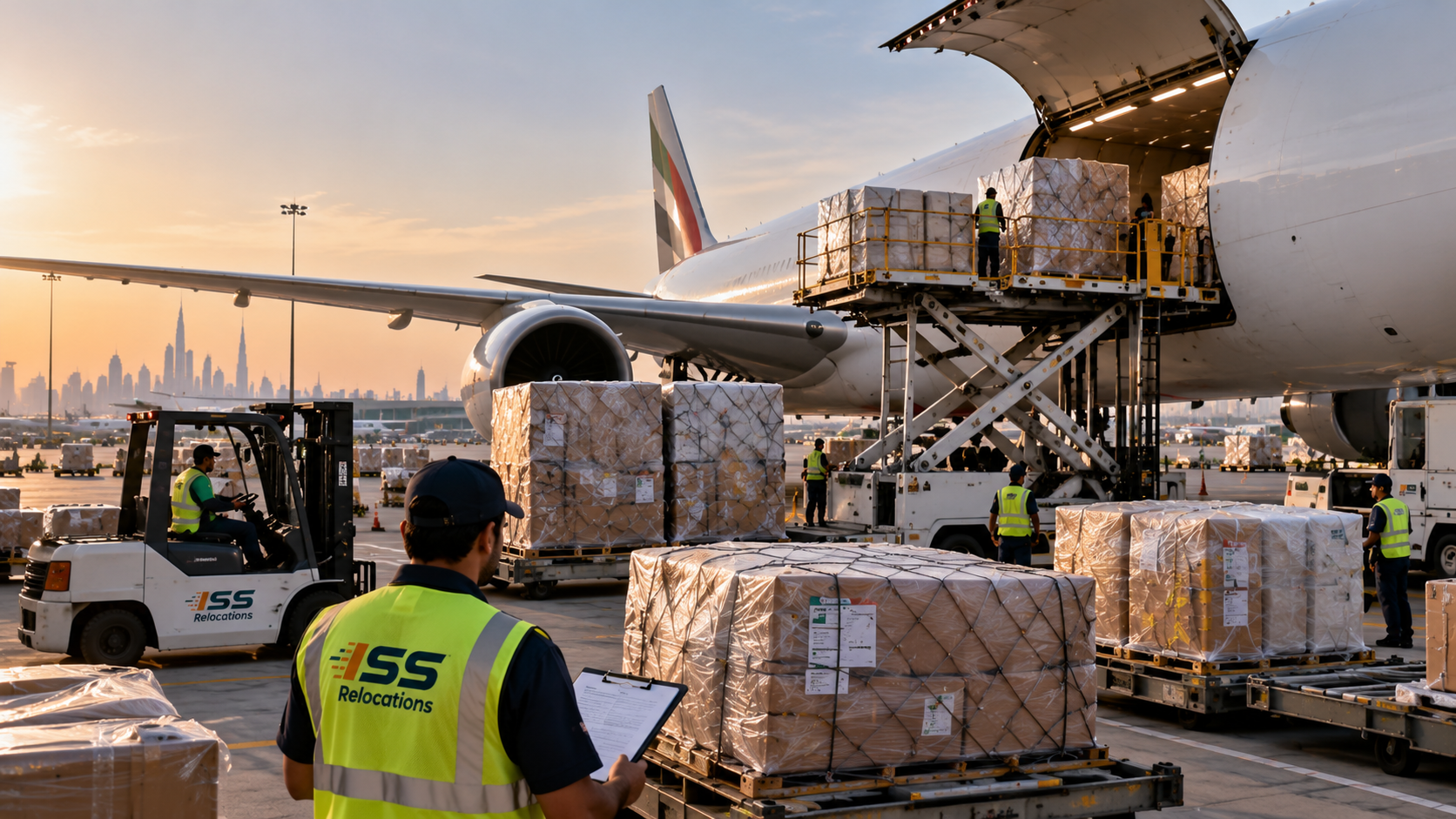
ISS Relocations moved the shipment by splitting it into stages. When the booked flights turned out to be narrow-body aircraft that could not carry the whole consignment, our team stayed in constant contact with the airline, found alternative departures, sent the goods in parts and tracked every stage. The shipment still reached the client within the required timeframe.
What was the situation?
This summer, ISS Relocations managed an international air relocation for a prestigious client who makes several international moves each year. Every move follows a fixed schedule:
- Packing at the residence
- Collection
- Airfreight departure
- Delivery directly to the next residence
The client expects a seamless door-to-door service, with the shipment arriving when it is needed, not merely when it is convenient to transport. For this client, the dates could not move.
How big was the shipment, and why did that matter?
The move involved approximately 4,000 to 5,000 kg of household goods by air. A shipment of this size needs a lot of cargo capacity, so the right aircraft and confirmed cargo space are critical. Planning around those two things is the basis of any heavy air relocation.
What went wrong?
The movement was planned and the bookings were made. But the flights expected to carry the shipment were operated by narrow-body aircraft, which could not take the entire consignment as expected. The required movement dates were disrupted as a result.
The wider environment made this harder. In the current Middle East situation, flight availability, aircraft capacity and operations can change quickly, and even a carefully planned shipment can be affected.
What did ISS do about it?
For the client, the dates stayed fixed. For ISS, the responsibility was to find a solution. Our team:
- Intensified coordination with the airline, following up repeatedly on available capacity
- Explored alternative departures instead of waiting for the original plan to recover
- Moved the shipment in parts, so the consignment could travel in stages rather than all at once
- Monitored each stage closely, so nothing was left to chance
We did not accept the disruption as an unavoidable delay. We worked through the available options.
What was the result?
Through persistent coordination and active management, the shipment arrived within the client’s required timeframe.
Why can a “confirmed” booking still fall short?
This case shows something many customers do not realise: not all airline bookings offer the same level of service or priority.
A standard freight booking generally depends on available cargo capacity and prevailing operating conditions. Even when the airline accepts the booking, the shipment can still be affected by space availability, aircraft limitations and operational changes.
Does priority air cargo solve the problem?
Not completely. For time-critical movements, airlines may offer premium or priority cargo services at substantially higher rates. Depending on the airline, route and service conditions, these can give:
- Enhanced handling priority
- A better opportunity to secure space on the intended departure
However, premium services should be judged against the airline’s actual commitments and operating conditions. They are not an absolute guarantee against disruption.
Do return moves from Europe to the Middle East face the same risk?
Yes. Capacity constraints and operational uncertainty can create similar challenges on return movements. Each direction needs fresh coordination, realistic contingency planning and a clear understanding of the client’s priorities.
What can you learn from this case?
- Ask about the aircraft. Large household shipments may not fit on narrow-body flights.
- Treat a booking and guaranteed space as different things. A booking does not always mean the whole shipment will fly.
- Compare standard and priority options when your date is fixed, and ask what each one really commits to.
- Insist on a backup plan before collection, such as staged movement.
- Choose a mover who communicates openly and stays accountable when plans change.
How does ISS prepare for time-critical air relocations?
For ISS, every assignment needs more than a competitive freight quote. It requires:
- Understanding the client’s expectations
- Negotiating with airlines well in advance
- Evaluating standard versus priority services
- Assessing whether the aircraft suits the shipment
- Building a practical contingency plan before the shipment is collected
ISS Relocations is a FIDI-accredited international relocation company with more than 30 years of experience and over 100,000 moves completed. We hold ISO 9001:2015 and ISO 14001:2015 certifications and have offices across the GCC and South Asia.
Premium relocation is not defined by price alone. It is defined by the ability to anticipate problems, communicate transparently, make informed decisions and remain accountable when circumstances change.
Frequently Asked Questions
Why couldn’t the whole shipment fly on the planned flights? The flights were operated by narrow-body aircraft, which could not carry the entire consignment as expected.
What is a staged air shipment? A shipment that is sent in parts, across different flights, usually to meet a delivery date when one flight cannot carry everything.
Can an air freight shipment be delayed even after it is booked? Yes. Standard bookings depend on available capacity and operating conditions, so space, aircraft type and schedules can affect the shipment.
Does priority air cargo guarantee on-time delivery? No. It can improve handling priority and the chance of securing space, but it does not guarantee against disruption.
How much household goods can be moved by air? It depends on the route, airline and available capacity. This case involved approximately 4,000 to 5,000 kg, which needs substantial cargo space.
Who handles coordination with airlines during an international move? Your relocation company. At ISS, our teams work with destination partners and airline cargo departments throughout the move.