







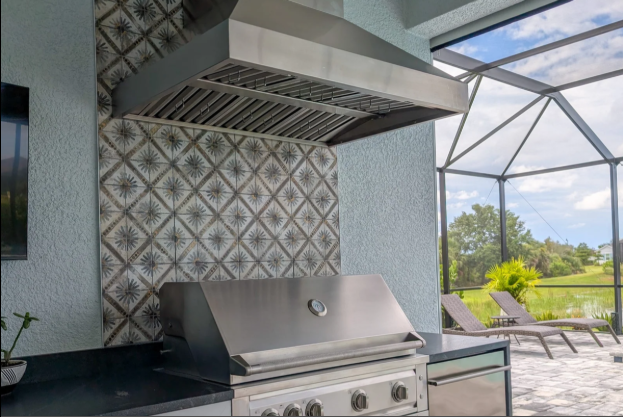
Cooking releases more than delicious aromas. Frying, grilling, boiling, and searing can introduce grease particles, smoke, moisture, and airborne pollutants into indoor air. Without adequate ventilation, these contaminants may linger, settle on kitchen surfaces, and affect indoor comfort. A kitchen hood vent helps capture cooking emissions and remove them from the cooking area, making it an important component of a functional kitchen. Understanding ventilation capacity, noise levels, installation requirements, and maintenance can help homeowners select a system that supports their cooking habits and kitchen layout.
How a Kitchen Hood Vent Improves Indoor Air Quality
A range hood draws in air from above the cooking surface, capturing heat, smoke, grease, and cooking odors. Ducted models transport exhaust outdoors, while ductless models pass air through filters before recirculating it into the room. These systems serve different installation needs, but their performance depends on design, airflow, and filtration.
Effective ventilation can reduce exposure to cooking-related pollutants, particularly during high-temperature cooking methods such as frying and searing. However, capture performance varies among models. Hood placement, coverage, airflow, and cooking practices all influence how effectively emissions are collected.
Using the hood while cooking and allowing it to run briefly afterward can help manage lingering emissions. Whenever possible, exhausting air outdoors provides a practical way to remove contaminants rather than returning filtered air to the kitchen.
Essential Factors to Consider Before Choosing a Vent Hood
1. Airflow Capacity and Cooking Requirements
Airflow is measured in cubic feet per minute (CFM), indicating how much air a hood can move. Selecting the right capacity involves considering cooktop dimensions, heat output, cooking frequency, and ventilation layout.
A higher CFM rating does not automatically guarantee better performance. A hood must capture cooking emissions effectively, and its ductwork must support the required airflow. Frequent high-heat cooking may demand greater ventilation capacity than occasional light meal preparation.
2. Hood Dimensions and Capture Coverage
A hood should generally be at least as wide as the cooking surface, with sufficient depth to capture emissions from the burners. Coverage becomes especially important when cooking on front burners or using large pans.
Mounting height also affects capture performance. A kitchen hood vent installed too high may allow smoke and steam to escape into the surrounding room, while incorrect placement can interfere with safe appliance operation. Follow the installation specifications for the selected hood and cooking appliance.
3. Noise Levels and Blower Design
Noise can influence whether homeowners use their ventilation system consistently. Range hood sound is commonly expressed in sones, with lower ratings indicating quieter perceived operation. One sone is approximately comparable to a quiet refrigerator, although actual sound perception varies.
Noise typically increases as airflow rises. Therefore, compare sound ratings at similar airflow levels instead of evaluating the lowest advertised noise figure alone. Variable-speed controls allow users to select lower settings during light cooking and increase ventilation when needed.
Ductwork and Installation Requirements
Duct design directly affects a ventilation system’s efficiency and operating noise. Undersized ducts, unnecessary bends, long runs, and restrictive exhaust outlets can increase resistance, forcing the blower to work harder.
Before installation, check the manufacturer’s recommended duct diameter, exhaust route, and mounting specifications. Rigid, appropriately sized ductwork with fewer bends generally supports better airflow. The exhaust should discharge outdoors through an approved termination point rather than into an attic or enclosed space.
Maintenance Practices for Reliable Ventilation
Regular maintenance helps preserve airflow, filtration, and everyday performance. Grease accumulation can restrict filters and reduce effective ventilation, while neglected components may contribute to unpleasant odors.
Homeowners can follow these maintenance practices:
- Clean grease filters regularly: Wash reusable filters according to the manufacturer’s instructions. Cooking frequency determines how often cleaning is necessary.
- Inspect the exhaust pathway: Check for visible obstructions and arrange periodic inspections when airflow declines unexpectedly.
- Maintain blower components: Follow recommended servicing instructions instead of attempting repairs on energized equipment.
- Replace disposable filters: For ductless systems, replace charcoal filters at the recommended intervals to maintain odor-control performance.
A sudden change in noise, persistent vibration, or noticeably weaker airflow can indicate an obstruction, installation issue, or component problem that requires attention.
Conclusion
Choosing a ventilation system involves balancing airflow, sound levels, capture coverage, installation compatibility, and maintenance needs. A model with impressive specifications may still perform poorly if it is incorrectly sized or connected to unsuitable ductwork. Homeowners comparing quieter models can also review this Top 4 Quiet Range Hoods buyer’s guide to understand available options and evaluate noise-related features. Ultimately, effective kitchen ventilation depends on matching equipment to the cooking environment. By considering ventilation capacity, sound ratings, proper installation, and routine care, homeowners can create a more comfortable cooking space while managing airborne cooking emissions responsibly.