







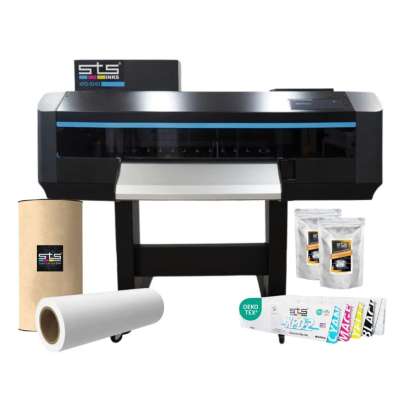
Choosing the right printing equipment can make a real difference to an apparel business. For print shops handling custom clothing, promotional merchandise, and bulk transfer orders, the challenge is finding a system that balances print quality, production capacity, and day-to-day reliability. The STS XPD-924D is worth exploring for businesses considering a wider-format direct-to-film production setup.
Before investing, buyers should look beyond the machine’s name and consider how it fits their actual workflow. Print width, printhead configuration, software compatibility, maintenance needs, and ongoing supply costs all influence whether a particular system is suitable for a growing business.
For businesses researching DTG PRO transfer printing equipment, comparing the available features against real production requirements is a sensible starting point. The right choice depends on the types of orders a shop handles, the space available, and the level of technical support it needs.
What Is the STS XPD-924D?
The STS XPD-924D belongs to the direct-to-film printing category, a technology used to create designs that can be transferred onto garments using a heat press. Rather than printing directly onto each finished shirt, the process produces artwork on a transfer film, which is then prepared and applied to the selected material.
This approach can be useful for apparel decorators serving customers who want personalized designs, branded clothing, team uniforms, or short-run merchandise.
The model name suggests a 24-inch-class system, but buyers should confirm the exact usable print width, printhead configuration, included accessories, and current specifications with the seller before ordering. These details matter when planning production capacity and choosing compatible consumables.
Key Features to Evaluate
1. Printing Width and Production Capacity
A wider printing system can provide more flexibility when arranging multiple designs across a transfer film. For a shop producing several garment transfers in one batch, efficient layout planning can help reduce material waste.
However, a wider format does not automatically guarantee faster production. Actual output depends on print settings, artwork coverage, resolution, operating conditions, and the time required for subsequent transfer-processing steps.
Before purchasing, ask the supplier for realistic production estimates at the print quality you expect to use.
2. Print Quality and Color Consistency
Customers expect apparel graphics to look sharp, with clean edges and colors that match the approved design as closely as possible. Print quality depends on several factors, including the printing system, ink condition, color-management settings, film quality, and maintenance.
When evaluating the XPD-924D, ask whether sample prints are available. Review fine details, gradients, solid-color areas, and white-ink coverage where applicable.
A sample produced using your typical artwork can tell you more about practical performance than a headline resolution figure alone.
3. Software and Workflow Compatibility
Printing software helps operators prepare artwork, manage color, arrange jobs, and send files to the machine. A workflow that is easy to understand can reduce setup mistakes, particularly in shops where several people handle production.
Confirm which RIP software is supported, whether a license is included, and what computer specifications are required. It is also worth asking about training, software updates, and assistance with initial setup.
4. Consumables and Maintenance
Ink, transfer film, adhesive powder, and cleaning products contribute to the overall cost of every job. Their compatibility with the equipment is important for consistent results.
Routine maintenance also matters. Following the manufacturer’s instructions for printhead care, cleaning, and storage can help prevent avoidable interruptions. Ask the supplier about recommended maintenance schedules, replacement-part availability, and the expected costs of commonly replaced components.
Benefits for Apparel Printing Businesses
Greater Flexibility for Custom Orders
Direct-to-film technology supports a range of garment-decoration applications, making it useful for businesses that serve different customer groups. A shop may produce a small run of branded shirts in the morning and prepare transfers for a larger order later in the day.
This flexibility can help businesses respond to changing customer needs without relying exclusively on large-volume orders.
Opportunities to Improve Workflow
A well-matched production system can help operators organize jobs, plan transfer layouts, and establish repeatable procedures. Combined with appropriate curing and heat-press equipment, it can become part of a consistent production process.
Still, overall efficiency depends on the complete setup rather than the printer alone. Film handling, powder application, curing, pressing, inspection, and packaging all affect the time needed to complete an order.
Potential to Support Business Growth
As order volumes increase, businesses need equipment and processes that can accommodate more work without compromising quality. A production-focused system may be appropriate for shops that have outgrown a smaller setup, provided its capacity and operating costs match their demand.
Before upgrading, estimate your average weekly order volume and identify the specific bottleneck you want the new equipment to solve.
Specifications to Confirm Before Buying
Product specifications can vary by configuration or package, so buyers should obtain a current specification sheet for the exact model being offered.
| Specification | What to verify |
|---|---|
| Maximum print width | Confirm usable width and media compatibility |
| Printhead configuration | Verify the installed printhead model and quantity |
| Printing speed | Request speeds at different quality settings |
| Ink system | Check compatible inks and available colors |
| RIP software | Confirm the software, license, and supported operating system |
| Film handling | Check roll-feed capability and supported media |
| Included equipment | Verify whether a shaker, curing unit, or heat press is included |
| Training and support | Confirm onboarding, warranty, and technical assistance |
| Maintenance | Ask about cleaning procedures and replacement parts |
These checks help prevent misunderstandings about what is included in the purchase price.
Is the STS XPD-924D Right for Your Business?
The best choice depends on your current workload and future plans. A business producing occasional personalized shirts may not need the same capacity as a commercial shop handling regular wholesale orders.
When comparing DTF Printers, evaluate the complete cost of ownership rather than focusing only on the initial price. Include consumables, electricity, maintenance, software, labor, and any additional equipment required to complete the transfer process.
It is also wise to discuss your intended applications with the supplier. Ask for sample output, written specifications, warranty terms, and a clear list of included accessories before making a decision.
Conclusion
The STS XPD-924D is a model worth investigating for businesses exploring wider-format direct-to-film production. Its suitability will depend on verified specifications, print quality, workflow compatibility, ongoing maintenance, and the type of orders your shop handles. For buyers comparing DTF Printer solutions, a practical assessment of sample output and total operating costs is more useful than relying on marketing claims alone. DTGPRO provides a starting point for exploring apparel printing equipment and discussing which configuration may best match your production goals.