





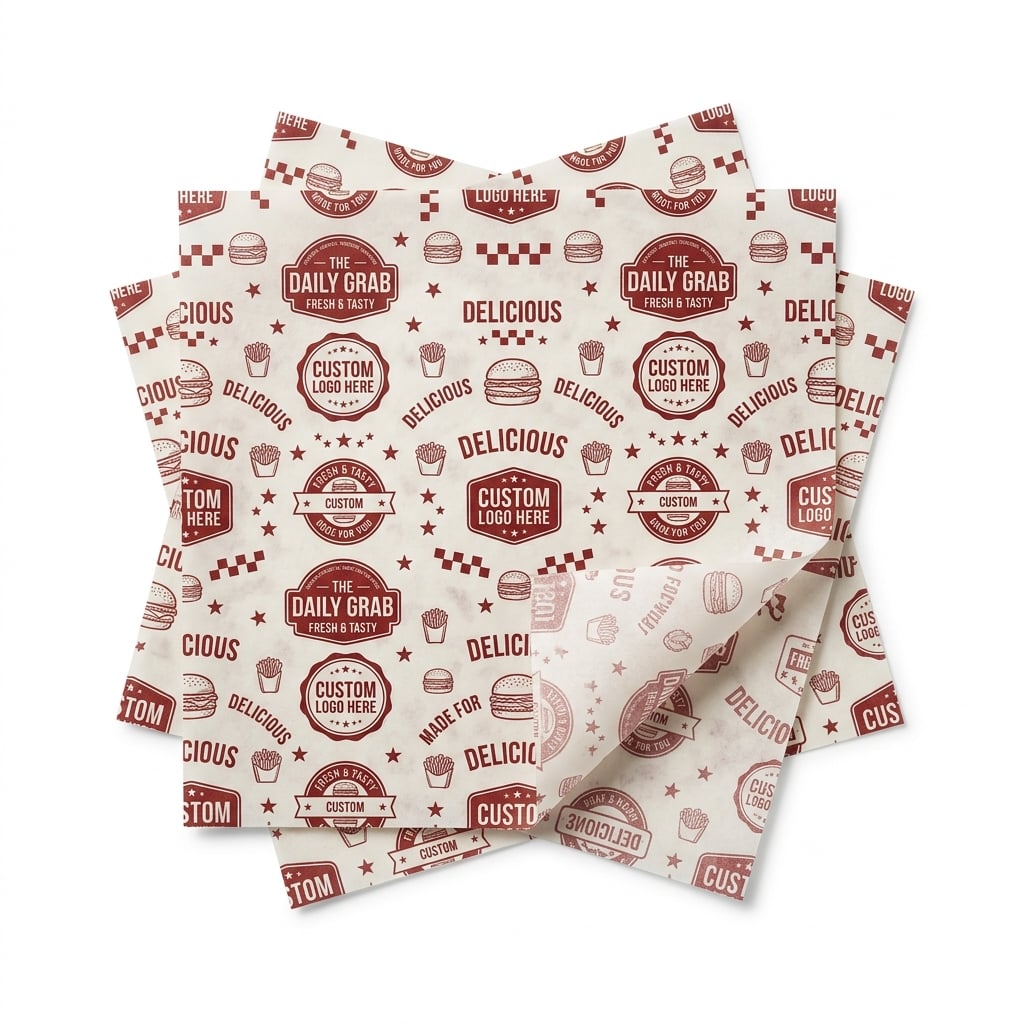
In the food service industry, presentation can influence how customers judge a meal before taking the first bite. Restaurants, cafés, food trucks, and takeaway businesses increasingly recognize that packaging is part of the overall dining experience. Custom Food Basket Liners offer a practical way to keep serving baskets organized, support cleaner food presentation, and display a restaurant’s identity through customized designs.
Whether used for burgers, fries, sandwiches, appetizers, or sharing platters, the right liner can combine everyday functionality with visual appeal. Consistent branding can also help a business create a recognizable experience across dine-in and takeaway orders. When material quality, dimensions, and artwork are selected carefully, food basket liners become a useful part of a broader packaging strategy.
What Are Custom Food Basket Liners?
Custom Food Basket Liners are sheets of paper designed to line food-serving baskets, trays, and other suitable containers. They may feature printed logos, brand colors, decorative patterns, or promotional messages while serving as a practical layer between food and the serving surface.
Unlike plain liners, customized options help connect the food presentation with the restaurant’s visual identity. A burger restaurant, for example, might use a repeating logo pattern, while a casual café could choose a minimal design that complements its menu and interior.
The material should always suit the intended application. Food-contact suitability, grease resistance, paper strength, sheet size, and printing specifications all affect performance. A liner that looks attractive but tears easily or absorbs oil too quickly may create more problems than it solves.
Why Branded Basket Liners Matter for Restaurants
Food presentation involves more than the plate or serving container. Small details, including the liner beneath the food, can make a meal appear organized and thoughtfully prepared.
Creating a Consistent Brand Experience
Branded Food Basket Liners help restaurants maintain a consistent visual identity across different service settings. When liners share colors, typography, and logo styles with takeaway bags, cups, and boxes, customers encounter a more unified brand.
This consistency can be especially useful for restaurant chains and businesses with multiple locations. Standardized packaging makes it easier to maintain a similar presentation even when different teams prepare orders in separate kitchens.
Independent restaurants can benefit as well. A distinctive liner gives a simple serving of fries or a sandwich a more recognizable appearance without requiring expensive changes to the serving equipment.
Improving the Appearance of Everyday Meals
A plain basket may serve its purpose, but a thoughtfully designed liner can make the presentation look more complete. Custom Printed Food Basket Liners add a visual layer that complements the food instead of competing with it.
For example, a restaurant serving loaded fries could use a subtle repeating pattern that frames the portion without making the basket look crowded. A café offering sandwiches and pastries might choose a lighter design that reflects a relaxed, premium atmosphere.
The most effective approach is usually simple. Clear branding, balanced spacing, and colors that match the restaurant’s identity can create a professional result while keeping attention on the food.
Key Benefits of Custom Printed Food Basket Liners
Customized liners can support both operational and marketing goals when their material and design are chosen appropriately.
- Improved presentation: Liners help create a tidy, coordinated appearance for baskets and trays.
- Stronger brand recognition: Repeated use of logos and colors can make packaging more familiar to customers.
- Consistent service standards: Standardized liners help different staff members present orders in a similar way.
- Flexible promotional opportunities: Selected designs can support seasonal campaigns, new menu launches, or special events.
- Practical serving support: Suitable paper can help separate food from the basket surface and simplify cleanup.
- Packaging coordination: Liners can complement wraps, boxes, bags, and other branded food-service materials.
These benefits depend on how the liners perform in real conditions. Poorly sized sheets, weak paper, or overly complex artwork can reduce their practical value. Material testing and design review should therefore remain part of the purchasing process.
Custom Printed Papers for Consistent Packaging Branding
Custom Printed Papers help restaurants maintain consistent branding across food packaging, including basket liners, wrappers, and serving sheets. Matching colors, logos, and brand patterns create a professional presentation while improving brand recognition. Businesses can select suitable paper materials, print designs, and sheet sizes according to their food-service needs.
Choosing Greaseproof Food Basket Liners for Oily Foods
Fried and oily foods can present challenges for serving materials. Oil may pass through unsuitable paper, leaving visible marks on baskets and reducing the quality of the presentation.
Greaseproof Food Basket Liners are designed to resist oil penetration more effectively than ordinary paper. Depending on their specifications, they may be suitable for items such as fries, fried chicken, onion rings, and other foods with oily surfaces.
However, grease resistance varies between products. A liner suitable for a small serving of fries may not perform equally well with heavily seasoned food, oily sauces, or longer holding periods.
Before selecting a material, businesses should consider:
- The oil content of the menu items.
- The expected serving temperature.
- How long food remains in the basket.
- Whether the paper needs to withstand moisture as well as grease.
- The strength of the paper during normal handling.
- Whether the liner fits the serving basket without excessive folding.
A sample test using actual menu items can reveal problems that may not be obvious from a product description. It can also help staff determine whether the liner remains presentable during normal service.
Why Food-Grade Basket Liner Paper Is Essential
Visual quality should never replace food safety considerations. Food-Grade Basket Liner Paper should be suitable for its intended food-contact conditions and comply with applicable requirements in the market where it is used.
The right specification depends on the food, temperature, contact duration, and any coatings or printing materials used. A product intended for dry foods may not automatically be suitable for hot, oily, or moist items.
Purchasing teams should confirm several details before approving a supplier:
- Food-contact suitability: Verify that the paper is intended for the planned application.
- Temperature limitations: Check whether it is appropriate for the expected serving conditions.
- Printing materials: Ask about inks and other components used in the printed design.
- Supporting documentation: Request relevant specifications or compliance information.
- Handling performance: Confirm that the paper maintains its integrity during normal use.
These checks support safer purchasing and reduce uncertainty. When a business changes its menu or serving method, the liner’s suitability should be reviewed rather than assumed to remain unchanged.
Custom Paper Basket Liners for Different Food Businesses
Custom Paper Basket Liners can be adapted to a range of food-service settings. The best format depends on the menu, the type of basket, and how orders are served.
Burger Restaurants and Fast-Casual Dining
Burger restaurants often serve meals with fries, sides, and condiments in baskets or trays. A coordinated liner can help organize the serving area while reinforcing the restaurant’s visual identity.
For busy kitchens, standard sheet sizes can simplify preparation and reduce the need for staff to cut paper during service. The liner should fit the basket without bunching around the food or leaving unnecessary excess material.
Cafés and Sandwich Shops
Cafés may use liners for sandwiches, baked goods, snacks, and light meals. A restrained design can complement the presentation without distracting from the product.
For sandwiches containing moist fillings, the liner should be evaluated for its ability to withstand the expected contact conditions. Some foods may require additional wrapping or a different material to maintain quality during service.
Food Trucks and Takeaway Businesses
Food trucks and small takeaway operations often work in compact spaces with high order turnover. Liners that are easy to store, access, and place into baskets can support a smoother workflow.
Customized paper can also help smaller businesses establish a recognizable identity at markets, festivals, and local events. A consistent design across serving liners and takeaway packaging makes the business easier to recognize.
Pubs, Sports Bars, and Casual Restaurants
Pubs and casual dining venues frequently serve shared appetizers, wings, fries, and other finger foods. A printed liner can help create a coordinated presentation for these menu items.
The design can reflect the venue’s atmosphere, whether that means a classic style, bold graphics, or a more understated appearance. Still, practical considerations such as grease resistance, fit, and easy handling should remain central to the selection.
How Personalized Food Basket Liners Support Brand Identity
Personalized Food Basket Liners allow businesses to adapt packaging to their audience, menu, and marketing objectives. A design might feature a logo, a repeating graphic, a seasonal illustration, or a short message connected to the restaurant’s identity.
Customization is most effective when it follows a clear design system. Too many colors, small text, and competing visual elements can make the liner look cluttered.
A practical design process includes the following steps:
- Choose a recognizable logo or brand symbol.
- Use colors that match other packaging materials.
- Keep important design elements visible when the sheet is folded or covered.
- Check that the artwork remains legible at the final print size.
- Review the design on a sample basket or tray.
- Confirm spelling, alignment, and color expectations before production.
A digital proof is useful, but a physical sample can provide a more realistic view of how the liner will appear during service. This is particularly important when the basket’s shape hides part of the printed design.
Making Custom Logo Food Basket Liners Work Harder
Custom Logo Food Basket Liners can reinforce brand recognition without turning the serving surface into a crowded advertisement. A logo repeated at consistent intervals may provide enough visibility while allowing the food to remain the main focus.
Placement matters. Logos positioned beneath the food may be hidden, while marks placed close to folds may become distorted. Designers should consider the size and shape of the basket as well as the way staff typically arrange the meal.
A business may also choose to use limited variations for seasonal promotions or new menu items. However, the core visual identity should remain recognizable so that temporary artwork does not weaken brand consistency.
Before a large print run, the final artwork should be checked for image quality, print alignment, dimensions, and any required approvals. These small steps can prevent avoidable errors and help maintain consistency across future orders.
Are Disposable Food Basket Liners a Practical Choice?
Disposable Food Basket Liners are often used in food-service settings because they can be replaced between servings and may simplify routine cleanup. Their practical value depends on the type of food, the serving system, and the restaurant’s hygiene procedures.
Disposable paper should not be treated as a substitute for proper cleaning. Baskets and trays still need to be handled and cleaned according to the business’s food-safety procedures.
When selecting disposable liners, operators should evaluate paper strength, size, storage, and the amount used per serving. A liner that is too small may fail to cover the intended surface, while an oversized sheet can create unnecessary waste.
Businesses should also consider how used liners will be handled and discarded. Food residue and grease can affect disposal options, so waste procedures should reflect local requirements and the actual material used.
Eco-Friendly Food Basket Liners and Responsible Packaging
Eco-Friendly Food Basket Liners may use responsibly sourced fibers, recycled content where suitable, or materials designed for specific disposal pathways. Their environmental impact depends on the full product construction, including coatings, inks, and the facilities available for waste processing.
Environmental claims should be verified before they appear in marketing materials. Paper is not automatically recyclable or compostable simply because it is fiber-based. Food contamination and grease can also limit acceptance in some waste streams.
Buyers should ask suppliers about:
- Fiber sourcing and supporting documentation.
- Coatings or treatments that may affect disposal.
- Verified recycling or composting claims.
- Printing materials and relevant certifications.
- Local facilities that accept the used product.
A realistic sustainability strategy considers both material selection and end-of-life handling. Businesses can make better decisions when they understand how the liner performs during service and what happens after disposal.
Buying Wholesale Food Basket Liners: What to Compare
Wholesale Food Basket Liners can help restaurants plan regular supply and maintain consistency across multiple locations. Larger orders may reduce unit costs, but savings should be weighed against storage, minimum order quantities, and the risk of unused stock.
| Purchasing factor | What to evaluate | Why it matters |
|---|---|---|
| Material performance | Strength, grease resistance, and intended food use | Supports reliable serving |
| Sheet dimensions | Fit with baskets and trays | Reduces handling problems |
| Print quality | Logo clarity and color consistency | Maintains brand presentation |
| Minimum order quantity | Match with expected demand | Helps control inventory |
| Lead time | Production and delivery schedule | Reduces stock shortages |
| Documentation | Food-contact specifications | Supports buyer confidence |
| Sustainability | Verified material and disposal claims | Encourages responsible choices |
Procurement teams should compare the total value rather than focusing only on the lowest price per sheet. Inconsistent print quality, late deliveries, or unsuitable material can create additional costs and disrupt operations.
Storage is another consideration. Liners should be kept in a clean, dry area protected from moisture and physical damage. Forecasting demand before placing a large order can help businesses avoid excess stock and make better use of available storage.
Common Mistakes to Avoid When Ordering Custom Food Basket Liners
Even a strong design can underperform when the purchasing process overlooks practical requirements.
Choosing appearance over function: Attractive printing cannot compensate for paper that tears or performs poorly with oily food.
Ignoring basket dimensions: Poorly fitted sheets may bunch up, leave surfaces exposed, or slow down staff during preparation.
Overcomplicating the artwork: Excessive text and fine details can make the design difficult to recognize at serving size.
Assuming every paper is food-safe: Food-contact suitability must be verified for the intended application.
Ordering more than the business needs: Large quantities may create storage problems or leave a business with outdated branding.
Making unverified environmental claims: Sustainability messaging should be supported by accurate product information.
Avoiding these mistakes helps businesses select liners that support presentation while meeting daily operational requirements.
A Practical Checklist Before Placing an Order
Before selecting Custom Food Basket Liners, restaurants and procurement teams should review these essentials:
- Identify the menu items and serving containers that will use the liners.
- Confirm the paper’s food-contact suitability and grease resistance.
- Select dimensions that fit the baskets and trays.
- Prepare artwork that aligns with the existing brand identity.
- Review the proof for spelling, alignment, and color consistency.
- Test a sample during normal service when possible.
- Compare pricing, minimum quantities, and production lead times.
- Confirm storage requirements and forecast expected usage.
- Request relevant material and sustainability documentation.
- Establish a process for checking quality on future orders.
This checklist helps businesses balance customer experience, material performance, branding, and cost control before committing to a production run.
Conclusion
Custom Food Basket Liners can enhance food presentation, reinforce brand recognition, and support a more consistent customer experience. Their effectiveness depends on choosing suitable paper, confirming food-contact requirements, selecting practical dimensions, and developing artwork that complements the food rather than overpowering it. When these factors are considered together, liners become a useful part of the restaurant’s wider packaging strategy.
For food businesses, a thoughtful purchasing process can improve day-to-day service while supporting brand consistency and responsible material choices. Sample testing, supplier comparisons, and realistic demand planning help reduce avoidable problems. For businesses exploring customized food packaging options, Custom Wax Paper Manufacturer can be considered as part of a broader supplier evaluation.
FAQs
1. What are Custom Food Basket Liners used for?
Custom Food Basket Liners are used to line suitable serving baskets and trays for foods such as burgers, fries, appetizers, and sandwiches. They can support presentation and display restaurant branding.
2. What are the benefits of Custom Printed Food Basket Liners?
Custom Printed Food Basket Liners combine serving functionality with visual branding. They can help create consistent presentation, reinforce brand recognition, and complement other packaging materials.
3. Are Greaseproof Food Basket Liners suitable for fried foods?
They can be suitable when the paper’s specifications match the food’s oil content, temperature, and expected contact duration. Buyers should verify performance and test samples when possible.
4. What should buyers check about Food-Grade Basket Liner Paper?
Buyers should confirm food-contact suitability, temperature limitations, relevant documentation, and the suitability of printing materials for the intended application.
5. Can Custom Logo Food Basket Liners improve restaurant branding?
Yes. Custom Logo Food Basket Liners can reinforce visual identity through consistent logo placement and colors. Clear, balanced artwork generally works better than crowded designs.
6. Are Disposable Food Basket Liners hygienic?
They can support routine serving and cleanup when used correctly, but they do not replace appropriate cleaning and sanitation procedures for baskets and trays.
7. Are Eco-Friendly Food Basket Liners recyclable?
That depends on the paper, coatings, printing components, food contamination, and local waste facilities. Businesses should verify disposal claims before choosing or promoting a product.
8. Is Wholesale Food Basket Liners a cost-effective option?
Buying in bulk may lower unit costs and support consistent supply. Businesses should also consider minimum order quantities, storage capacity, delivery schedules, and expected usage.