







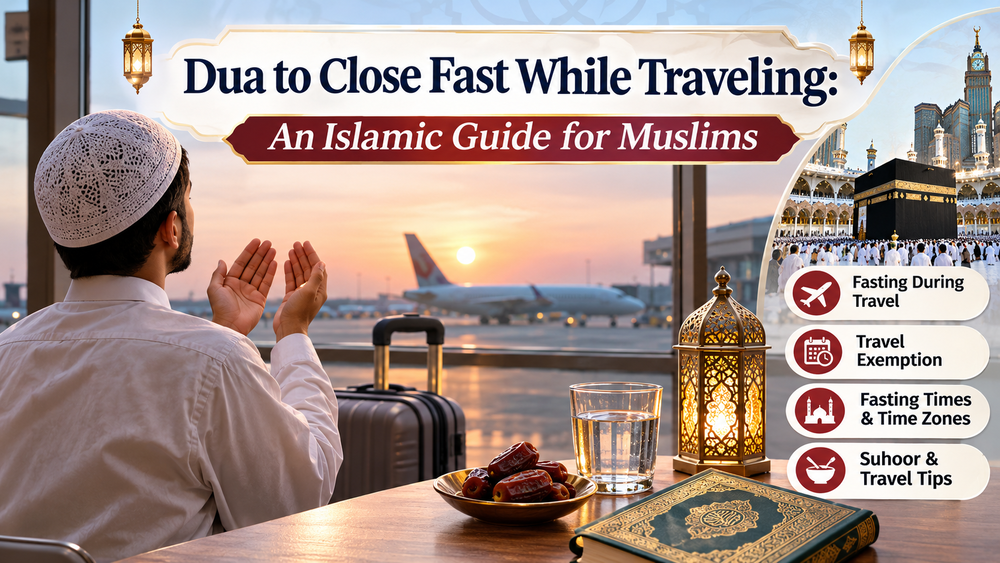
Traveling during Ramadan requires careful planning, especially when managing Suhoor, prayer times, and fasting schedules across different destinations. Many Muslim travelers search for the dua to close fast to understand how to begin their fast according to Islamic teachings. Although Islam provides flexibility for travelers, those who choose to fast should understand the importance of intention, fasting times, and religious exemptions. Whether traveling for Umrah, business, family visits, or personal reasons, Muslims can observe Ramadan while following the guidance provided in the Quran and Sunnah.
What Is the Dua to Close Fast While Traveling?
The dua for closing fast is commonly associated with making the intention (Niyyah) to observe fasting. However, there is no specific verbal supplication established in an authentic Hadith that Muslims must recite before beginning their fast.
A commonly recited expression of intention is:
Arabic:
وَبِصَوْمِ غَدٍ نَوَيْتُ مِنْ شَهْرِ رَمَضَانَ
Transliteration:
Wa bisawmi ghadin nawaytu min shahri Ramadan.
English Translation:
I intend to fast tomorrow in the month of Ramadan.
This wording is a commonly used expression of intention, not an authenticated prophetic supplication. Muslims can make their intention in their hearts without reciting a particular Arabic phrase.
What Does the Quran Say About Fasting While Traveling?
Allah provides concessions for travelers who may experience difficulties while fasting. Muslims who qualify for the travel exemption can postpone their fasts and complete them after Ramadan.
Allah says in the Quran:
Arabic:
وَمَن كَانَ مَرِيضًا أَوْ عَلَىٰ سَفَرٍ فَعِدَّةٌ مِّنْ أَيَّامٍ أُخَرَ ۗ يُرِيدُ اللَّهُ بِكُمُ الْيُسْرَ وَلَا يُرِيدُ بِكُمُ الْعُسْرَ
English Translation:
And whoever is ill or on a journey, then an equal number of other days. Allah intends ease for you and does not intend hardship for you.
Reference: Surah Al-Baqarah (2:185), excerpt.
This verse establishes the permissibility of postponing fasting during qualifying journeys. Travelers should consider their circumstances and the relevant Islamic rulings when deciding whether to fast.
What Does the Hadith Say About Fasting During Travel?
The Prophet Muhammad (ﷺ) provided guidance regarding the choice of fasting while traveling.
Hamzah ibn Amr Al-Aslami asked the Prophet (ﷺ) whether he should fast while traveling. The Prophet (ﷺ) replied:
Arabic:
إِنْ شِئْتَ فَصُمْ وَإِنْ شِئْتَ فَأَفْطِرْ
English Translation:
If you wish, fast, and if you wish, do not fast.
Reference: Sahih al-Bukhari 1943.
This Hadith demonstrates that eligible Muslim travelers have flexibility regarding fasting. However, when fasting creates serious hardship or threatens health, taking the permitted exemption may be more appropriate.
When Should Travelers Make Their Fasting Intention?
Muslims intending to observe an obligatory Ramadan fast should generally establish their intention before Fajr. Islamic schools of jurisprudence differ regarding the precise timing and renewal of fasting intentions.
Travelers preparing for early morning flights or long-distance journeys should determine their fasting plans in advance. Making a sincere intention before sleeping or during Suhoor can help them prepare for the following day.
The intention does not require a specific language, audible recitation, or formal ceremony.
Plan Your Ramadan Journey with Hajj Umrah Planner
Muslims traveling to Makkah and Madinah during Ramadan should organize their journeys around worship, accommodation, transportation, and meal arrangements. Using a Hajj Umrah Planner can help pilgrims prepare their travel schedules while considering Suhoor availability, local prayer times, airport transfers, and rest periods.
Pilgrims should also account for the physical demands of Tawaf and Sa’i, particularly during crowded periods. Planning sufficient rest and hydration between Iftar and Suhoor can make the journey more manageable.
How to Manage Fasting Times Across Different Time Zones
International travel can affect the duration of fasting, particularly when flying between the United States and Middle Eastern destinations. Travelers should follow the applicable dawn and sunset times at their actual location rather than automatically following their departure city’s schedule.
| Travel Situation | Fasting Guidance |
| Before departure | Follow applicable local Fajr timings |
| During a flight | Consider dawn and sunset at your actual position |
| After arrival | Follow the destination’s local fasting schedule |
| Qualifying travel hardship | Use the permitted fasting exemption |
| Missed Ramadan fasts | Complete the required fasts later |
Travelers experiencing uncertainty about fasting times during flights should consult a qualified Islamic scholar.
Is Suhoor Necessary Before Fasting During Travel?
Suhoor is a recommended practice in Islam, but eating it is not a condition for a valid fast. A Muslim who misses Suhoor may still fast if the necessary intention and other fasting conditions are fulfilled.
Travelers should choose meals that support sustained energy and hydration, including whole grains, fruits, vegetables, eggs, and sufficient water. Excessively salty foods may increase thirst during long journeys.
Preparing Suhoor in advance is particularly helpful when airport restaurants or hotel dining facilities have limited operating hours.
Common Fasting Mistakes Muslim Travelers Should Avoid
Understanding Islamic fasting requirements helps travelers avoid unnecessary confusion. Common mistakes include:
- Believing that reciting a particular fast dua is compulsory.
- Following home-country fasting times throughout an international journey.
- Ignoring serious physical exhaustion or dehydration.
- Assuming every short journey qualifies for the fasting exemption.
- Forgetting to make up missed obligatory Ramadan fasts.
Travel-related exemptions have specific conditions that differ among Islamic schools of jurisprudence. Seeking reliable religious guidance can help travelers understand which rulings apply to their circumstances.
Can Muslims Make Personal Duas Before Starting a Fast?
Muslims can make personal supplications before beginning their fast, asking Allah for strength, forgiveness, protection, and acceptance of their worship.
While there is no mandatory dua for closing fast, believers can supplicate sincerely in Arabic, English, or another language they understand. Travelers may also pray for a safe journey and ease in fulfilling their religious obligations.
Conclusion
Understanding the dua to close fast while traveling helps Muslims prepare for Ramadan journeys with greater awareness of Islamic teachings. A sincere fasting intention, accurate prayer timings, suitable travel arrangements, and knowledge of religious exemptions are essential considerations. Islam provides flexibility for eligible travelers, allowing them to fulfill their obligations without unnecessary hardship. Following authentic Quranic and prophetic guidance enables Muslims to balance travel responsibilities with their spiritual commitments.
Frequently Asked Questions (FAQs)
What is the dua to close fast while traveling?
There is no specific authenticated supplication required. A sincere intention in the heart is sufficient.
Can Muslims skip fasting while traveling?
Yes, eligible travelers may postpone fasting and make up the missed days later.
Can I make my fasting intention in English?
Yes, fasting intention does not require a particular language or verbal expression.
Can I fast without eating Suhoor during travel?
Yes, missing Suhoor does not invalidate a fast when its other conditions are fulfilled.
When should I break my fast while flying?
Generally, you should follow sunset at your actual location, including your altitude when traveling by airplane.