







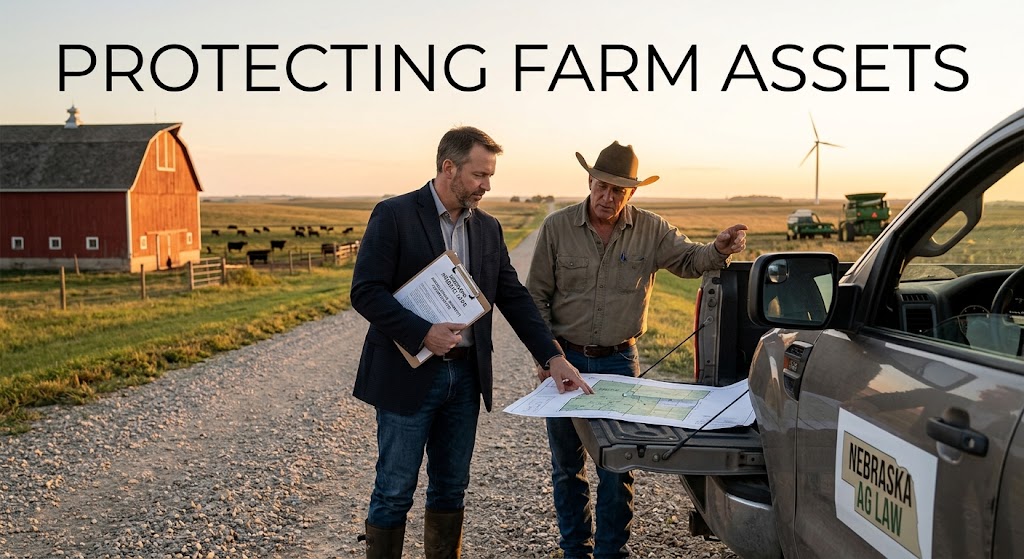
Preserving family farmland requires more than just dedicated daily labor; it demands a clear understanding of the legal framework governing real estate, ownership transfers, and estate administration. Across the Heartlands, agricultural real estate forms the financial bedrock of rural communities. When generational shifts occur or boundary misunderstandings arise, agricultural property faces severe operational disruption. Without structured legal protections, decades of hard work can become entangled in lengthy court proceedings. Protecting land assets means addressing potential vulnerabilities early, ensuring continuous operational stability, and preserving the economic viability of the farm for upcoming generations.
How Nebraska Probate Laws Apply to Agricultural Real Estate
When a landowner passes away, their real property must clear transfer procedures established by state statutes. The framework governed by nebraska probate laws ensures that debts are settled, assets are properly inventory-checked, and property rights transition to rightful heirs. However, applying standard probate procedures to active farming operations creates unique operational hurdles.
- Personal Representative Duties: The court-appointed executor gains management authority over estate assets. For farm real estate, this includes handling active cash rent agreements, maintaining conservation leases, and ensuring real estate tax payments remain current during probate proceedings.
- Intestate Succession Complications: Dying without a valid will triggers default statutory distribution schedules. Land split evenly among multiple off-farm and on-farm heirs often fragment farmland into non-viable parcels or forces undivided fractional ownership interests.
- Creditor Notice Timelines: State laws mandate a specific notice window for creditors to present claims against the estate. Land cannot be clear-titled or sold until creditor obligations and estate liabilities are satisfied.
Without proactive legal preparation, probate delays can stall critical spring financing or autumn land leasing decisions.
Managing Active Farm Leases During Probate
Active leases do not automatically terminate upon the death of a landowner. Executors must carefully audit existing cash rent or crop-share agreements to honor contractual obligations while managing estate liabilities. Mismanaging tenant relationships or missing statutory lease termination deadlines can cause unnecessary financial loss for the estate.
Resolving Agricultural Property Disputes Effective Strategy
Land ownership boundaries, drainage rights, and access points occasionally create friction between neighboring operations or co-heirs. Agricultural property disputes often emerge from informal agreements made decades ago that no longer align with current legal deeds or modern farming practices.
- Boundary Line Misalignments: Fences built decades away from actual surveyed boundary lines can lead to adverse possession claims or quiet title actions if left unaddressed.
- Drainage and Water Usage Rights: Altering natural water flows or installing tile drainage systems without proper legal easements can trigger disputes regarding downstream water impact and property damages.
- Partition Actions Among Co-Owners: When co-heirs inherit undivided interests in land and disagree on whether to hold, lease, or sell, state court partition actions may force an auction of the real estate unless an alternative buyout is structured.
Mitigating Family Conflict Through Legal Structuring
Family land disputes carry significant emotional and financial costs. Utilizing precise legal entities, such as Limited Liability Companies (LLCs) or revocable living trusts, allows operators to centralize decision-making authority. Partnering with targeted agricultural legal resources like Midwest Ag Law helps families draft clear operational agreements that prevent factional impasses among non-farming heirs.
Proactive Strategies for Farm Real Estate Succession
Securing land assets requires structuring a comprehensive succession strategy long before an estate enters administration. Integrating modern legal tools protects agricultural land from unnecessary probate delays and protects family ownership.
- Revocable Living Trusts: Holding land within a trust allows real estate to pass directly to designated beneficiaries without entering county probate court, maintaining privacy and continuity.
- Transfer on Death Deeds: Specific real estate deeds allow landowners to designate beneficiaries who automatically receive title upon the owner’s passing while avoiding court oversight.
- Entity Formation: Placing acreage into an ag-focused corporate structure decouples land control from raw individual acreage titles, enabling structured share transfers over time.
Summary
Securing agricultural real estate requires balancing daily operational needs with sound legal structures. Navigating statutory estate rules, addressing potential boundary or co-ownership friction early, and implementing targeted estate mechanisms ensures that productive land remains stable. Taking informed legal measures today safeguards valuable property rights and preserves a lasting legacy for the future.
FAQs
Q1: How long does the probate process take for farm real estate in Nebraska?
Probate for agricultural estates typically takes six to eighteen months depending on estate complexity, creditor claims, and their cooperation.
Q2: Can a farm operate normally while undergoing probate?
Yes, but only after the county court officially appoints a Personal Representative with authority to sign leases, manage contracts, and handle finances.
Q3: What happens if an agricultural landowner dies without a will?
The real estate is distributed according to state intestate laws, dividing property among surviving spouses and heirs, which often splits land ownership.
Q4: How are boundary disputes between neighboring farms legally resolved?
Boundary conflicts are resolved through certified land surveys, quiet title lawsuits, mediated boundary agreements, or statutory adverse possession evaluations.
Q5: Does placing farmland into a trust avoid probate?
Yes, properly titled land held in a trust bypasses probate court entirely, allowing seamless management transitions.